
A side plate, also called a cheek plate, lines the inner side walls of a jaw crusher’s crushing chamber. It shields the frame from direct rock contact, keeps feed inside the crushing zone, and absorbs the reactive force released when stone breaks. Cast in high manganese steel or high carbon steel, a side plate protects expensive frame castings and stretches overhaul intervals.
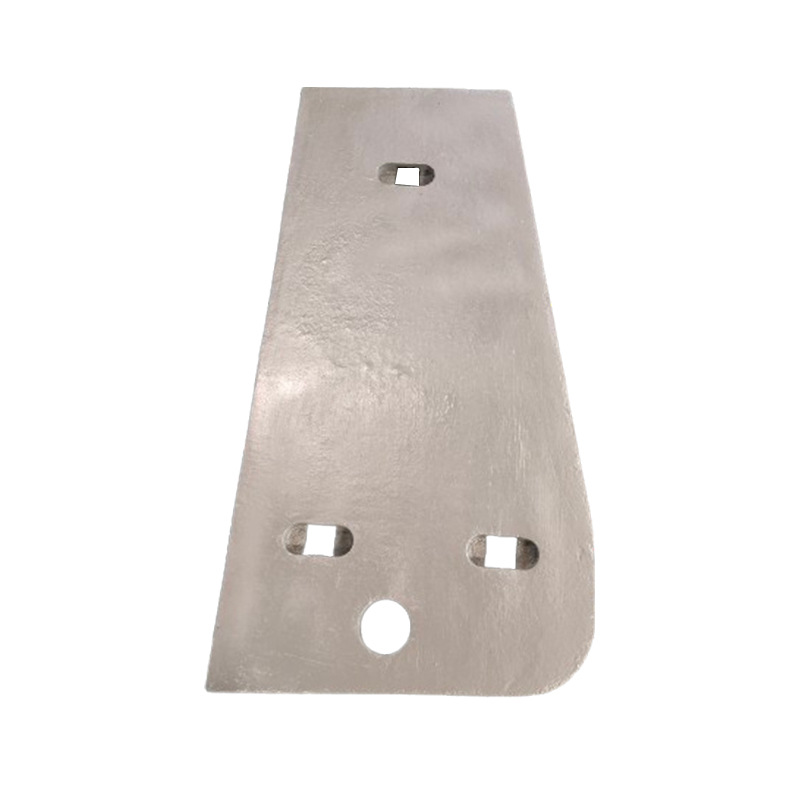
The Real Job of a Side Plate Inside the Crushing Chamber
Plenty of operators replace this component without ever asking what it actually does. Understanding its role explains why a poorly made casting turns into downtime within weeks.
Shielding the Frame from Direct Rock Contact
Inside every jaw crusher, the two side walls of the frame face constant sliding abrasion from feed rock. A side plate bolts onto those walls and takes the punishment instead. Replacing a worn side plate costs a fraction of repairing a scored frame, which is why quarry and mining crews treat it as a planned consumable rather than an emergency spare.
Handling the Reactive Force of Fragmentation
When stone splits between the fixed and swing jaws, the released energy pushes outward against the chamber walls. A side plate with high strength and rigidity absorbs that reactive force of fragmentation without bending or cracking around the bolt holes. Thin or poorly cast material deforms, loosens fasteners, and lets fines wedge behind the liner — a familiar cause of unplanned stops.
Keeping Feed Material Inside the Crushing Zone
Material must travel a controlled path from the feed opening down to the discharge gap. A properly profiled side plate closes the gaps at both chamber sides so rock cannot escape sideways or grind against unprotected steel. Correct fit also keeps chamber geometry stable, which protects product gradation and helps the jaw plates wear evenly across their full width.
Which Steel Makes a Side Plate Last Longer?
Buyers usually ask two questions first: which grade, and how long will it run? Both answers come down to casting quality and how the alloy behaves under repeated impact.
High Manganese Steel and Work Hardening
High manganese steel remains the workhorse choice. Under hammering loads the surface work-hardens while the core stays tough, so a side plate cast in this grade resists impact instead of shattering. For granite, basalt and river gravel operations, that combination delivers long service life and gives maintenance teams predictable change-out intervals rather than random failures.
High Carbon Steel for Rigidity Under Load
Some crushing duties reward stiffness more than surface hardening. High carbon steel gives a side plate excellent rigidity and dimensional stability, keeping the liner flat against the frame under continuous pressure. We discuss feed material, throughput and machine model with each client before recommending a grade, because the right choice depends on the job — not on a catalogue default.
Standing Up to Harder Rock and Corrosive Sites
Harder rock raises abrasion; wet pits, coastal plants and washed aggregate add corrosion. A well-cast side plate handles both, offering good corrosion resistance alongside impact strength, so surfaces don’t pit and weaken between shifts. Heat treatment and controlled chemistry matter enormously here — two castings that look identical can perform very differently after one season in a working crusher.
How Buyers Specify and Source a Replacement Side Plate
Trust gets built long before the first shipment arrives. Here is what experienced purchasing and production managers check when ordering from an overseas foundry partner.
Drawings, Samples and Bolt-Hole Accuracy
Most orders start from a drawing, a worn sample, or simply photographs with measurements. Our engineering team converts these into a manufacturable side plate pattern, confirming thickness, contour and bolt-hole positions before any metal is poured. Small dimensional errors create big installation headaches on site, so we prefer one extra round of confirmation over a casting that won’t seat correctly.
Working Alongside Toggle Plate, Springs and Dust Ring
A side plate never works alone. The toggle plate, cast in high manganese steel, acts as the sacrificial link; tension springs made from spring steel, high-strength steel wire or carbon steel keep the mechanism loaded; and a dust ring in high manganese steel or high chromium alloy steel seals out grit. Ordering these together simplifies stocking and shortens future downtime.
Inspection Records and Realistic Lead Times
Every side plate batch passes chemical analysis, hardness testing and dimensional inspection before packing, and the reports travel with the shipment. Standard patterns move quickly; fully customized castings take longer, particularly when drawings need several review rounds or special processes are involved. We give an honest schedule at quotation stage, then keep clients updated as production moves along.
Conclusion
A side plate protects the jaw crusher frame, contains the feed, and absorbs the reactive force of fragmentation. Cast in high manganese steel or high carbon steel, it withstands impact, suits harder rock, and offers good corrosion resistance. The right grade plus an accurate fit keeps your crusher running and your maintenance budget predictable.
FAQ
1. Is a side plate the same as a cheek plate?
Yes. Both names describe the wear liner protecting a jaw crusher’s chamber side walls.
2. Which material do you recommend?
High manganese steel for heavy impact duty, high carbon steel where rigidity matters most. We advise after reviewing your feed conditions.
3. Can you produce from a worn sample?
Certainly. Send photos, measurements or the sample itself, and our team rebuilds the geometry into a working drawing.
4. Do you supply other crusher parts?
Yes — toggle plate, jaw plate, dust ring, blow bar for impact crushers, and forged main shaft.
5. How long does a side plate last?
It depends on rock hardness, feed size and running hours; most plants align replacement with scheduled liner changes.
Partner with Xian Huan-Tai for Reliable Crusher Components
Rooted in China since the mid-90s, Xian Huan-Tai Technology and Development Co., Ltd. has spent 30 years customizing non-standard mechanical parts for mining and engineering machinery. Our production team controls quality through every process step, and our technical engineers turn your performance targets into castings that fit the first time. Send a drawing, a sample photo or your machine model, and we’ll reply with a clear quotation and schedule: inquiry@huan-tai.org.
References
- Wills, B. A., & Finch, J. A. — Wills’ Mineral Processing Technology
- Gupta, A., & Yan, D. S. — Mineral Processing Design and Operations: An Introduction
- Lynch, A. J. — Mineral Crushing and Grinding Circuits: Their Simulation, Optimisation, Design and Control
- Beeley, P. R. — Foundry Technology
- Bhadeshia, H. K. D. H., & Honeycombe, R. W. K. — Steels: Microstructure and Properties
