
Impact crusher parts made with lost wax casting have sharper edges, tighter tolerances, and smoother surfaces than parts made with regular sand routes. That accuracy means that impact plates, blow bars, and chamber liners can be put in place more quickly, the rotor can be loaded evenly, and the wear life is longer. We pour alloy steel, high-manganese steel, and high-chromium cast iron into investment shells that we build based on your plans at Xi’an Huan-Tai.
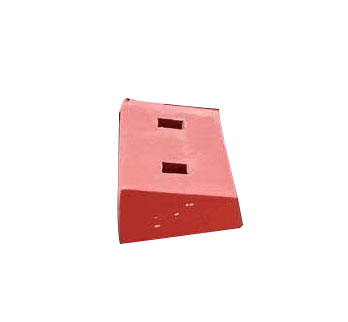
Why Lost Wax Casting Improves Dimensional Accuracy
Crushing rooms are very harsh. A small difference of a few millimetres on a mounting face changes the gap setting, which changes the wear pattern and makes the part last less long. During the pattern stage, before the metal is poured, investment casting controls that difference.
Wax Patterns Lock In the Profile
Every casting starts with a wax copy made from a machined die. This means that the shape of every piece, from the very first one to the very last one, is the same. The shape, thickness, and spacing of the bolt holes on impact plates stay the same from one batch to the next. This is exactly what maintenance teams need when they need to replace a worn set during a short plant shutdown.
Less Machining, Faster Fit-Up
As-cast surfaces are smoother and gaps are smaller because the clay shell can show fine details. There are many impact plates that don’t need to be fully machined but only need light finishing on the mounting faces. Cutting away less stock means less cost, less time, and no chance of cutting through the hardened working layer that gives the part its resistance to wear.
Choosing Between Lost Wax, Resin Sand and V-Method
We don’t make each job fit into a single process. Lost wax is good for complicated shapes that need to be made accurately; resin sand is good for medium and large wear castings; and the V-method makes flat-backed parts with clean surfaces. When you come to heavy impact plates, we usually look at all three options and decide which one gives you the best value based on your budget, tolerance, and the number of tonnes you need.
Materials That Keep Impact Crusher Parts Alive
You can’t get accuracy without the right metals. The choice of material is based on the feed hardness, the impact energy, and whether the duty is mostly shock or mostly abrasion.
High-Manganese Steel for Shock Duty
High-manganese steel is tough at first, but it gets harder when it is hammered over and over, creating a hard skin over a flexible core. We use it for blow bars on impact crushers, toggle plates, dust rings, and impact plates that deal with blocky, high-impact materials like basalt or recycling concrete, where resistance to breaking is more important than hardness on the top.
High-Chromium Cast Iron for Abrasive Feed
High-chromium cast iron works best when the feed is very rough and the impact energy is not too high. The chromium carbides in it make it much less likely to get gouged than plain steel. Customers in the mining and quarrying industries often buy this grade of impact plates for limestone, river gravel, and slag circuits. They are willing to accept less toughness in exchange for a clear increase in service hours.
Alloy Steel and Composite Solutions
Alloy steel is strong and easy to weld at the same time. It is good for making rack bars, brackets, and structural wear parts. We also make composite castings with a tough steel back and a ceramic or high-chromium working face for tough sites. These impact plates are hard where the rock hits them and won’t break where the bolts are pulling on them.
From Drawing to Installed Part
Being accurate in dimensions is not a matter of luck; it is the end of a process. Every step of our process is checked to make sure it’s working right, because a worn part that doesn’t fit right costs the customer a lot more than the casting itself.
Engineering Review Before Tooling
Each drawing or sample is checked by our expert team for shrinking, gate position, and machine reference. If it’s hard to fill in a profile, we suggest revising it instead of taking a chance on the pour. Customers who need to replace worn impact plates but don’t have the original drawings can send us the old part. We’ll reverse-engineer it and make sure the 3D model is correct before we cut any tools.
Inspection Throughout Production
A spectrometer checks the chemical make-up, Brinell or Rockwell checks the hardness, and a gauge, CMM, or mould checks the key dimensions. When contracts call for it, non-destructive testing can be done. Every batch of impact plates leaves with a report that can be tracked. This way, your inspection matches ours, and there are no disagreements about hardness or tolerance.
Realistic Scheduling and Matched Components
Lead time depends on the type of tooling, the alloy, and the size of the order. Standard patterns move quickly, but fully customised profiles that need to be drawn over and over again naturally take longer. We tell you the truth about the plan right away. We provide impact plates, forged main shafts, spring steel and high-strength steel wire springs, carbon steel bolts, and high-manganese steel dust rings. This way, you only have to deal with one source.
Conclusion
Lost wax casting produces reliable impact plates for impact crushers, backed by correct alloy selection and disciplined inspection to ensure precise fit and predictable wear performance. With three decades of non-standard casting experience, Xi’an Huan-Tai turns your drawings into durable components your maintenance crew can trust, shutdown after shutdown.
FAQ
1. Can you produce parts without original drawings?
Yes. Send a worn sample or photographs with key measurements; we reverse-engineer and confirm the model with you first.
2. Which material should I choose for my impact plates?
It depends on feed hardness and impact energy. High-manganese steel for shock, high-chromium cast iron for abrasion, composite for both.
3. Do you only use lost wax casting?
No. We also run resin sand and V-method, and recommend the most economical route for your part size.
4. Are main shafts cast?
No. Crusher main shafts are forged for better grain structure and fatigue strength.
5. What inspection documents do you provide?
Chemical analysis, hardness results and dimensional reports, with NDT on request.
Work With a Partner, Not Just a Foundry
Tell us what fails first on your crusher, and we will tell you how to make it last longer. Xi’an Huan-Tai Technology and Development Co., Ltd. combines a professional production team that controls quality from melt to packing, an engineering team that meets your performance targets, and 30 years of non-standard casting experience. Send drawings, samples or simply a problem description to inquiry@huan-tai.org — we reply with real technical answers.
References
- Campbell, John. Complete Casting Handbook: Metal Casting Processes, Metallurgy, Techniques and Design. Butterworth-Heinemann.
- Beeley, Peter R. Foundry Technology. Butterworth-Heinemann.
- Wills, Barry A., and Finch, James A. Wills’ Mineral Processing Technology: An Introduction to the Practical Aspects of Ore Treatment and Mineral Recovery. Elsevier.
- Davis, Joseph R. (ed.). ASM Specialty Handbook: Cast Irons. ASM International.
- Avery, Howard S. Work Hardening in Relation to Abrasion Resistance of Austenitic Manganese Steel. Climax Molybdenum Company.
