
Impact plates — also called aprons or liner plates — are the fixed surfaces inside an impact crusher that rock strikes after leaving the rotor. Cast from alloy steel, high manganese steel, high chromium cast iron or composite material, they take the second hit in the crushing cycle, shape your product, and protect the housing from ruinous wear.
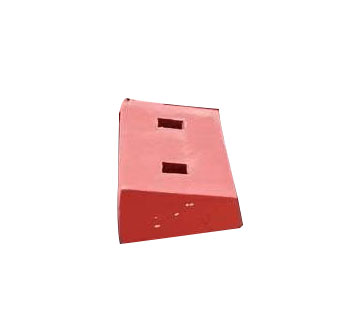
Where Impact Plates Actually Do Their Work
Before choosing a grade, it helps to be clear about what the part is being asked to survive. The job is harsher than most spec sheets admit.
The Second Blow in the Crushing Cycle
Material accelerated by the rotor slams into the apron at high velocity and breaks again on rebound. Impact plates absorb that entire second blow, so their surface hardness and fracture toughness directly control how cleanly stone shatters. Get the geometry right and rock cycles efficiently through the chamber; get it wrong and you simply grind metal away for nothing.
Setting Product Shape and Gradation
Aggregate producers chasing cubical product live or die by apron position. Impact plates form the reflecting surface that governs how many times a stone is struck before it exits, which decides both shape and fines content. As the profile wears, the gap opens and gradation drifts — a good reason to track wear rather than wait for a complaint from the customer.
Protecting the Housing and Rotor Assembly
Behind every apron sits a fabricated housing nobody wants to repair mid-season. Impact plates act as the sacrificial barrier, keeping abrasive rock away from structural steel and shielding the rotor assembly from stray oversize. Replacing a worn liner during a planned stop costs a fraction of cutting and welding a damaged frame in the middle of a production week.
Materials and Casting Routes That Decide Wear Life
Two aprons can look identical on a pallet and behave completely differently after four weeks. The difference is metallurgy and how the casting was made.
Alloy Steel and High Manganese Steel
High manganese steel work-hardens under repeated hammering — soft on arrival, tough where it counts once the machine has run in. Impact plates in this grade suit heavy, high-energy duty and shock-loaded feed. Alloy steel, by contrast, offers a balanced strength-to-toughness profile with good machinability, which many clients prefer for medium-duty crushing and recycling applications.
High Chromium Cast Iron and Composite Options
Where abrasion dominates and impact energy is moderate, high chromium cast iron delivers outstanding hardness and long service intervals. For sites that need both, composite construction gives impact plates a hard working face backed by a tougher body, resisting fracture while still fighting wear. We discuss feed hardness, moisture and throughput before recommending which route pays off.
Lost-Wax, Resin Sand and V-Method Casting
Grade alone isn’t the whole story. Our foundry produces impact plates by lost-wax investment casting, resin sand moulding and the V-method, choosing the process to match part size, tolerance and surface finish. Each route controls dimensional accuracy tightly, so mounting faces, wedge slots and bolt positions land where the drawing says they should — not approximately.
Selection Tips From the Foundry Floor
Here’s the practical advice we give purchasing and maintenance managers who don’t want to gamble on their next order.
Match the Grade to Your Feed, Not the Catalogue
Limestone, granite, river gravel and demolition concrete all wear metal differently. Send us feed type, maximum lump size and daily tonnage, and we’ll suggest impact plates in the grade that gives the best cost-per-tonne rather than the highest hardness number. Over-specifying wastes budget; under-specifying costs downtime. The middle ground is usually where profit lives.
Verify Fit Before Anyone Pours Metal
Most enquiries arrive as a drawing, a worn sample or photographs with a tape measure in shot. Our technical team reconstructs the geometry, confirms thickness and locking details, then sends it back for approval before pattern work begins. One extra confirmation round on impact plates is far cheaper than a casting that refuses to seat inside your chamber.
Plan Spares Around the Whole Machine
Aprons rarely wear alone. Impact plates are usually changed alongside blow bar sets on impact crushers, and many clients add related castings to the same shipment — toggle plate in high manganese steel, dust ring in high manganese or high chromium alloy steel, tension springs in spring steel, high-strength steel wire or carbon steel, alloy steel rack bar, and forged main shaft. One consignment, one shutdown.
Conclusion
Impact plates take the second blow in every impact crusher, shaping product and shielding the housing. Cast from alloy steel, high manganese steel, high chromium cast iron or composite material — and produced by lost-wax, resin sand or V-method moulding — they deliver the fracture resistance that high-load crushing demands.
FAQ
1. What are impact plates made from?
Alloy steel, high manganese steel, high chromium cast iron, or composite construction, selected according to your feed material and impact energy.
2. Which casting process do you use?
Lost-wax, resin sand or the V-method, chosen by part size and tolerance requirement to guarantee dimensional accuracy.
3. Can you copy a worn apron?
Yes. Send the sample, photos or measurements and our engineers rebuild a drawing for your approval before production.
4. Do you supply blow bar as well?
We do — blow bar for impact crushers, plus liners, toggle plate, dust ring and forged main shaft.
5. How long is production?
Standard patterns move quickly; fully customised castings take longer, especially when drawings need several review rounds.
Send Us Your Drawing — We’ll Take It From There
Since the mid-90s, Xian Huan-Tai Technology and Development Co., Ltd. has customised non-standard mechanical parts for mining and engineering machinery buyers worldwide. Thirty years of experience, a production team that owns quality at every stage, and engineers who translate your performance targets into castings that fit first time. Tell us your crusher model and feed conditions, and we’ll come back with a clear quotation and honest schedule: inquiry@huan-tai.org.
References
- Wills, B. A., & Finch, J. A. — Wills’ Mineral Processing Technology
- Campbell, J. — Complete Casting Handbook: Metal Casting Processes, Metallurgy, Techniques and Design
- Gupta, A., & Yan, D. S. — Mineral Processing Design and Operations: An Introduction
- Davis, J. R. (Ed.) — ASM Specialty Handbook: Cast Irons
- Hutchings, I. M., & Shipway, P. — Tribology: Friction and Wear of Engineering Materials
