
Wear plates are the sacrificial liners inside an impact crusher that absorb abrasion before it reaches the housing. When they thin out too quickly, throughput drops and repair bills climb. The fix usually comes down to two things: choosing the right cast material, and getting the casting dimensionally accurate enough to sit properly.
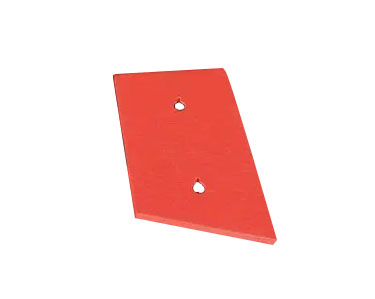
Why Abrasion Eats Liners Faster Than Anyone Budgets For
Premature wear is rarely one problem. It’s normally three or four small ones stacking up until the change-out interval collapses.
Three Wear Mechanisms Working at Once
Inside the chamber, rock scours the surface, strikes it head-on, and grinds fines against it under pressure. Wear plates face sliding abrasion, impact fatigue and gouging simultaneously, which is why a liner that performs brilliantly at one quarry can disappoint at the next. Diagnosing which mechanism dominates is the first honest step toward a longer service life.
Feed Material That Punishes Metal
Silica content, lump size and moisture all shift the wear curve. High-silica granite and river gravel abrade far harder than clean limestone, while damp, sticky feed packs behind liners and accelerates local wastage. We ask clients about feed before quoting, because wear plates specified for soft stone will disappear quickly in an abrasive hard-rock circuit — and nobody wants that surprise.
The Real Cost of Changing Out Too Often
The casting price is the small number. Lost tonnage, crew hours, crane time and a stalled crushing line make up the rest. Every unplanned stop to swap wear plates also risks damage elsewhere in the chamber. Buyers who compare cost-per-tonne rather than unit price almost always end up with a calmer, cheaper season overall.
Material Solutions That Slow the Wear Curve
This is where most abrasion problems get solved. Grade selection isn’t guesswork — it follows directly from what your feed is doing to the metal.
High Manganese Steel for Shock-Heavy Duty
High manganese steel arrives relatively soft and work-hardens under repeated hammering, building a tough skin exactly where the punishment lands. Wear plates in this grade suit high-energy crushing with large, blocky feed, since the core stays ductile and resists cracking. For heavy primary and secondary impact duty, it remains a dependable, well-proven choice.
High Chromium Cast Iron Where Abrasion Rules
When the enemy is scouring rather than shock, high chromium cast iron changes the economics. Its hard carbide structure resists abrasive wear far longer than softer grades, so wear plates hold their profile through extended runs on limestone, recycled concrete and other moderate-impact applications. Many clients report noticeably fewer shutdowns after switching liner grade on the right feed.
Alloy Steel and Composite Construction for Mixed Conditions
Plenty of sites see both abrasion and heavy impact in the same week. Alloy steel offers a balanced strength-to-toughness profile that copes well with varied duty, while composite construction gives wear plates a hard working face bonded to a tougher backing body. That combination delivers excellent resistance to fracture without sacrificing surface life under high-load conditions.
Casting Accuracy and Fit — The Half Most Suppliers Skip
A perfect alloy in a badly made casting still fails early. Fit and soundness matter just as much as chemistry.
Lost-Wax, Resin Sand and V-Method Moulding
Our foundry selects the moulding route to match the part. Lost-wax investment casting handles detailed profiles, resin sand suits larger sections, and the V-method gives clean surfaces on flat liners. Each process is chosen so wear plates come out dimensionally accurate — mounting faces, wedge slots and bolt holes exactly where the approved drawing puts them.
Backing Contact and Mounting Detail
A liner that rocks against its seat hammers itself loose and cracks around the fixings. Flatness and consistent thickness let wear plates transfer load into the structure instead of concentrating it at two contact points. We machine critical faces where required, because good backing contact is often the difference between a full campaign and a mid-season failure.
From Sample or Drawing to Shipment
Most enquiries reach us as a worn liner, a drawing, or photos with tape measurements. Our engineers rebuild the geometry, confirm it with you, then start pattern work. Every batch of wear plates is checked for chemistry, hardness and dimensions, with reports shipped alongside. Repeat patterns move quickly; heavily customised castings take longer, especially when drawings need several review rounds.
Conclusion
Abrasion problems in impact crushers are solved by matching material to feed and insisting on accurate casting. High manganese steel, high chromium cast iron, alloy steel or composite wear plates — produced by lost-wax, resin sand or V-method moulding — deliver the fracture resistance and fit that high-load crushing demands.
FAQ
1. Which material lasts longest?
It depends on your feed. High chromium cast iron excels against abrasion; high manganese steel handles heavy impact better.
2. Can you produce from a worn liner?
Yes. Send the sample, photos or dimensions, and our team reconstructs a drawing for approval before casting.
3. Do you supply other impact crusher parts?
We produce blow bar, liners, forged main shaft, alloy steel rack bar, and dust ring in high manganese or high chromium alloy steel.
4. What inspection do you provide?
Chemical analysis, hardness testing and dimensional checks, with reports shipped with every batch.
5. How is lead time decided?
Standard patterns run faster; custom castings depend on drawing confirmation and process complexity.
Tell Us What’s Wearing Out — We’ll Solve It
Xian Huan-Tai Technology and Development Co., Ltd. has customised non-standard mechanical parts since the mid-90s, serving mining and engineering machinery buyers worldwide. Thirty years of experience, a production team controlling quality at every stage, and engineers who turn your performance targets into castings that fit first time. Send your drawing, sample photo or crusher model, and we’ll reply with a clear quotation and realistic schedule: inquiry@huan-tai.org.
References
- Hutchings, I. M., & Shipway, P. — Tribology: Friction and Wear of Engineering Materials
- Wills, B. A., & Finch, J. A. — Wills’ Mineral Processing Technology
- Davis, J. R. (Ed.) — ASM Specialty Handbook: Cast Irons
- Campbell, J. — Complete Casting Handbook: Metal Casting Processes, Metallurgy, Techniques and Design
- Gupta, A., & Yan, D. S. — Mineral Processing Design and Operations: An Introduction
