
How the undercarriage works is the best place to start if you’re new to wheeled mining equipment. Heavy machines like excavators and mine crawlers can move over rough, uneven ground without falling or losing their grip thanks to the track system. The track plate, which is bolted to each track link and touches the ground, is at the heart of this system. It supports the weight of the machine and sends drive force straight to the ground.
What Makes Up a Mining Machine Track System
The Undercarriage and Its Main Components
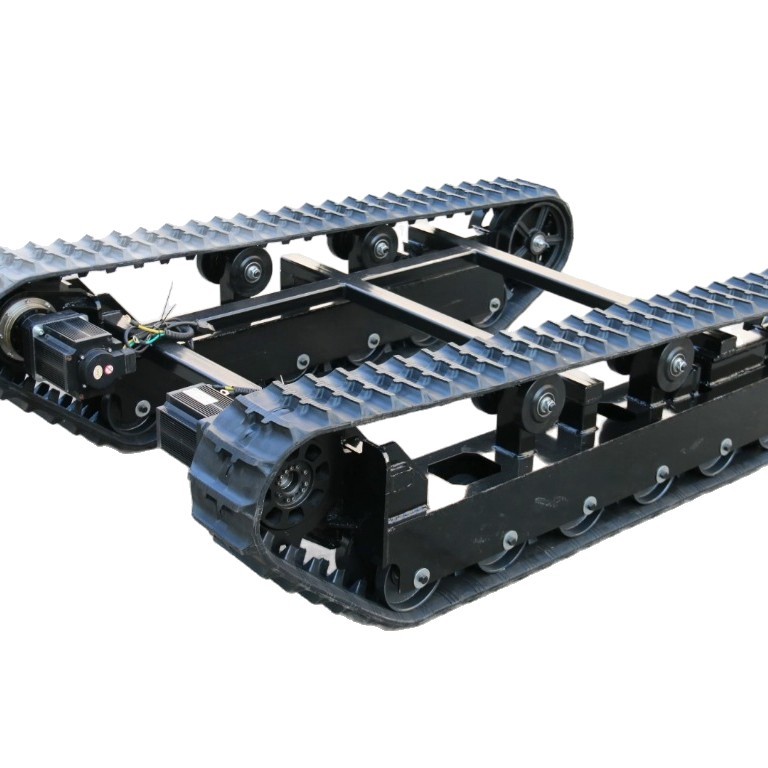
The drive sprocket, idler, upper and lower rollers, track links, and Track Plates are all parts of a tracked chassis that are linked. They work together to make a closed loop that keeps turning as the machine moves. The sprocket moves the chain, the rollers support and guide the frame of the machine, and the Track Plate is where the chain actually touches the ground. Every part does a specific job, and if any one of them breaks, the whole system won’t work as well.
How Track Plates Connect to the Chain
High-strength screws are used to bolt each Track Plate straight onto a pair of track links. The plates spin with the chain as it goes around the sprocket and idler. This makes the flat or grouser-shaped surface that presses against the ground. Both the bolt design and the plate thickness have to be exactly the same as the link system. If you don’t tighten or fit the Track Plate right, it will come loose when it’s loaded, which will throw off the balance and speed up the wear on the underside.
The Role of Grousers in Traction and Stability
The higher bumps on a Track Plate are known as grousers, and they help tracked machines stay on soft or firm ground. The grouser’s height and shape directly affect how well the machine can move and stay in place in mine, where materials can be anything from loose rock to wet clay. Different types of single, double, and triple grouser Track Plates have different trade-offs between grip, ground pressure, and damage to the surface. The right choice relies on the environment and the machine’s use.
Why Track Plate Quality Matters in Mining Operations
Load Capacity and Structural Reliability
Some of the biggest mobile tools in any business is used in mining, and the Track Plate carries a lot of that weight while the machine is running. A well-made plate, made of high-quality cast iron or steel, is very tough and strong. This lets the machine work nonstop in hard underground or open-pit conditions without the plate breaking or deforming. Failure of the structure at the ground-contact area immediately poses risks to safety and production, so the quality of the material must be maintained at all times.
Hydraulic System Compatibility
These days, tracked mining tools have hydraulic drive systems that move the wheels. The Track Plate and the gear that goes with it must stay the same size even when high-pressure hydraulic circuits are working. If they change shape, it can cause the chain to become out of alignment, which puts too much stress on the sprocket teeth and roller flanges. A Track Plate with exact shape and tight specs helps keep the chain’s moving pitch correct, which keeps the hydraulic drive parts from wearing out too quickly from being out of line.
Maintenance Cost and Replacement Practicality
When choosing a Track Plate, one of the most useful things to think about is how easy it is to change in the field. Plates that are easy to take off and put back on cut down on the time a machine has to be shut down for repair, which directly lowers running costs. By choosing the right materials and heat treating them properly, each Track Plate lasts longer before it needs to be replaced, which is something that both buying managers and machine workers look at when they are choosing a provider.
Selecting and Sourcing the Right Track Plate
Matching Plate Specifications to Your Machine
Track Plates are not all the same. The pitch, width, design of pin holes, and grouser layout must all match the type of the machine and the bottom assembly. The most effective way to make sure that replacements or parts for a new build will work is to provide exact specs, preferably from OEM paperwork, a thorough plan, or a real example. A Track Plate that fits right from the start will work better and last longer than one that needs to be changed in the field.
Custom Manufacturing for Non-Standard Requirements
Due to fixes, changes, or old OEM specs, the undercarriages of many mining tools that have been in use for a long time no longer fit the standard catalog measurements. In these situations, the best thing to do is have personalized Track Plates made from customer models or examples. Lead times for custom parts depend on things like how complicated the drawing is, what casting tools are needed, and how the process is confirmed. Simple profiles can go through production pretty quickly, but more complicated geometries or ones that need to be reviewed multiple times for accuracy will naturally take longer.
Inspection Standards Before Delivery
Every Track Plate that leaves the factory should be inspected for its size, stiffness, and surface quality before it leaves. Receiving a part that isn’t up to par costs a lot, not just in new value but also in shipping and downtime for equipment that works in remote mine areas. Manufacturers with a good reputation send inspection records with orders. This gives buying teams the proof they need to keep equipment upkeep logs and back up guarantee or reliability claims when they need to.
Conclusion
The track system of a mining machine is only as effective as its parts. The Track Plate is an important part of both movement and machine life. Knowing how these systems work, from the layout of the base to the materials needed and where to get them, helps equipment workers and buying teams make better choices that cut down on downtime and keep machines working well in tough conditions.
FAQ
Q1: What kind of material are mining-grade Track Plates made of?
Most of the time, high-quality cast iron or steel is used because it is tough, can hold a lot of weight, and doesn’t wear down easily in mine settings.
Q2: How do I find the right Track Plate for my machine?
For your chassis to work, you need the right plate pitch, width, bolt hole design, and grouser type. The most dependable sources are OEM paperwork, models, or a real sample.
Q3: Can Track Plates be changed to fit older or non-standard machines?
To fit machines that no longer have normal stock parts available, custom Track Plates can be made from plans or samples.
Q4: In general, how long does a Track Plate last?
How long something lasts depends on the ground, how much weight is on it, and the quality of the object. If you use the right heat process on your cast steel plates, they will last longer and wear more evenly.
Q5: What’s the difference between 3G Track Plates and 1G Track Plates?
Single grouser plates work better on hard surfaces because they put less pressure on the ground. Triple grouser designs, on the other hand, give you more grip on loose or soft ground. Which option is best for you depends on how you use your computer.
Source Your Track Plates From a Manufacturer You Can Trust
Xian Huan-Tai Technology and Development Co., Ltd. has been making special mechanical parts for mining and industrial tools around the world for more than 30 years. Our skilled production and technical teams make sure that quality is maintained at every stage, from casting and cutting to finishing and final testing. This way, we can be sure that every Track Plate we ship will work as you expect it to. We can help you whether you need regular refills or parts that are made just for you. Send your drawings or inquiry to inquiry@huan-tai.org today.
References
- Caterpillar Inc. (2010). Undercarriage Systems: Application and Maintenance Guide. Caterpillar Service Publications, Peoria, IL. Section on track shoe selection and ground condition matching.
- Peng, S. S. (2006). Longwall Mining (2nd ed.). West Virginia University Press. Coverage of tracked equipment undercarriage systems in underground mining applications.
- Frimpong, S., Hu, Y., & Awuah-Offei, K. (2005). Mechanics of cable shovel-formation interactions in surface mining excavations. Journal of Terramechanics, 42(1), 15–33.
- Bekker, M. G. (1969). Introduction to Terrain-Vehicle Systems. University of Michigan Press. Foundational work on tracked vehicle ground contact mechanics and grouser design.
- Shoop, S. A., Coutermarsh, B., & Diemand, D. (2006). Vehicle Mobility Modeling for Winter Conditions. U.S. Army Cold Regions Research and Engineering Laboratory. Analysis of tracked vehicle traction and track plate performance across terrain types.
