
A bearing housing‘s main job is to keep a bearing firmly in place on a machine by providing a stable, precisely placed seat that supports the moving shaft and transfers pressure to the machine frame. It keeps the bearing in the right place while it’s working, keeps it safe from outside contamination, and lets the bearing be changed without messing up the structure around it. A well-designed frame is a key part of a reliable motor in industrial and mining equipment.
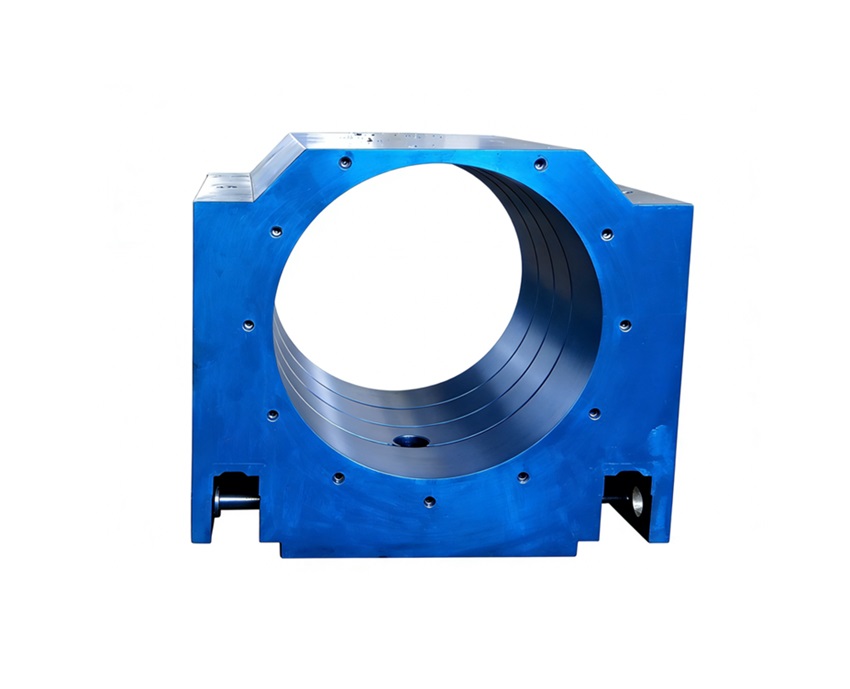
The Core Functions a Bearing Housing Performs
Locating and Supporting the Bearing
The precise hole provided by a bearing housing establishes the bearing’s location in relation to the shaft axis and the rest of the machine. This function of placement is very important; if the bearing is not in the right place, the shaft orientation is thrown off, and the gear or pulley mesh shape changes from what was intended. To make sure the bearing outer ring doesn’t rock, spin, or shift when the machine is working, the housing hole has to be made to very tight width and roundness standards.
Load Transfer From Shaft to Machine Frame
In addition to being used for placement, the bearing housing is what holds the moving shaft to the fixed machine frame. Every force that acts on the shaft goes through the bearing and into the case before it reaches the machine structure. These forces are radial loads from drive belts or gear mesh, axial loads from spiral gears or thrust applications, and dynamic shock loads from quick changes in working conditions. In other words, the housing needs to be stiff enough to support and spread these loads without bending in ways that change the shape of the bearings while they’re working.
Sealing and Contamination Protection
When dust, small particles, water, and other contaminants get into the housing space of spinning equipment used in engineering and mining, they speed up the wear on the bearings. If the bearing housing is made correctly, it has closing features like labyrinth seals, contact seals, or seal gaps that keep dirt and oil inside the bearing hollow. The design of the case has to be able to fit these sealing elements without affecting the accuracy of the bearing seat or making it too hard to change the bearings in the field.
Why Bearing Housing Design and Material Matter for Heavy Equipment
Cast Iron and Cast Steel for Structural Rigidity
The type of material used to make a bearing housing has a direct effect on how well it aligns and supports loads. Cast iron is commonly used because it is good at damping, easy to shape, and strong against compression, all of which are good for both static and moderately dynamic loads. Cast steel has higher tensile strength and is better at withstanding quick impact loads. It is often used in mine crushers, conveyor drives, and heavy-duty gears. Both of these materials can be poured into complicated shapes and then finished by milling to the exact dimensions needed for bearing seats.
Optimized Structural Design for Load Distribution
If the bearing housing is the right size, it will spread the load evenly around the bearing hole and into the fixing feet or flanges. This will stop stress builds up that cause wear breaking over time. This is especially important for places where loads change or are high, like where the body of a jaw crusher eccentric shaft or a conveyor head pulley is used. These places will see millions of load cycles over the course of its life. A good housing has a well-thought-out structure design that keeps the bearing seat geometrically stable for the life of the machine. This keeps the bearing safe from loads it wasn’t made to handle.
Compatibility Across Different Equipment Types
If you change the mounting style (foot-mounted, flange-mounted, or pillow block styles), you can use a well-designed Bearing Housing on a lot of different types of machines. The bearing size and internal shape will stay the same. This flexibility makes it easier for repair teams to keep track of supplies for a variety of machine types. For non-standard or custom equipment, housings can be made based on the exact shaft diameter, bearing type, and fitting shape that is needed. This ensures a perfect fit without the problems that come with trying to use a standard catalog part in a non-standard setting.
Sourcing and Customizing Bearing Housings for Industrial Applications
Matching Housing Specifications to Your Equipment
If you’re looking for a bearing housing for a new machine or to repair an old or broken part, the most important things to check are the bore diameter and accuracy class, the bolt hole design and mounting dimensions, the shaft clearance, the seal gap dimensions, and the overall housing environment. If you need to repair something, it’s best to give the maker a thorough drawing or a real model. This clears everything up and makes sure the new shell goes right the first time, without any extra work.
Custom Manufacturing and Realistic Lead Times
Standard bearing housing shapes can be made in times that are pretty easy to predict. Custom housings take longer to make, especially if they have odd hole shapes, mounting setups that aren’t standard, or material requirements that mean finding metals that aren’t commonly used. This is especially true if the design needs to be reviewed several times before it’s finalized. When you ask for a quote, being clear about when you need the goods by lets the maker know about any problems early on and plan production accordingly.
Quality Inspection Before Delivery
Before being sent out, each bearing housing should have all of its important features measured, including the bore diameter, the flatness of the mounting face, and the position of the bolt holes. For industrial equipment that is used all the time, a building that passes inspection when it arrives means that installation can go ahead without any delays. When suppliers include inspection records with delivery, buying and maintenance teams have the records they need to handle the equipment’s tracking and reliability over its entire life.
Conclusion
The bearing housing is very important because it keeps the bearing clean, moves working loads into the machine frame, and makes sure the bearing is properly located. How well it does these jobs in heavy industrial work depends on the material it’s made of, how it’s designed, and how accurate its measurements are. For mining and industrial equipment that works in tough conditions, getting a good Bearing Housing from a reliable maker is an easy way to make sure the machine will last.
FAQ
Q1: What is the difference between a pillow block and a flanged Bearing Housing?
A pillow block mounts on a flat surface with the shaft running parallel to it, while a flanged housing mounts perpendicular to a wall or plate. Both serve the same fundamental locating and load-transfer functions, just in different mounting orientations.
Q2: What causes a Bearing Housing bore to wear oversize?
Insufficient interference fit, bearing spin due to undersized bore, excessive vibration, or contamination entering the bearing cavity can all cause the housing bore to enlarge over time, requiring sleeve repair or housing replacement.
Q3: Can a Bearing Housing be customized for non-standard shaft diameters?
Yes. Custom housings can be machined to any required bore diameter and tolerance class, along with matching seal groove and mounting geometry for the specific application.
Q4: What material is best for a heavy-load Bearing Housing?
Cast steel is preferred for high-impact, high-load applications. Cast iron suits moderate-load, vibration-damping applications. The choice depends on the magnitude and nature of the loads the housing must handle.
Q5: How do I know when a Bearing Housing needs replacing?
Signs include visible cracking, bore diameter that has worn beyond tolerance, damage to seal grooves, or mounting surfaces that are no longer flat and parallel — any of which compromises bearing location and load transfer.
Let’s Find the Right Bearing Housing for Your Equipment
Xian Huan-Tai Technology and Development Co., Ltd. brings over 30 years of manufacturing expertise to every component we produce. Our production and technical teams manage quality throughout the entire process — from casting and machining to final inspection — and we work closely with customers to confirm specifications before production begins. Whether you need a standard replacement or a fully custom Bearing Housing, we’re ready to help. Send your drawings or inquiry to inquiry@huan-tai.org today.
References
- Harris, T. A., & Kotzalas, M. N. (2006). Rolling Bearing Analysis: Essential Concepts of Bearing Technology (5th ed.). CRC Press. Coverage of bearing housing fit tolerances, load transfer, and housing design requirements for industrial applications.
- Shigley, J. E., & Mischke, C. R. (2001). Mechanical Engineering Design (6th ed.). McGraw-Hill. Section on shaft and housing fits, bearing seat tolerances, and structural requirements for rotating machinery.
- SKF Group. (2014). SKF Bearing Maintenance Handbook. SKF Publishing. Practical guidance on bearing housing inspection, mounting methods, and replacement criteria for industrial equipment.
- Budynas, R. G., & Nisbett, J. K. (2011). Shigley’s Mechanical Engineering Design (9th ed.). McGraw-Hill. Analysis of housing material selection, load distribution, and fatigue considerations for heavy-duty bearing supports.
- Peng, S. S. (2006). Longwall Mining (2nd ed.). West Virginia University Press. Section on drivetrain component requirements — including bearing housings — for continuous mining machinery operating under high-load underground conditions.
