
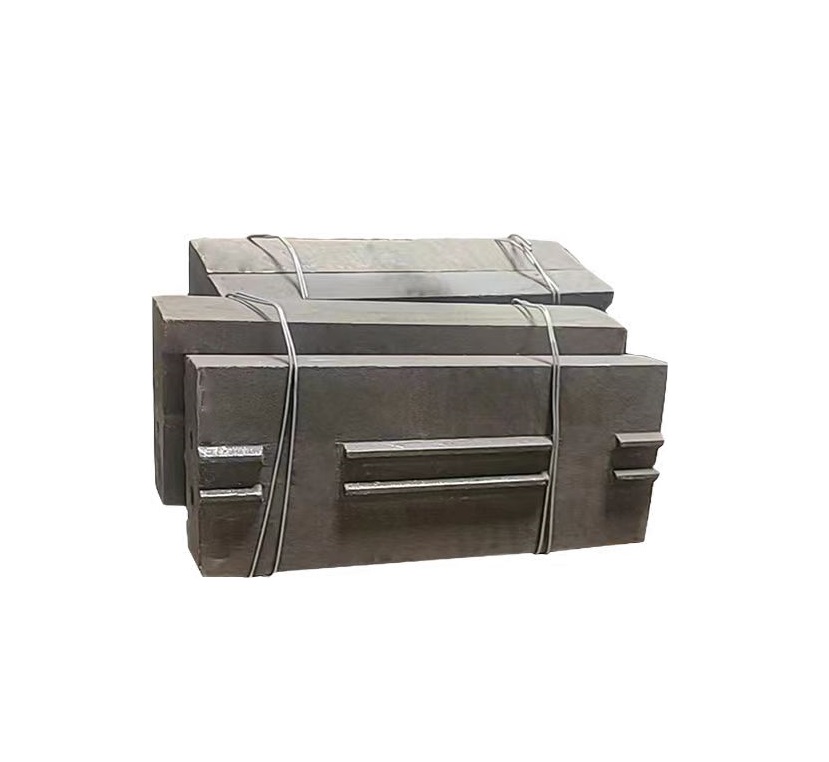
Selecting durable blow bars is one of the smartest ways to boost your mining impact crusher’s output and cut running costs. Blow bars take the full force of high-speed impact against hard ore, so their material, casting quality, and application match determine how long they last. This guide covers the essentials for choosing blow bars that truly perform. As reaction-side components on impact crushers, blow bars operate under relentless load. Making the right choice from the start saves money and prevents avoidable downtime throughout your crushing operation.
What Material Should Durable Blow Bars Be Made Of?
High Manganese Steel for Shock Absorption
High manganese steel gives blow bars exceptional toughness because the surface work-hardens under impact while the core stays ductile. This means the bars absorb heavy blows without cracking. For mining operations with high-impact feed, blow bars cast from high manganese steel offer excellent resistance to fracture and impact force, delivering dependable performance in high-load, high-strength crushing conditions day after day.
Alloy Steel for Versatile Duty
Alloy steel blow bars are a good balance of hardness and toughness, which lets them work with a wide range of feed types. They don’t wear down easily and can handle quick shocks that would break more fragile materials. When working with mixed ore or ore that is only slightly rough, alloy steel blow bars last a long time and do their job well without sacrificing impact power.
High-Chromium Cast Iron for Abrasion
High-chromium cast iron gives blow bars better strength and wear protection for mine feed that is very rough. Their microstructure is very tough, so they don’t wear away as easily as softer grades. Composite blow bars have a hard cast iron face and a tough backing. This makes them resistant to wear and strong against impact, so they last longer in the roughest mining environments where abrasion is the main problem.
How Does Casting Quality Affect Blow Bar Performance?
Lost-Wax Casting for Accuracy
With the lost-wax method, blow bars are made that are very accurate in terms of size and have smooth surfaces. Accurate fitting makes sure that it fits securely on the rotor and stays balanced at high speeds. Choosing lost-wax cast blow bars lowers shaking and uneven wear, making the crusher run more easily and giving each bar in the set more time to do its job.
Resin Sand Casting for Integrity
Resin sand casting delivers robust blow bars with strong structural integrity, ideal for the larger, heavier bars mining crushers demand. The controlled process limits internal defects that could trigger early failure. Blow bars produced this way combine dependable strength with consistent dimensions, offering a practical, reliable choice for heavy-duty ore crushing under continuous load.
V-Method Casting for Consistency
The V-method gives blow bars clean finishes and excellent batch-to-batch repeatability. This matters when replacing a full set, since matched bars keep the rotor balanced. Selecting blow bars cast with the V-method ensures every piece meets the same accuracy standard, supporting even wear and stable, predictable crusher operation over time.
How Do You Match Blow Bars to Mining Conditions?
Evaluating Ore Hardness and Abrasiveness
Begin by assessing your ore. Highly abrasive rock calls for blow bars with maximum wear resistance, while impact-heavy feed rewards toughness. Matching material grade to ore characteristics prevents premature failure. Correctly specified blow bars strike the right balance between hardness and fracture resistance, delivering efficient crushing without cracking or wearing out ahead of schedule.
Accounting for Rotor Speed and Load
Higher rotor speeds and heavier feed loads intensify stress on every set of blow bars. Under these conditions, choosing bars proven to resist fracture and impact force is critical. Well-cast blow bars designed for high-load, high-strength environments hold their profile and balance, protecting throughput and the surrounding machinery from vibration damage.
Confirming Fit and Dimensional Precision
Even premium material underperforms if blow bars do not fit correctly. Accurate dimensions ensure secure locking, proper balance, and smooth rotation. Blow bars cast precisely to your rotor drawings install quickly and run stably, reducing vibration-related wear and helping the entire impact crusher deliver consistent, reliable results across every shift in demanding mining service.
Conclusion
Selecting durable blow bars means matching material—high manganese steel, alloy steel, or high-chromium cast iron—to your ore, ensuring precise casting, and confirming accurate fit. This delivers strong impact resistance, longer life, and lower crushing costs.
FAQ
Q1: Which material makes the most durable blow bars?
It depends on ore. High manganese steel suits high impact, alloy steel offers versatility, and high-chromium cast iron excels with abrasive feed.
Q2: Why does casting method matter for blow bars?
Methods like lost-wax, resin sand, and V-method ensure dimensional accuracy, improving fit, balance, and overall blow bar service life.
Q3: How do I match blow bars to my mining crusher?
Evaluate ore hardness, rotor speed, and load, then select a material grade and size suited to those operating conditions.
Q4: Can blow bars handle high-load mining environments?
Yes. Properly cast blow bars offer excellent resistance to fracture and impact force, ideal for high-load, high-strength crushing.
Q5: How long does producing custom blow bars take?
Lead times vary. Custom bars may take longer when drawings need repeated confirmation or specific casting processes are required.
Partner With Huan-Tai for Reliable Mining Wear Parts
Need blow bars engineered for your toughest ore? At Xian Huan-Tai Technology and Development Co., Ltd., our 30 years of industry experience, dedicated production team, and expert engineers deliver customized castings backed by full-process quality control. We give mining and machinery buyers the stability, consistency, and on-time delivery they rely on. Get in touch today for a tailored quote and let our specialists power up your crushing line—email inquiry@huan-tai.org.
References
- Gupta, A., & Yan, D. S. Mineral Processing Design and Operations: An Introduction.
- Wills, B. A., & Finch, J. A. Wills’ Mineral Processing Technology.
- Campbell, John. Complete Casting Handbook: Metal Casting Processes, Metallurgy, Techniques and Design.
- Davis, J. R. ASM Specialty Handbook: Cast Irons.
- Napier-Munn, T. J., Morrell, S., Morrison, R. D., & Kojovic, T. Mineral Comminution Circuits: Their Operation and Optimisation.
