
In jaw crusher design, the Eccentric shaft and the standard shaft serve fundamentally different mechanical roles. A standard shaft transmits torque in a straight rotational line, while an eccentric shaft converts that rotation into the oscillating motion of the movable jaw — the action that actually breaks rock. This distinction is what makes the eccentric shaft the functional core of every jaw crusher. Understanding the difference between the two shaft types helps maintenance teams, procurement managers, and equipment engineers make better decisions about crusher components, service intervals, and replacement strategy.
How the Two Shaft Types Differ in Function
The Eccentric Shaft Drives the Crushing Motion
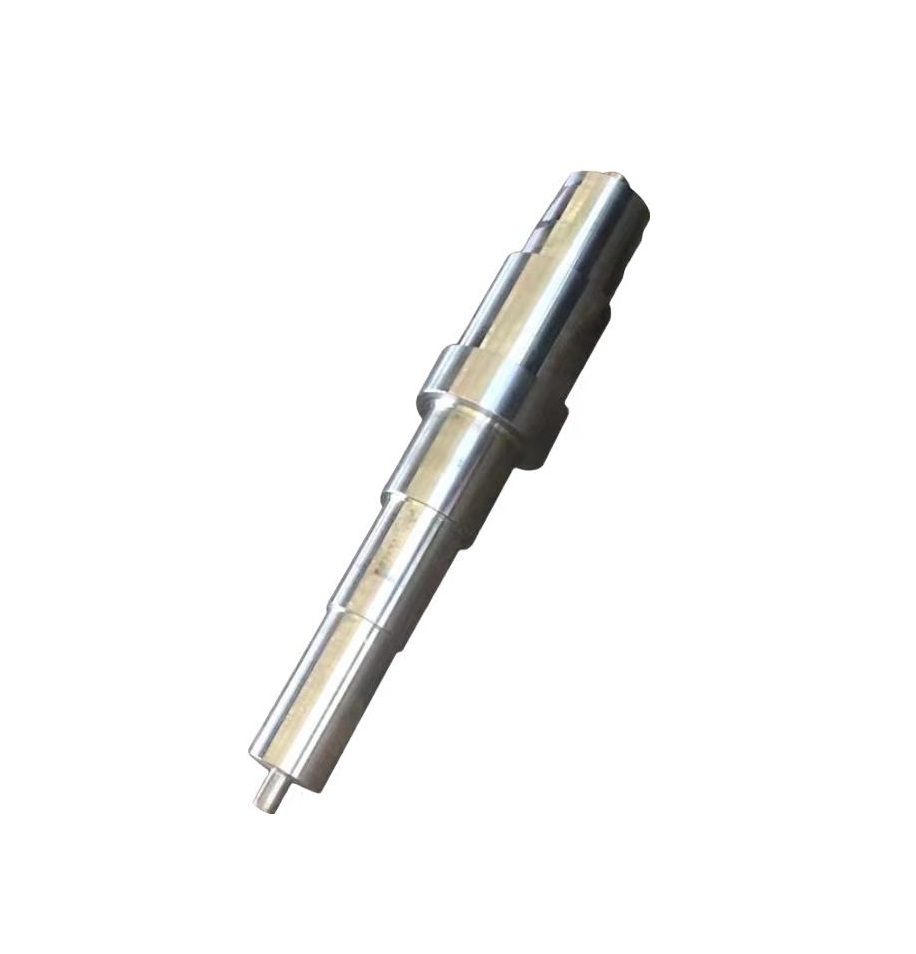
The eccentric shaft in a jaw crusher is machined with an offset bore, meaning its rotational centerline is deliberately displaced from its geometric centerline. As it rotates, this offset translates into a back-and-forth motion of the movable jaw, generating the compression force that breaks feed material. Every ton of rock crushed passes through a cycle driven directly by the eccentric shaft. Without this offset geometry, there is no crushing action — it is the defining crusher component in the jaw mechanism.
The Standard Shaft Carries Torque Without Offset
A standard shaft, by contrast, runs true to its rotational axis and is used in applications where straight torque transmission is needed — drive pulleys, conveyor systems, and auxiliary equipment being typical examples. In the context of jaw crushers, standard shafts appear in the drive train outside the crushing chamber itself. They are simpler to manufacture and easier to replace, but they cannot replicate the motion-generating function of the eccentric shaft. Confusing the two in a parts procurement context leads to specification errors that delay maintenance and increase downtime.
Load Profile and Material Requirements Differ Significantly
Because the eccentric shaft carries the full reactive force of each crushing stroke, its material and manufacturing requirements far exceed those of a standard shaft. Huan-Tai’s eccentric shafts are produced with high strength and rigidity to withstand these reactive crushing forces, manufactured from high manganese steel and high carbon steel for impact resistance and extended service life. Standard shafts in crusher components face lower and more predictable loads, and are typically produced from alloy steel or carbon steel suited to straightforward torque transmission.
Why Eccentric Shaft Quality Directly Affects Crusher Performance
Dimensional Accuracy Determines Motion Consistency
The offset geometry of the eccentric shaft must be held to precise dimensional tolerances. Any deviation in the offset distance changes the stroke length of the movable jaw, altering the crusher’s output gradation and throughput capacity. For mining and engineering operations where product specification compliance is critical, an eccentric shaft that has worn out of tolerance — or was poorly manufactured from the start — quietly degrades crusher performance before any obvious mechanical symptom appears. Tight dimensional control during manufacturing is what separates a reliable eccentric shaft from one that causes chronic setting drift.
Material Toughness Extends Service Life in Hard Rock Applications
Hard rock crushing — granite, basalt, iron ore, and similar materials common in mining and quarrying — places extreme demands on the eccentric shaft through both impact force and corrosive exposure. Eccentric shafts cast from high manganese steel develop work-hardening properties under repeated impact loading, while good corrosion resistance protects the shaft surface in wet or chemically active ore environments. These material properties are built into the shaft during manufacturing and cannot be added after the fact, which is why material specification matters as much as dimensional accuracy when sourcing replacement crusher components.
Forging vs Casting in Shaft Manufacturing
It is worth noting that the main shaft of a jaw crusher — which includes the eccentric shaft — is produced using a forging process, not casting. Forging aligns the grain structure of the steel along the shaft’s length, producing superior fatigue resistance and toughness compared to a cast equivalent. This manufacturing distinction is significant for high-load crusher components because fatigue failure under cyclic loading is the primary failure mode for shafts in this application. When evaluating eccentric shaft suppliers, confirming that forging is used for shaft production is a sound technical checkpoint.
Selecting the Right Eccentric Shaft for Your Jaw Crusher
Matching the Shaft to the Crusher Model and Application
Not all jaw crushers use the same eccentric shaft geometry. Offset distance, journal diameter, shaft length, and keyway configuration all vary by crusher model and manufacturer. For standard production crushers, replacement eccentric shafts are often available within a reasonable lead time. For older machines, non-standard configurations, or crusher components from less common manufacturers, customized production from a supplier capable of working to drawings or model specifications is the most reliable path to a correct fit.
Procurement Lead Times for Customized Shafts
Customized eccentric shafts require drawing confirmation, material procurement, forging, and machining before delivery — a process that takes longer than sourcing an off-the-shelf part. Lead times vary depending on the complexity of the specification and the extent of drawing review required between the customer’s engineering team and the manufacturer. For planned maintenance programs, initiating procurement of customized crusher components well ahead of the scheduled shutdown window avoids the production risk of waiting on a critical part.
Supplier Capability and Quality Verification
For procurement managers and production engineers evaluating eccentric shaft suppliers, the key capability markers are material certification, forging process confirmation, dimensional inspection records, and the ability to produce to customer drawings. These are standard quality assurance checkpoints that protect the equipment investment and give operations confidence that the replacement eccentric shaft will perform to specification from the first day in service.
Conclusion
The eccentric shaft and the standard shaft are not interchangeable — they serve different mechanical purposes and carry very different load profiles. In jaw crushers, the eccentric shaft is the critical crusher component that makes crushing possible, and its material quality, dimensional accuracy, and manufacturing process determine how reliably the machine performs. Choosing the right shaft, sourced from a capable supplier, is a direct investment in crusher uptime and output consistency.
FAQ
Q1: What makes an eccentric shaft different from a standard shaft?
The eccentric shaft has an offset bore that converts rotation into oscillating jaw motion. A standard shaft transmits torque in a straight rotational line and cannot generate this motion.
Q2: How is the eccentric shaft manufactured?
It is produced using a forging process, which aligns the steel grain structure for superior fatigue resistance — an important advantage over casting for high-load crusher components.
Q3: What materials are used for eccentric shafts?
High manganese steel and high carbon steel are common choices, providing the strength, toughness, and corrosion resistance required for hard rock crushing applications.
Q4: How do I know when the eccentric shaft needs replacing?
Increased vibration, inconsistent jaw stroke, abnormal bearing heat, and changes in output gradation are the most common indicators of eccentric shaft wear or damage.
Q5: Can eccentric shafts be customized for non-standard jaw crushers?
Yes. Suppliers with forging and machining capabilities can produce eccentric shafts to customer drawings, though lead times depend on specification complexity and drawing confirmation.
Looking for a Reliable Eccentric Shaft Supplier?
At Xian Huan-Tai Technology and Development Co., Ltd., we have 30 years of experience manufacturing customized non-standard mechanical parts for mining, engineering, and heavy equipment industries. Our technical team works directly from your drawings or equipment model, and our production and inspection teams ensure every eccentric shaft meets your performance and quality requirements. Whether standard or fully customized, we deliver crusher components you can depend on. Contact us at inquiry@huan-tai.org.
References
- Wills, B. A., & Finch, J. A. (2016). Wills’ Mineral Processing Technology (8th ed.). Butterworth-Heinemann. Chapter 5: Jaw Crusher Mechanics — Eccentric Shaft Design, Motion Generation, and Wear Part Management.
- Gupta, A., & Yan, D. S. (2006). Mineral Processing Design and Operations: An Introduction. Elsevier. Chapter 6: Primary Crushing — Drive Shaft and Eccentric Assembly in Jaw Crusher Design.
- Metso Outotec Engineering Team (Ed.) (2020). Crushing and Screening Handbook (6th ed.). Metso Corporation. Section 3: Jaw Crusher Components — Eccentric Shaft Specification, Replacement Criteria, and Maintenance Practice.
- Bearman, R. A., & Briggs, C. A. (1996). The active use of crushers to control product requirements. Minerals Engineering, 9(8), 849–860.
- Lewis, F. M., Coburn, J. L., & Bhappu, R. B. (1976). Comminution: A Guide to Size-Reduction System Design. Society of Mining Engineers of AIME. Section on eccentric drive shaft mechanics and material selection for jaw crusher primary crushing applications.
