
The most frequent and expensive problem in breaking processes is jaw plate failure. Every turn, the jaw plate is put through a lot of contact and compression forces. If it breaks early, either by cracking, wearing out quickly, or not fitting properly, it stops production and could damage more expensive parts of the crusher. Any mine, drilling, or heavy engineering job that needs to keep running smoothly needs to know why jaw plates break and take the right steps to avoid that happening again.
Common Reasons Why Jaw Plates Fail Prematurely
Wrong Material Grade for the Application
Using a material grade that isn’t right for the feed material is one of the main reasons why jaw plates break early. A jaw plate made of regular high manganese steel works well on fairly rough rock, but it goes out faster than thought when used with very hard or high-silica coal. Instead of using a general standard, choosing jaw plate material based on the real hardness and abrasiveness of the feed makes them last a lot longer.
Poor Casting Quality and Internal Defects
Even if the jaw plate looks fine on the outside, it may still break soon after it is cast if the quality is bad. Weak spots that crack when hit over and over again are caused by internal gaps, uneven carbon distribution, or different levels of stiffness across the plate. To make a good jaw plate, you need to carefully watch over the melting and pouring process, make sure the metal gets the right heat treatment, and check the plate carefully after it has been cast. Before a jaw plate leaves the forge, it should always be tested for hardness and looked at to see if there are any surface flaws.
Improper Installation and Fitment
If the jaw plate is not put in correctly, it will break quickly, even if it is well-made. When the plate is mounted too loosely, it can move around while it is being used, putting more stress on the fixing points and speeding up wear along the edges. The jaw plate and the crusher frame move slightly when they are loaded because there are gaps between them. This ruins both the plate and the frame’s sitting area over time. It’s basic but important that the fitting is done right, with all the screws tightened to the right force and full touch across the back of the plate.
How Material Selection Prevents Jaw Plate Failure
High Manganese Steel: Work-Hardening Under Impact
Jaw plates made of high manganese steel are most often used in basic breaking because they can get harder with use. Although the core stays tough, the top gets harder as it takes hits from rocks. Because it strengthens itself, it works really well in jaw breakers that process basalt, limestone, and iron ore. It also resists rusting well, which is important in hot mines or when working long shifts handling wet ore.
High Carbon Steel and Alloy Steel for Demanding Conditions
When working with harder materials or a lot of them at once, high carbon steel and alloy steel jaw plate grades are better at resisting wear than normal manganese grades. These materials are made to be very strong and stiff, so the jaw plate can handle the force of fragmentation without deforming or cracking even when it’s loaded and unloaded many times. Alloy steel jaw plates keep their shape longer, which is important in engineering and mining where regular crusher gap sets are important.
Matching Plate Profile to Feed Characteristics
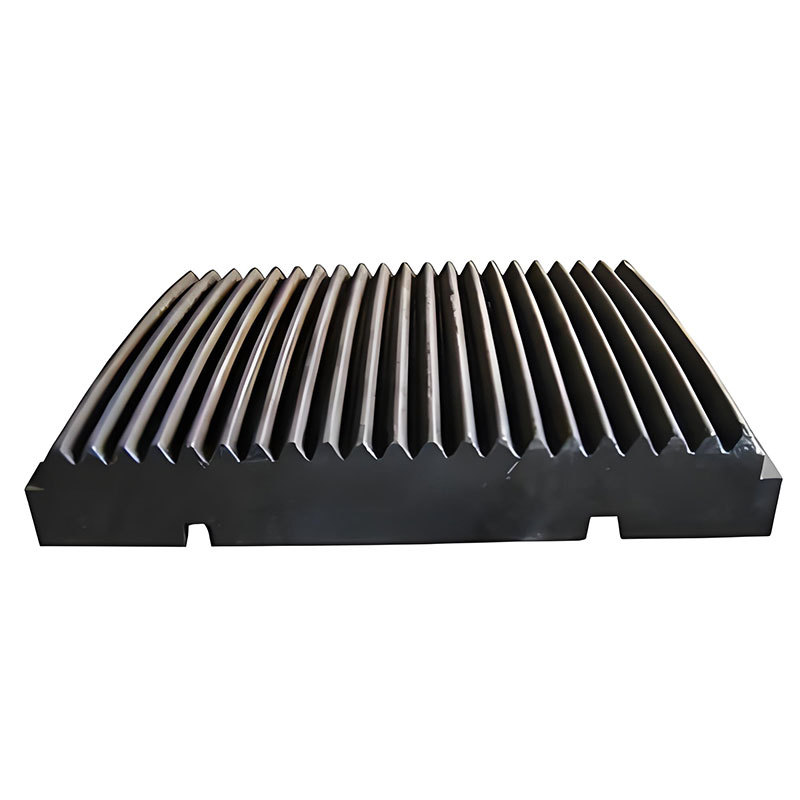
Just having the right type of material isn’t enough; the feed material must also fit the jaw plate, too. Profiles with ridges are better at breaking up hard, blocky rock, while profiles with a smooth surface are better at preventing packing in clay- or stick-filled feeds. If you pick the wrong shape, the wear patterns will be random, and output will go down. When the crusher is set up in a way that isn’t standard, a custom jaw plate shape that is made to fit the feed type and crusher design works much better than a standard one.
Preventive Practices to Extend Jaw Plate Service Life
Regular Wear Monitoring and Rotation
Maintenance teams can plan replacements for jaw plates before they break by keeping track of how much they wear at regular times. Checking the wear level at several locations on the plate’s surface shows uneven wear patterns that point to problems with alignment or feed distribution. Rotating the jaw plate, or turning it end-for-end when one part is more worn, is a useful way to get the most use out of each plate and cut down on how often they need to be replaced completely in mining operations.
Controlling Feed Size and Avoiding Uncrushable Material
Some of the main reasons why jaw plates break suddenly are feed and tramp metal that are too big. When something bigger than the crusher’s rated feed hole goes into the chamber, it causes a lot of stress in one place that not even a high-quality jaw plate can handle without breaking. Putting in a grizzly screen before the jaw crusher to get rid of over-sized materials and a tramp release device saves the jaw plate and the larger crusher assembly from shock loading and unexpected downtime.
Sourcing Jaw Plates with Full Quality Documentation
Jaw plate failure can be avoided from the time they are bought. When buyers buy from a company that gives them material certificates, hardness test results, and records of measurement inspections, they can be sure that every jaw plate meets the requirements before it is put to use. For custom or non-standard jaw plate orders, making sure that all the plans are approved before production starts lowers the chance that the plates won’t fit properly when they arrive. Custom parts can have different delivery times based on how complicated the drawing is and what the process needs. That’s why it’s always best to plan ahead.
Conclusion
Jaw plate failure is almost never a mistake; instead, it is typically caused by a mismatch between the material grade, plate shape, feed conditions, or fitting technique. Crushing operations can greatly cut down on unplanned downtime and increase the useful life of all jaw plates by figuring out why problems happen and following a structured method for choosing, installing, and maintaining equipment.
FAQ
What makes the jaw plate break while it’s being used?
Cracking generally happens because the casting isn’t good enough, the material grade isn’t right for the feed hardness, or there is a quick contact from material that is too big or can’t be crushed entering the crusher chamber.
How do I know when to get a new jaw plate?
Check the wear level often and keep an eye out for changes in the regularity of the product size. A big drop in plate thickness at the breaking zone or cracks that can be seen on the surface are clear signs that the plate needs to be replaced.
Does rotating the jaw plate really make it last longer?
Yes. By turning the jaw plate from end to end when one part is worn out more than the other, the load is spread out and the less-worn part can be used, which essentially doubles the plate’s useful life.
Can a jaw plate be made to fit a crusher frame that isn’t standard?
Yes. A company that can both cast and machine can make a unique jaw plate based on your plans. Giving exact measurements and material details up front cuts down on wait time and prevents fitting problems.
What kinds of quality checks should a jaw plate seller do?
At the very least, the material must be tested for toughness, compared to engineering plans to make sure it fits, inspected visually for flaws in the casting, and given a chemical makeup certificate. Every package should have these papers with it.
Work with a Jaw Plate Supplier Who Gets It Right the First Time
We at Xian Huan-Tai Technology and Development Co., Ltd. have been making special, non-standard mechanical parts for heavy industry, mining equipment, and technical tools for more than 30 years. Our technical and production teams make sure quality at every step, from choosing the raw materials to the final check, so you get a jaw plate that fits well, works well, and lasts a long time. Send us your part specs or plans right now, and we’ll figure it out. Reach us at inquiry@huan-tai.org.
References
1. Wills, B. A., & Finch, J. A. (2016). Wills’ Mineral Processing Technology: An Introduction to the Practical Aspects of Ore Treatment and Mineral Recovery (8th ed.). Butterworth-Heinemann.
2. Lindqvist, M., & Evertsson, C. M. (2003). Liner wear in jaw crushers. Minerals Engineering, 16(12), 1173–1181.
3. Metso Outotec. (2021). Crushing and Screening Handbook (6th ed.). Metso Outotec Corporation.
4. Bearman, R. A., Briggs, C. A., & Kojovic, T. (1997). The application of rock mechanics parameters to the prediction of comminution behaviour. Minerals Engineering, 10(3), 255–264.
5. Gupta, A., & Yan, D. S. (2006). Mineral Processing Design and Operations: An Introduction. Elsevier Science.
