
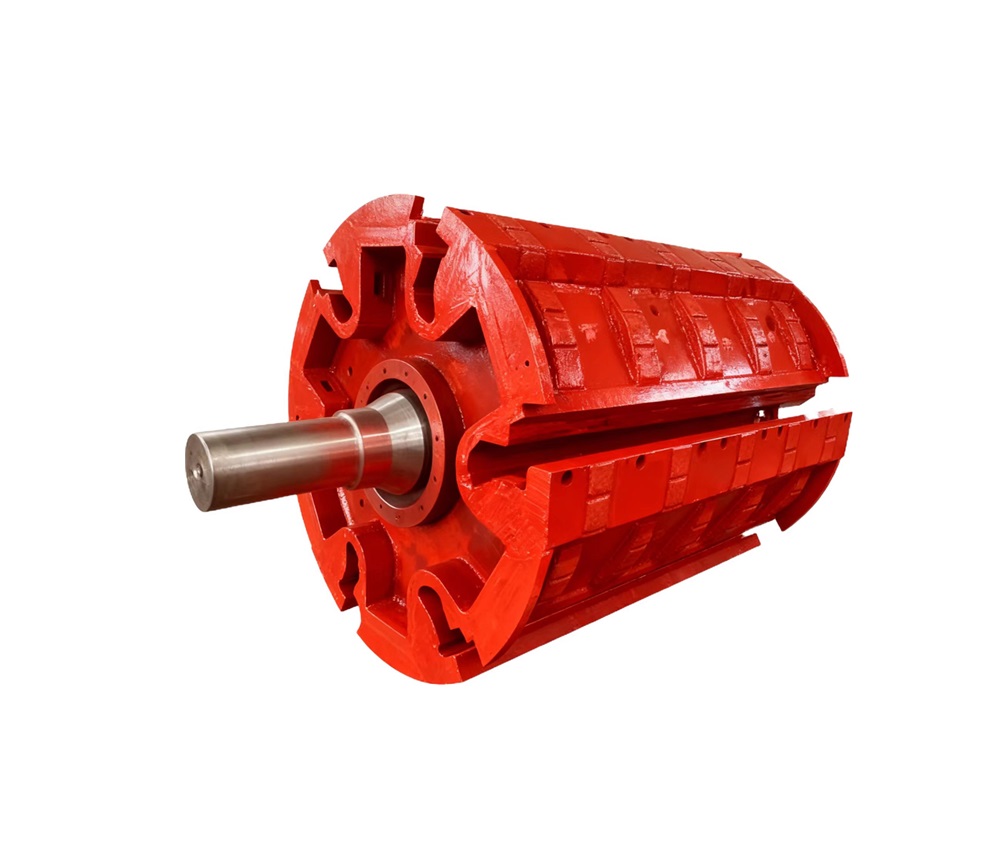
The rotor is the mechanical heart of a hammer crusher. It carries the hammer heads, transmits the crushing force, and endures constant high-impact loading in some of the harshest operating environments in mining and engineering. When the rotor is damaged — whether through imbalance, wear, fatigue, or improper maintenance — the entire crushing circuit suffers. Understanding how to protect the rotor is not just a maintenance question; it is a production continuity and cost management priority for any operation relying on hammer crushing equipment.
Recognize the Root Causes of Rotor Damage Early
Unbalanced Hammer Head Wear
One of the most common causes of rotor damage is uneven hammer head wear. As hammer heads degrade at different rates — due to variations in feed material or mounting position — the rotor develops dynamic imbalance. This imbalance puts cyclic stress on the rotor disc, shaft, and bearings. Monitoring hammer head wear regularly and rotating or replacing heads in matched sets keeps the rotor running in balance and extends its service life significantly.
Feed Material That Exceeds Design Parameters
The rotor is designed for a defined feed size and material hardness range. When oversized rocks, metal tramp, or excessively hard material enters the crusher, the impact energy transmitted through the hammer heads to the rotor disc and shaft far exceeds design limits. For mining and quarry operations, installing a grizzly screen or magnet before the crusher inlet is a practical and cost-effective way to protect the rotor from sudden overload events that can cause cracking or deformation.
Fatigue Accumulation from Deferred Maintenance
Rotor damage rarely happens without warning. Micro-cracks, bearing wear, and loose hammer pins accumulate over time when routine inspection is skipped. In high-production mining or engineering applications, a structured maintenance interval — covering hammer head tightness, rotor disc inspection, and shaft condition — catches developing problems before they become failures. The rotor’s main shaft is produced using a forging process, which gives it superior fatigue resistance, but no forged component is immune to damage from prolonged neglect.
Choose the Right Hammer Heads to Protect the Rotor
Bimetallic Composite Hammer Heads Reduce Shock Transmission
The specification of hammer heads has a direct influence on how much shock energy reaches the rotor. Huan-Tai’s customizable bimetallic composite hammer heads are engineered with a hard, wear-resistant striking face and a tough, impact-absorbing handle. This design absorbs a significant portion of each impact locally, rather than transmitting it fully into the rotor disc. The result is less fatigue loading on the rotor over time — a practical solution for operations running coarser or harder feed materials.
Structural Design That Delivers Uniform Crushing Force
Beyond material selection, the geometry of the hammer head affects how load is distributed across the rotor. An optimized structural design ensures that crushing force is applied more evenly per revolution, avoiding the sharp load spikes that accelerate rotor wear. Huan-Tai’s hammer heads are designed to produce more uniform particle size while reducing the peak forces acting on the rotor — a benefit that shows up as longer intervals between rotor inspections and lower maintenance costs over the equipment lifecycle.
Compatibility Across Equipment Types
A hammer head that does not seat correctly on the rotor pin creates localized stress concentrations that damage both the hammer and the rotor disc over time. Huan-Tai produces hammer heads compatible with a wide range of hammer crusher models used in engineering, mining, and aggregate processing. When sourcing replacement hammer heads — particularly for older or non-standard equipment — dimensional accuracy and material certification from the supplier are essential to protect the rotor from installation-related damage.
Establish Operational Practices That Extend Rotor Life
Controlled Start-Up and Shutdown Procedures
How the crusher is started and stopped matters more than most operators realize. Cold starts with full load, or sudden stops under load, create thermal and mechanical shock in the rotor assembly. A controlled start-up sequence — beginning with an empty chamber before introducing feed — reduces the peak torque the rotor must absorb at startup. Similarly, allowing the rotor to run clear before shutdown prevents material compaction around the hammer heads, which can cause uneven loading at the next start.
Scheduled Inspection of Rotor Discs and Pins
Rotor discs and hammer pins are wear points that should be part of any structured inspection program. Disc cracking, pin elongation, and hammer seat wear are early indicators of impending rotor failure. In mining applications where production runs continuously, borescope inspection during scheduled maintenance windows can identify disc fatigue before visible cracking develops. Catching these signs early allows planned replacement rather than emergency repair — which, for customized rotor components, can involve a lead time that depends on drawing confirmation and process complexity.
Monitoring Vibration as a Real-Time Diagnostic Tool
Vibration monitoring is one of the most accessible and effective tools for detecting rotor problems before they escalate. A sudden increase in vibration amplitude — especially at rotor frequency — typically indicates hammer imbalance, a broken hammer head, or early bearing failure. For larger mining and engineering operations, continuous online vibration monitoring provides the earliest possible warning. Even for smaller repair companies, periodic manual vibration checks with a handheld analyzer offer meaningful protection at low cost.
Conclusion
Preventing hammer crusher rotor damage is a combination of the right components, consistent maintenance discipline, and smart operational habits. Using well-engineered hammer heads, respecting feed material limits, and monitoring the rotor’s condition proactively are the most effective strategies. When these practices are followed, the rotor delivers reliable performance and a longer service life with fewer unplanned interruptions.
FAQ
Q1: What is the main function of the rotor in a hammer crusher?
The rotor carries the hammer heads and transmits crushing force to the feed material. Its balance, structural integrity, and rotational speed directly determine the crusher’s output capacity and product gradation.
Q2: What causes rotor imbalance in hammer crushers?
Uneven hammer head wear, broken hammers, or incorrect hammer replacement are the most common causes. Regular inspection and replacing hammer heads in matched sets helps maintain rotor balance.
Q3: How is the rotor shaft manufactured?
The main shaft of a hammer crusher rotor is produced using a forging process, which provides superior fatigue resistance and toughness compared to casting.
Q4: Can rotor components be customized for non-standard crushers?
Yes. Manufacturers with casting, forging, and machining capabilities can produce rotor-related components to customer drawings. Lead times vary depending on design confirmation and process requirements.
Q5: How often should the rotor be inspected?
Inspection frequency depends on operating conditions and feed material. In high-intensity mining applications, monthly visual inspection and quarterly detailed inspection of discs, pins, and hammer seats is a reasonable baseline.
Partner With a Manufacturer That Understands Heavy Equipment
At Xian Huan-Tai Technology and Development Co., Ltd., we have 30 years of hands-on experience supplying customized mechanical parts for mining, engineering, and heavy equipment industries. Our production and inspection teams manage quality at every stage, and our technical team works directly with your engineers to meet exact performance requirements. Whether you need standard or non-standard rotor components, we are ready to help. Contact us at inquiry@huan-tai.org.
References
- Wills, B. A., & Finch, J. A. (2016). Wills’ Mineral Processing Technology (8th ed.). Butterworth-Heinemann. Chapter 5: Comminution — Crushing Equipment and Wear.
- Gupta, A., & Yan, D. S. (2006). Mineral Processing Design and Operations: An Introduction. Elsevier. Chapter 6: Impact Crushing — Rotor Design and Maintenance Considerations.
- King, R. P. (2001). Modeling and Simulation of Mineral Processing Systems. Butterworth-Heinemann. Section on rotor dynamics and hammer wear modeling.
- Metso Outotec Engineering Team (Ed.) (2020). Crushing and Screening Handbook (6th ed.). Metso Corporation. Section 5: Hammer Crusher Components — Rotor Assembly, Maintenance, and Replacement.
- Cleary, P. W., & Sinnott, M. D. (2015). Simulation of particle flows and breakage in crushers using DEM. Minerals Engineering, 74, 130–149. Paul W. Cleary & Matthew D. Sinnott, CSIRO Computational Informatics.
