
Whether importing jaw stock parts works or not depends on a few things: how strong the casting is and how well it absorbs fragmentation reaction forces; the steel grade used; how well it fits your exact model and drawing; and how well the supplier keeps their quality control and delivery promises over a long supply chain. If you think about all of these things before you send a deposit, the jaw stock that comes will be ready to install and will last for a long time.
Factor One: The Metal That Decides Jaw Stock Life
Strength and rigidity to absorb reaction forces
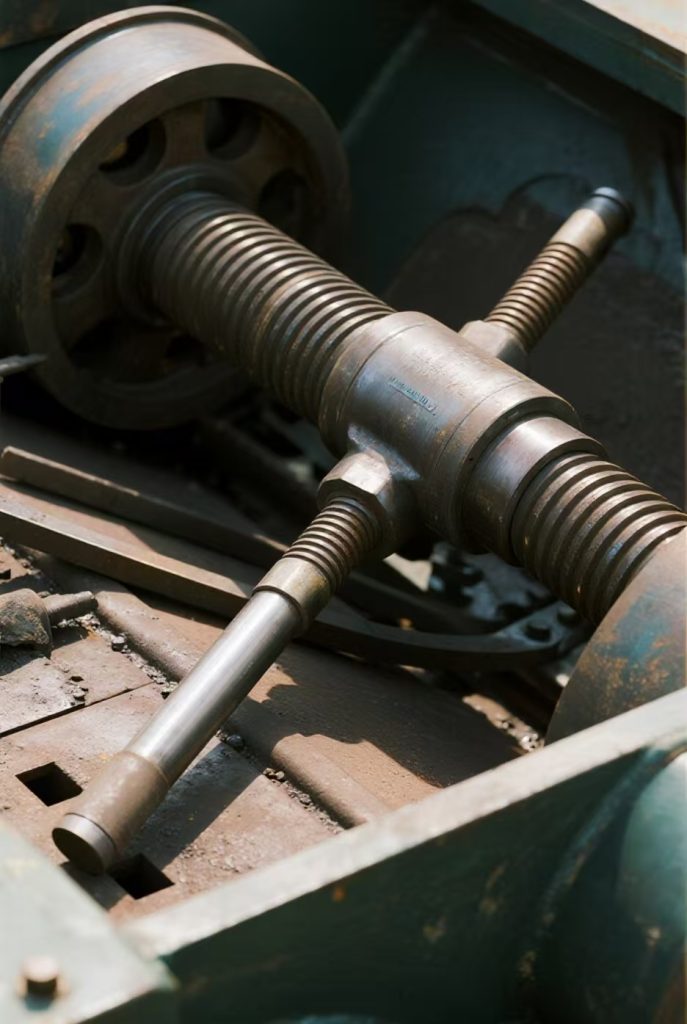
The moving jaw of a jaw crusher is held together by a jaw stock. Every piece of material that it crushes pushes back, and that force of fragmentation goes right into this casting. It can handle those cycles without breaking or bending because it is very strong and rigid. When looking at different sources, make sure you ask how they promise the section width and internal ribs. This is because a flexible jaw stock quietly takes the breaking force from the rock and gives it to the frame.
Steel grades selected for impact duty
This is where a lot of imports go wrong when they only look at the paper. We made the jaw stock out of high-quality steel, like high manganese steel and high carbon steel, so it can take a hit without breaking and last longer in tough situations. Before you place an order, ask the seller to name the grade, the science standard that supports it, and the way that accuracy is checked from one melt to the next.
Hard rock capability and corrosion resistance
Friendly stone doesn’t eat everything. A jaw stock that is properly sized can be used on harder rocks and is resistant to corrosion, which is important in coastal plants that are humid or ores that have a lot of aggressive moisture. That feature should be seen as a reason to buy itself, not as a gift. Most of the time, the least expensive casting in an inquiry folder is not the one that makes it through your worst feeding shift underground.
Factor Two: Fit and Verifiable Quality Before Shipment
Customization to model and drawing
A “nearly right” casting needs days of grinding and shimmying on site because the geometry is different for each brand and size of crusher. Every jaw stock is made to order based on the model and plan. This includes the bolt patterns, bearing seats, jaw plate attachment faces, toggle seat angles, and toggle seat angles. Send your drawing to someone and make sure they know exactly what sizes will be on the certified inspection report that comes with the part before you sign anything.
Documents you can audit, not promises
It costs a lot to trust someone when you are far away, so bring in proof instead. Our production team is in charge of quality throughout the whole process, including keeping track of ladle chemistry, treatment records, hardness checks, and end measurements at set inspection gates. A real plant will send those records along with your jaw stock order. If the seller can’t show you records for the casting you want to buy, you should look elsewhere. Your crusher deserves better.
Heat treatment behind the casting
The cast state is just the beginning. Key parts go through special heat treatment processes that make the casting stronger and less likely to wear down. The jaw stock also benefits from these processes. When comparing quotes, find out which parts are treated, to what standard, and if results are recorded. If one of the casts has been properly cleaned and the other has not, they may behave in very different ways.
Factor Three: The Supplier Behind the Shipment
One responsible factory, not a chain of subcontractors
When you import, you have to deal with extra costs, delays, and different time zones. Choose to buy from a factory that handles the whole process. At Xian Huan-Tai, casting, treatment, machining, and inspection are all done in the same place, so your jaw stock is always in good hands. Toggle plates are made of high manganese steel, springs are made of spring steel, high-strength steel wire, or carbon steel, and dust rings are made of high manganese steel or high chrome alloy steel. All of these parts are covered by the same roof.
Schedules written to be kept
Delivery is where a lot of bad import stories go wrong. Standard castings take about two weeks to make. A custom jaw stock, on the other hand, could take longer if the casting process or the drawing needs another round of confirmation. We’d rather give a real date and stick to it than make one up to get an order. Ask every candidate supplier how they handle drawing revisions before you sign—your production plan depends on that answer.
Landed cost and support, not just unit price
Small repair shops pay close attention to unit price, while bigger makers think about danger. Both should figure out the landed cost, which is the price plus freight, duties, labour for fitting, and the cost of a stoppage if the part breaks early. A jaw stock that fits properly the first time and lasts its whole life is almost always better than a cheaper one. They also won’t leave you alone with a problem if they have a professional team.
Conclusion
There are three things you need to make sure about when you import jaw stock parts: the metal must match your duty, the quality must be checked before it ships, and the seller must be able to keep their schedule and provide help along the way. Xian Huan-Tai has learned exactly what overseas buyers want after nearly 30 years of making custom parts that aren’t made to order. If you use these tips for your next question, importing will be easy instead of risky.
FAQs
Q1: What is a jaw stock?
A: The main body of a jaw crusher’s moving jaw. It carries the jaw plate and transmits crushing force to the frame.
Q2: Which materials do you use?
A: High manganese steel and high carbon steel, cast for impact strength and long service life in hard-rock applications.
Q3: Can you match my crusher model?
A: Yes. Send the model number, drawing or a worn sample; we confirm every dimension before production starts.
Q4: How long does delivery take?
A: Standard parts move in weeks. Custom pieces take longer when drawings need re-confirmation. We agree on timing before you commit.
Q5: What else do you supply?
A: Forged main shafts, toggle plates in high manganese steel, springs, dust rings, alloy steel rackbars, plus blow bars for impact crushers and dedicated hammers for hammer crushers.
Put These Factors to Work on Your Next Order
Ready to import jaw stock parts without the guesswork? Email inquiry@huan-tai.org with your crusher model, drawing or a photo of the worn part. A Xian Huan-Tai engineer will reply with material advice, a clear quotation and a delivery date we intend to keep. Nearly 30 years of excellent service, a production team that owns quality end to end, and a technical team that turns drawings into fitting parts—send your inquiry today and feel the difference experience makes.
References
- Blair, M. and Stevens, T.L. (Editors) — Steel Castings Handbook, 6th Edition, ASM International, 1995.
- Avery, H.S. — “The Nature of Abrasive Wear,” SAE Technical Paper 750829, 1975.
- Wills, B.A. and Finch, J.A. — Wills’ Mineral Processing Technology, 8th Edition, Butterworth-Heinemann, 2015.
- Monczka, R.M., Handfield, R.B., Giunipero, L.C. and Patterson, J.L. — Purchasing and Supply Chain Management, 6th Edition, Cengage Learning, 2015.
- Brooks, C.R. and Choudhury, A. — Failure Analysis of Engineering Materials, McGraw-Hill, 2002.
