
One of the most useful repair choices you can make is when to change a rotor. This is true whether you’re in charge of a fleet of cars or big machinery. Surface wear that can be seen, deep lines or scores, vibrations during use, strange noises, and thickness measures that are below the manufacturer’s minimum requirement are the most reliable signs. If you catch these danger signs early, you can keep nearby parts from getting more expensive damage.
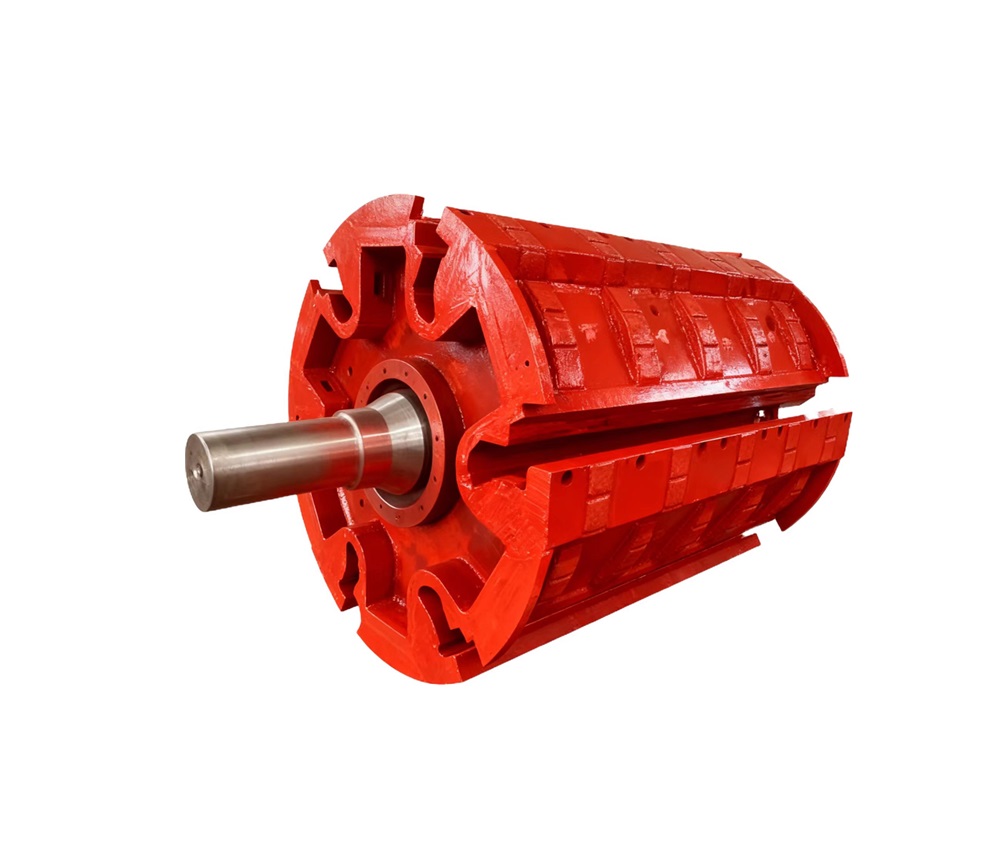
Physical Signs That Your Rotor Needs Replacing
Visible Grooves and Surface Scoring
Grooving on the working area is one of the obvious signs that a rotor has hit the end of its useful life. Over time, as the rotor rubs against the part it fits against, the contact area forms grooves that lower the amount of useful friction surface area and focus stress. Rotors made of high-chromium metal or high-manganese steel are made to survive this kind of abrasive wear in industrial breakers and other heavy machinery. But even the toughest materials have limits, and severe cutting is a good sign that they need to be replaced.
Thickness Below Minimum Specification
The company that makes the tools sets a minimum width or wear limit for each Rotor. When the rotor loses enough material through wear and tear or contact to fall below this level, structural stability starts to become a problem. If you run industrial rotors that are used for high-load breaking or comminution tasks below the minimum thickness, they could suddenly break under impact loads. This is a type of failure that can damage other parts of the machine and pose a safety risk. The most objective way to keep track of rotor state over time is to measure it regularly with a micrometer or wear scale.
Warping and Uneven Wear Patterns
Rotors that have been through a lot of heat cycle or uneven loads may get surface warping, which means that some parts of the face are higher or lower than the rest. This uneven surface makes the joining surface vibrate and make uneven touch with it while it’s working. Even small bending can cause shifting forces that put stress on shaft bearings and housing parts in spinning equipment. If you feel vibrations that weren’t there before or that are getting worse over time, one of the first things you should check is for warping.
Performance Symptoms That Indicate Rotor Wear
Vibration During Operation
Abnormal vibration is one of the most consistent performance symptoms of a worn or damaged Rotor. As the rotor surface loses its original geometry through wear or impact damage, rotating balance is affected and the machine begins to transmit vibration through its frame and bearings. In mining crushers and industrial processing equipment, this vibration accelerates wear across the entire machine — not just the rotor itself. Addressing vibration early by inspecting and replacing the worn rotor typically prevents a much larger and more expensive repair.
Unusual Noise From the Working Zone
Grinding, rattling, or impact noises that emerge from the rotor working area during operation are worth investigating promptly. These sounds often indicate that the Rotor surface has worn to the point where metal-to-metal contact is occurring in areas that should be protected by the rotor’s working face, or that rotor fasteners have loosened due to repeated impact loading. In heavy engineering and mining equipment, unusual noise from the rotor zone should never be dismissed as normal operational background — it is almost always a sign that inspection is overdue.
Reduced Output or Processing Efficiency
In crushing and industrial processing applications, a worn Rotor directly affects output quality and throughput. As the working face loses geometry and surface integrity, particle size distribution in the product becomes inconsistent, energy consumption rises, and machine capacity falls short of its rated performance. If your equipment’s output has degraded noticeably without a change in feed material characteristics, rotor wear is a strong candidate cause — and measuring the rotor against its wear limits will confirm whether replacement is needed.
Choosing the Right Replacement Rotor
Material Selection for Your Application
Not all rotors are made from the same material, and choosing the right one for your application has a direct impact on service life. High-chromium alloy offers excellent wear resistance in abrasive environments, while high-manganese steel provides superior toughness under impact loading. Composite material rotors combine properties suited to specific duty cycles. The Rotor must be matched to the severity and type of loading it will face — abrasion-dominated applications favor harder materials, while impact-dominated applications prioritize fracture toughness.
Casting Process and Dimensional Accuracy
The manufacturing method used to produce a rotor affects both its dimensional accuracy and its internal material integrity. Lost-wax casting, resin sand casting, and V-process casting each offer different advantages in terms of surface finish, dimensional tolerance, and suitability for complex geometries. For industrial rotors operating in high-load environments, a casting process that produces consistent, defect-free parts is essential. Dimensional accuracy matters because a rotor that doesn’t fit precisely within its housing will wear unevenly from the first moment of operation.
Sourcing and Lead Time Considerations
Standard rotor profiles for widely used crusher and processing equipment platforms can generally be sourced with predictable lead times. Custom or non-standard rotors — particularly those requiring new casting patterns, specific alloy compositions, or multiple drawing confirmation rounds — naturally take longer to complete. Providing detailed drawings or a sample rotor at the inquiry stage helps the manufacturer begin planning immediately and reduces the back-and-forth that extends lead times. For critical production equipment, factoring rotor replacement into your scheduled maintenance window avoids unplanned downtime.
Conclusion
Knowing when you need a new rotor comes down to regular inspection, measurement against wear limits, and attention to performance changes during operation. Physical wear, vibration, noise, and reduced output are all reliable signals. When replacement is due, choosing the right material and a manufacturer with proven casting capability ensures the new rotor delivers the service life your application demands.
FAQ
Q1: How often should a Rotor be inspected for wear?
Inspection frequency depends on the application and operating conditions. High-intensity crushing or processing applications warrant more frequent checks — at minimum, rotor condition should be assessed during every scheduled maintenance interval.
Q2: What materials are used for industrial Rotors?
High-chromium alloy, high-manganese steel, and composite materials are the most common, selected based on whether abrasion resistance or impact toughness is the primary requirement.
Q3: Can a worn Rotor be repaired rather than replaced?
In some cases, rotor surfaces can be rebuilt through hard-facing welding. However, rotors that are cracked, warped, or below minimum thickness are generally better replaced than repaired.
Q4: How is a replacement Rotor specified?
Key parameters include outer diameter, working face geometry, material grade, casting method, and mounting interface dimensions. Drawings or a physical sample are the most reliable specification references.
Q5: What happens if a worn Rotor is not replaced in time?
Continued operation beyond wear limits risks sudden fracture, increased vibration damage to bearings and housings, reduced output quality, and higher energy consumption — all of which cost more to address than a timely replacement.
Source Rotors Built to Outlast the Competition
At Xian Huan-Tai Technology and Development Co., Ltd., our 30 years of manufacturing experience means we understand exactly what it takes to produce Rotors that hold up in demanding mining and engineering applications. Our production team controls quality at every stage — from casting through final inspection — and our technical team works with you to confirm material and dimensional specifications before production begins. Ready to source a replacement or custom Rotor? Contact us at inquiry@huan-tai.org and let’s talk through your requirements.
References
- Wills, B. A., & Finch, J. A. (2015). Wills’ Mineral Processing Technology: An Introduction to the Practical Aspects of Ore Treatment and Mineral Recovery (8th ed.). Butterworth-Heinemann. Chapters on crusher rotor wear and replacement criteria in mineral processing applications.
- Metso Corporation. (2012). Crushing and Screening Handbook (5th ed.). Metso Minerals. Section on rotor inspection, wear measurement, and material selection for impact and cone crushers.
- Lindqvist, M., & Evertsson, C. M. (2003). Liner wear in jaw crushers. Minerals Engineering, 16(12), 1193–1199.
- Cleary, P. W., & Sinnott, M. D. (2015). Simulation of particle flows and breakage in crushers using DEM. Minerals Engineering, 74, 132–145.
- Gupta, A., & Yan, D. S. (2006). Mineral Processing Design and Operations: An Introduction. Elsevier. Coverage of rotor design principles, material selection, and service life considerations in industrial crushing equipment.
