
The side liner is a sacrificial wear component fitted to the inner walls of a jaw crusher’s crushing chamber, sitting between the feed material and the structural frame on each side. Its job is straightforward: absorb abrasive wear so the frame does not. Without properly maintained side liners, direct contact between hard rock and the cast frame causes progressive structural damage that is expensive and time-consuming to repair — far more so than a routine liner replacement carried out on schedule.
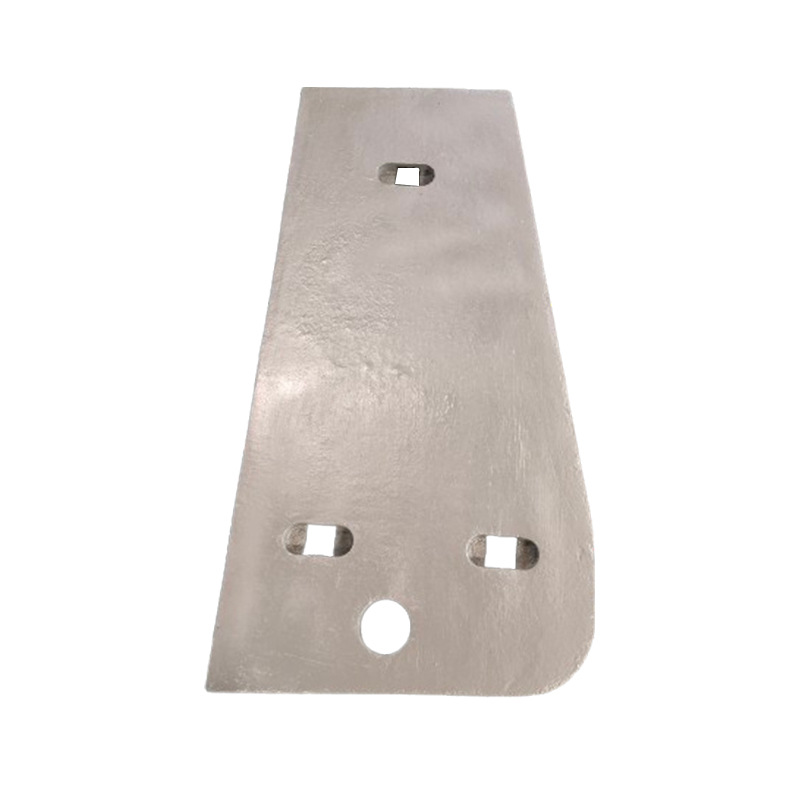
How the Side Liner Protects the Jaw Crusher Frame
Acting as a Sacrificial Wear Barrier
During each breaking cycle, the side liner stops the feed material from rubbing against the side walls of the crusher, which would be rough. Any surface that rock pieces touch is constantly worn down by slide and impact, especially in hard rock mining and blasting. By putting a side liner that can be replaced between the material and the structural frame, operators can direct the wear to a part that is made to be replaced on a regular basis instead of letting it build up on a major structural casting.
Maintaining Chamber Geometry Over Time
When the side liner goes down, it does so in a planned and controlled way that keeps the crushing chamber’s shape for longer than a frame wall that isn’t covered would. The chamber shape stays the same when the side liner is properly installed. This directly supports stable feed flow and reliable particle size distribution at the crusher outlet. As soon as the lining wears out, it can be replaced quickly and cheaply to get the chamber back to its original shape.
Reducing Repair Costs and Unplanned Downtime
It’s clear that buying good side liners will save you money: replacing an old liner during a maintenance window costs a lot less and takes a lot less time than fixing or replacing a damaged frame wall. Keeping the frame covered with side liners that can be changed on a known cycle is one of the easiest ways to keep maintenance costs low and avoid unexpected stops in engineering and mining operations where crusher availability is directly linked to production flow.
Material Selection: What Makes a Side Liner Perform in Hard Rock Applications
High-Manganese Steel for Impact and Abrasion Resistance
High-manganese steel is the most widely used material for side liners in jaw crushers working on hard, abrasive feed. Its work-hardening behavior means the liner surface progressively hardens under the repeated impact of rock during crushing, while the underlying material retains sufficient toughness to resist cracking. This combination gives high-manganese steel side liners an extended service life in demanding hard rock applications — reducing replacement frequency and keeping operating costs under control.
High Carbon Steel for Compressive Load Environments
In applications where the feed is moderately abrasive and the dominant loading mode is compressive rather than impact, side liners cast from high carbon steel offer excellent rigidity and resistance to deformation under sustained load. High carbon steel also provides reliable corrosion resistance, which is a practical benefit for crushers operating outdoors, in wet quarry environments, or in applications where water is used for dust suppression. Huan-Tai selects the appropriate material grade based on each customer’s specific operating conditions.
Casting Quality and Dimensional Consistency
A side liner’s protective function depends entirely on it fitting correctly against the frame wall. Dimensional inaccuracy — caused by poor casting control or inadequate inspection — results in gaps or uneven contact between the side liner and the frame, allowing fine material to pack behind the liner and accelerating frame wear. Huan-Tai’s production process includes dimensional verification at key stages to ensure every side liner fits as intended and provides the full protective coverage the frame requires.
Side Liner Installation, Inspection, and Replacement Planning
Correct Installation Practices
Installing a side liner correctly is as important as choosing the right material. The liner must sit flat against the frame wall with even contact across its full face, secured at all fixing points to the specified torque. Any gap or rocking at installation creates a stress concentration that accelerates both liner wear and frame damage. Liner contact surfaces should be clean and free of packed fines before a new side liner is fitted, to ensure full seating from the first hour of operation.
Inspection Intervals and Wear Tracking
Side liner condition should be assessed at every scheduled maintenance stop. Key indicators include remaining thickness at the thinnest wear point, any cracking visible at the liner surface or edges, and whether the liner is still sitting flush against the frame without rocking. Tracking wear rate across multiple replacement cycles allows the maintenance team to refine replacement intervals — scheduling liner changes just before failure rather than too early, which wastes usable material, or too late, which risks frame contact.
Lead Time and Sourcing Considerations
Standard side liner profiles for common crusher models can generally be sourced and delivered within a manageable timeframe, making it practical to keep one set of spares on hand for planned replacements. Customized or non-standard liners — where drawing confirmation, material approval, and tooling are involved — require a longer production cycle. Huan-Tai provides clear lead time guidance at the inquiry stage so customers can align procurement with their maintenance schedules rather than waiting under pressure.
Conclusion
Side liners are one of the most cost-effective forms of protection available for a jaw crusher’s structural frame. By absorbing abrasive and impact wear in place of the frame walls, they extend the working life of the machine’s most expensive components at a fraction of the replacement cost. For mining and engineering operations looking to reduce maintenance spend and improve crusher availability, maintaining a disciplined side liner inspection and replacement program delivers measurable and consistent returns.
FAQ
Q1: What materials are jaw crusher side liners made from?
High-manganese steel and high carbon steel are the most common choices. High-manganese steel suits hard rock impact applications; high carbon steel is appropriate where compressive loading and corrosion resistance are the primary requirements.
Q2: How do I know when a side liner needs replacing?
Monitor remaining thickness at the thinnest wear point, check for surface cracking, and confirm the liner is still seated flush against the frame. Replace before the liner wears through to the frame surface.
Q3: Can side liners be customized to non-standard crusher models?
Yes. Huan-Tai manufactures customized side liners to customer drawings or samples, with material grade and dimensions matched to the specific crusher model and application.
Q4: Does side liner quality affect crusher output quality?
Yes. A correctly maintained side liner preserves chamber geometry, which supports stable material flow and consistent discharge particle size — both important for downstream processing efficiency.
Q5: How does casting quality affect side liner performance?
Dimensional accuracy from quality casting ensures the liner sits flush against the frame wall, providing full protective coverage and preventing fine material from packing behind the liner and damaging the frame.
Source Quality Side Liners From an Experienced Manufacturer
Xian Huan-Tai Technology and Development Co., Ltd. has over 30 years of experience producing customized non-standard mechanical parts for engineering and mining applications. Our professional production and technical teams control quality at every step — from material selection and casting through dimensional inspection and dispatch — so you receive side liners that fit correctly, protect your frame effectively, and last as long as the application demands. Share your drawings or specifications with us today: inquiry@huan-tai.org.
References
1. Wills, B. A., & Finch, J. A. (2015). Wills’ Mineral Processing Technology: An Introduction to the Practical Aspects of Ore Treatment and Mineral Recovery (8th ed.). Butterworth-Heinemann.
2. Metso Corporation (2020). Crushing and Screening Handbook (6th ed.). Metso Minerals.
3. Gupta, A., & Yan, D. S. (2006). Mineral Processing Design and Operations: An Introduction. Elsevier Science.
4. Bearman, R. A., & Briggs, C. A. (1998). The Active Use of Crushers to Control Product Requirements. Minerals Engineering, 11(9), 849–859.
5. Lindqvist, M., & Evertsson, C. M. (2003). Liner Wear in Jaw Crushers. Minerals Engineering, 16(1), 1–12.
6. ASM International (2002). Fatigue and Fracture: Understanding the Basics. ASM International.
