
Misalignment of the eccentric shaft is one of the worst technical problems that can happen to a jaw crusher, and it almost never happens without notice. The eccentric shaft turns circular motion into the back and forth movement of the moving jaw, which is what does the breaking. When it’s not lined up properly, it affects every linked part: bearing temperatures rise, vibrations get worse, and the grinding performance gets worse. The first thing that can be done to stop misalignment is to figure out what causes it.
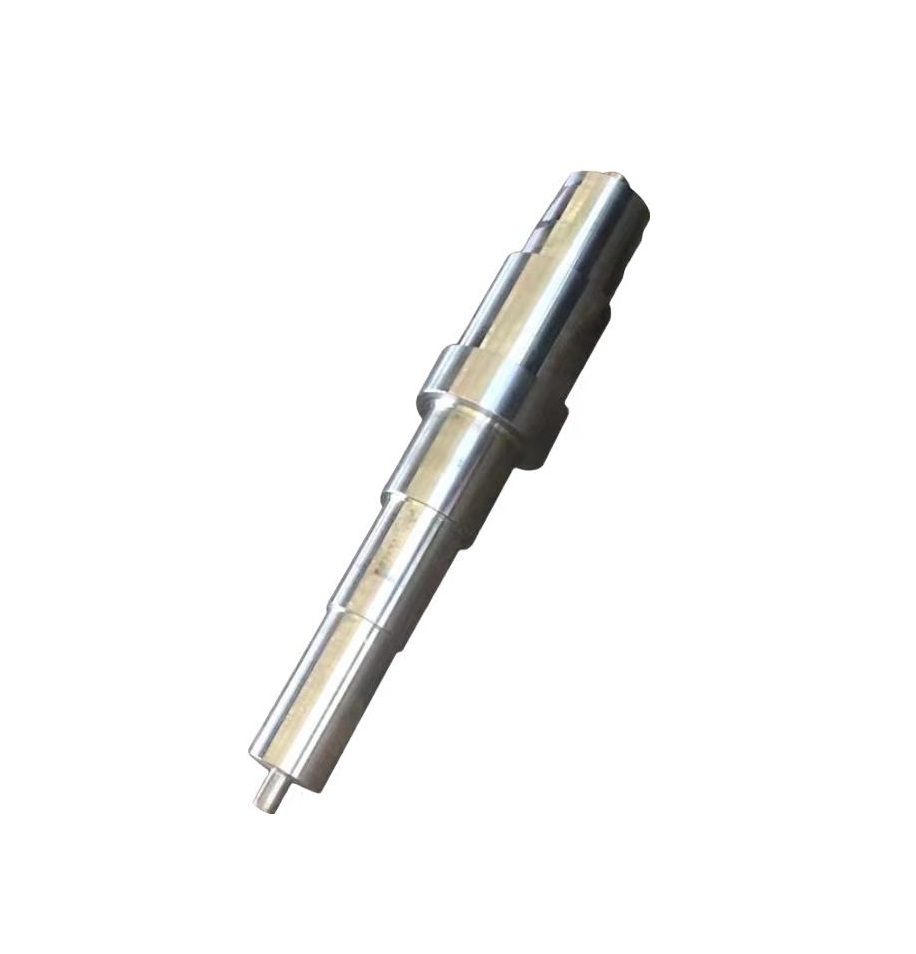
Mechanical Causes of Eccentric Shaft Misalignment
Bearing Wear and Clearance Growth
Wear and tear on the main bearing housings is the most common technical reason why eccentric shafts don’t line up properly. As the bearing gaps go beyond the allowed range, the eccentric shaft loses its set center of spin and starts to move laterally more and more. When working with hard rock in quarrying and mine, where breaking forces are high and hours are long, bearing wear happens faster if they are not oiled at regular times or if dirty lube is left in use for a long time.
Fatigue and Deformation of the Shaft Body
The eccentric shaft in jaw crushers is forged instead of cast, which gives the body of the shaft the grain structure and wear strength it needs to handle repeated twisting loads. Still, a shaft that has been repeatedly overloaded by tramp metal, too-hard feed, or material that is too big for the machine can get tiny cracks or permanently change shape over time. If the shape of the shaft changes from what it was supposed to be, it can’t be brought back to true running position without being replaced.
Frame Distortion Affecting Shaft Positioning
The eccentric shaft moves on bearing seats that are built into the main body of the crusher. If the frame bends because of wear cracks, loose foundation bolts, or uneven base settlement, the bearing seats will move relative to each other, throwing off the eccentric shaft’s alignment, even if the shaft and bearings are in good shape. Because of this, checking the frame’s soundness is a key part of figuring out why shaft alignment problems don’t go away after new bearings are installed.
Operational Factors That Accelerate Eccentric Shaft Misalignment
Overloading and Uneven Feed Distribution
When the machine works within its design limits, an eccentric shaft that is the right size for the job of crushing will be able to handle stress that causes misalignment much better. Overloading the crusher over and over again by using feed sizes bigger than the design limit or letting a lot of feed pile up on one side of the jaw causes uneven bending moments on the eccentric shaft, which speeds up bearing wear and causes the machine to become out of line over time. Controlling the feed rate and spread is just as important for maintaining the shaft’s life as any other task.
Inadequate Lubrication and Contamination
At the point where the eccentric shaft meets the bearing, a thin, clean film of oil keeps the metal surfaces apart and moves heat away from the contact area. Metal-to-metal contact speeds up bearing clearance growth when greasing is delayed, the wrong grade of lube is used, or dust and debris get into the oil supply, which happens a lot in open-pit mining and quarries. When the gaps get too big, the eccentric shaft starts to move out of center every time it turns.
Thermal Cycling and Differential Expansion
When used in places where the temperature changes a lot, like when the machine starts cold in the morning and then keeps going at full speed for a long time, the eccentric shaft, bearing housings, and frame all expand and contract at different rates. This can change the effective clearance at the bearing contact and loosen interference fits over a long period of time. The system is less affected by these thermal effects when it is working normally because it has a high-strength eccentric shaft that stays the same size across a wide range of temperatures.
How to Detect, Correct, and Prevent Eccentric Shaft Misalignment
Early Detection Through Vibration and Temperature Monitoring
When the eccentric shaft isn’t lined up right, the first signs are generally higher bearing temps and more vibrations at the crusher body. Low-cost tracking can keep an eye on both: infrared thermometry for the bearing housings and vibration measurement at set points on the frame. Setting standard values for when the machine is in good shape helps maintenance teams find deviations quickly, before they cause bearing failure or shaft damage from misalignment.
Alignment Verification and Bearing Replacement Procedures
Once it is proven that the machine is out of line, the eccentric shaft must be taken off and its shape compared to the original forging specifications. The bearing housings must also be checked for out-of-round wear, and any bearings that have worn past their clearance limits must be replaced. Before the machine is put back into service, the eccentric shaft should be brought back to its original axis. Trying to keep working with a known error, even when the load is lower, speeds up damage to every part of the drive train.
Sourcing a Replacement Eccentric Shaft
When a new shaft needs to be made, the wait time relies on how complicated the forging shape is, what materials are needed, and if there are any special size needs. Standard shapes for popular crusher types can usually be made faster. However, it may take longer to process first-time orders or non-standard designs that need thorough drawing approval and new tools. At the question stage, Huan-Tai gives customers accurate estimates of when things will be fixed, so they can plan maintenance shutdowns without having to deal with long periods of unplanned downtime.
Conclusion
In jaw crushers, eccentric shaft imbalance doesn’t usually happen all of a sudden. It happens over time because of wear, loading conditions, and gaps in upkeep. Early identification of the factors that cause problems, regular checks on the state of the bearings, and replacement of parts before they fail are ways to keep the shaft running straight and the crusher working at its full capacity. When it comes to mining and building, proactive shaft care is just a better buy than reactive fixes.
FAQ
Q1: Why is the eccentric shaft made instead of cast?
Forging lines the steel’s grain structure along the load-bearing plane of the shaft, making it stronger and more resistant to wear than a cast version. This is important for a part that has to handle twisting loads during every crushing cycle.
Q2: What are the first signs that an eccentric shaft isn’t lined up right?
Most of the time, the eccentric shaft is out of line early on when the bearing temperatures rise, the frame starts to shake more, and the jaw plates wear unevenly.
Q3: If an eccentric shaft is broken or bent, can it be fixed?
Small amounts of surface wear can sometimes be fixed, but a shaft that is permanently deformed or has internal cracks should be replaced. Keeping a broken shaft running could lead to a fatal failure.
Q4: What kind of material are eccentric shafts made of?
The standard is high-strength cast steel that is very stiff and doesn’t bend easily when hit. This type of steel is chosen to be able to handle the long-lasting reaction forces that are created when hard rocks are crushed.
Q5: Does Huan-Tai make special eccentric shafts?
Yes, Huan-Tai makes eccentric shafts that are exactly what the customer wants them to be based on sketches or samples they provide. The material grade and size limits are chosen to match the crusher model and how it is used.
Need a Reliable Company to Give You an Eccentric Shaft for Your Crusher?
Xian Huan-Tai Technology and Development Co., Ltd. has been making special, non-standard mechanical parts for mining and industrial uses for more than 30 years. Our professional technical team uses your sketches or samples to make eccentric shafts that are the right size and made of the right material. Our production team, on the other hand, makes sure quality at every step, from casting to final review. Let us know what you need at inquiry@huan-tai.org if you are looking for a replacement or making plans ahead of time.
References
1. Wills, B. A., & Finch, J. A. (2015). Wills’ Mineral Processing Technology: An Introduction to the Practical Aspects of Ore Treatment and Mineral Recovery (8th ed.). Butterworth-Heinemann.
2. Metso Corporation (2020). Crushing and Screening Handbook (6th ed.). Metso Minerals.
3. Harris, T. A., & Kotzalas, M. N. (2006). Essential Concepts of Bearing Technology (5th ed.). CRC Press / Taylor & Francis.
4. Shigley, J. E., Mischke, C. R., & Budynas, R. G. (2004). Mechanical Engineering Design (7th ed.). McGraw-Hill.
5. Bearman, R. A., & Briggs, C. A. (1998). The Active Use of Crushers to Control Product Requirements. Minerals Engineering, 11(9), 849–859.
6. ASM International (2002). Fatigue and Fracture: Understanding the Basics. ASM International.
