
The most useful choice a repair or purchasing team can make is picking the right material for the impact hammer on a hammer crusher. The impact hammer is the straight working part. It hits the feed material very quickly with each turn, taking in both rough wear and impact shock at the same time. Getting the right material grade will mean longer service intervals, fewer unexpected stops, and better breaking efficiency for all the materials your business handles.
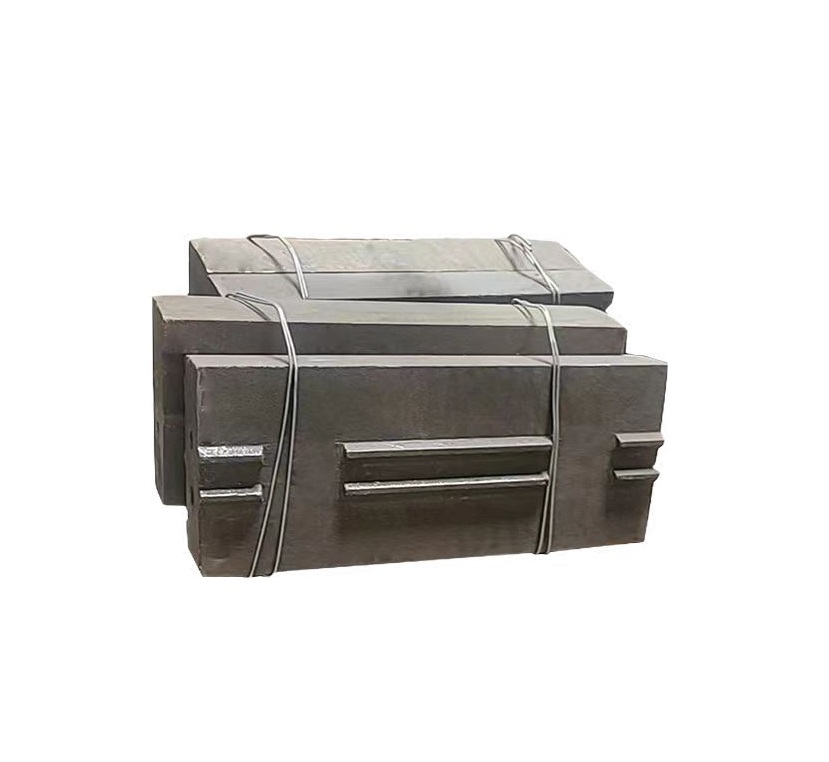
What Materials Are Commonly Used for Impact Hammers?
High-Manganese Steel for Impact-Heavy Applications
Heavy-duty impact hammers have been made of high-manganese steel for many years, and for good reason. Its most important feature is work hardening, which means that as it takes contact, the surface gets harder. This makes the material self-reinforcing when it’s in a hammer crusher. Because of this, it works well for working mixed or hard feed material where the impact frequency is high. High-manganese steel is used to make impact hammers that don’t break easily and last a long time even when they are used in heavy duty situations.
Alloy Steel for Versatile Performance
Alloy steel impact tools are useful for a lot of different breaking tasks because they have the right amount of strength, toughness, and wear resistance. Manufacturers can change the qualities of a material to meet specific needs by changing the alloying elements, which include chromium, molybdenum, nickel, and others. When working with fairly rough materials quickly, alloy steel works consistently and doesn’t have the risk of breaking that comes with harder, more specialized grades. Precision casting methods, like resin sand or V-method casting, make sure that the dimensions are right, which helps the rotor balance and wear is spread out evenly.
High-Chromium Cast Iron for Abrasion-Dominated Conditions
When abrasive wear is the main cause of failure instead of breakage, like when working with dry, fine, or very gritty grain feed, high-chromium cast iron is a good choice for impact tools. Because it is very hard, it doesn’t wear down easily on the surface, which can make it last a lot longer in the right situation. The lost-wax and resin sand casting methods produce the precise dimensions that make sure every impact hammer in a production run is the same shape. This helps keep the rotor balanced and ensures that the part wears in a predictable way over its lifetime.
How Does Material Affect Impact Hammer Performance?
Fracture Resistance Under Repeated Impact
Every time an impact hammer strikes feed material, it absorbs an impulse that creates both surface stress and sub-surface tensile loading. Over thousands of cycles per shift, this fatigue loading can initiate cracks in materials that lack adequate toughness. An impact hammer manufactured from a material with excellent fracture resistance — whether high-manganese steel or a well-formulated alloy steel — maintains its structural integrity through extended service without developing the premature cracks that cause sudden in-service failures and rotor damage.
Wear Rate and Service Interval Length
The wear rate of an impact hammer directly determines how often it needs to be replaced, which in turn drives maintenance frequency and parts cost. Material hardness is the primary factor governing abrasive wear resistance, but it must be matched to the actual feed conditions — a material that is too hard for the application becomes brittle, and a material that is too soft wears too quickly. Understanding your feed material’s abrasiveness and selecting an impact hammer material that is appropriately matched is the most straightforward way to optimize service interval length and minimize total wear part expenditure.
Dimensional Accuracy and Rotor Balance
An impact hammer must maintain correct geometry — weight, profile, and mounting dimensions — to keep the rotor in dynamic balance. Rotors that lose balance due to uneven wear or poorly cast replacement hammers generate vibration that stresses bearings, the rotor itself, and the crusher frame. High-quality casting processes combined with rigorous post-cast dimensional inspection ensure that every impact hammer meets the geometric specification needed for balanced operation. This is a detail that separates well-made components from cheaper alternatives that cause secondary damage long before they reach their rated wear limit.
How to Select the Right Impact Hammer Material for Your Operation?
Match Material to Feed Hardness and Abrasiveness
The most direct selection criterion is the nature of your feed material. Softer, more impact-intensive materials favor high-manganese steel or alloy steel for their toughness. Harder, highly abrasive dry materials favor high-chromium cast iron for its surface hardness. For operations processing varied feed — which is common in quarrying and mining applications — alloy steel grades with a balanced hardness-toughness profile are often the most practical choice, as they perform acceptably across a range of conditions rather than excelling in one narrow scenario.
Consider Casting Process and Supplier Capability
The material grade is only part of the story — casting process quality determines whether the material’s potential is actually realized in the finished impact hammer. Suppliers using established casting methods such as lost-wax, resin sand, or V-process casting, combined with in-process quality control and dimensional verification, produce impact hammers with consistent mechanical properties and geometry. For standard models, lead times are generally manageable. For custom-dimensioned hammers requiring drawing confirmation or specialized alloy grades, timelines may extend, so planning ahead is important for operations that maintain lean spare parts inventory.
Factor in Total Cost Over Service Life
Unit price is an understandable focus for procurement teams, but the most cost-effective impact hammer is not always the cheapest one per piece. A higher-quality impact hammer that lasts significantly longer than a lower-cost alternative delivers better value when maintenance labor, lost production during stoppages, and secondary damage to the rotor are included in the calculation. For larger machinery manufacturers with structured quality requirements, material traceability and certification matter too — factors that a capable casting supplier should be able to support without difficulty.
Conclusion
Selecting the right impact hammer material — whether high-manganese steel, alloy steel, or high-chromium cast iron — comes down to matching material properties to your specific crushing conditions. Fracture resistance, wear rate, dimensional accuracy, and casting quality all contribute to real-world performance. A well-chosen impact hammer reduces maintenance frequency, protects the rotor, and lowers the total cost of keeping your hammer crusher productive.
FAQ
Q1: What is the most durable material for an impact hammer?
Durability depends on application. High-manganese steel excels where impact loading dominates; high-chromium cast iron performs best in highly abrasive conditions. Alloy steel suits mixed or moderate conditions well.
Q2: How often should impact hammers be replaced?
Replacement intervals depend on feed hardness, throughput rate, and material grade. Regular wear measurement during maintenance checks is the most reliable way to schedule replacement before failure occurs.
Q3: Can impact hammers be custom cast to non-standard dimensions?
Yes. Custom impact hammers can be produced to drawing specification using casting processes such as lost-wax or resin sand. Lead times vary based on drawing complexity and material requirements.
Q4: Does material grade affect rotor balance?
Yes. Consistent material density and accurate casting dimensions are both essential for maintaining rotor balance. Using impact hammers from a single production batch with verified weight consistency is good practice.
Q5: What casting methods are used for impact hammers?
Common methods include lost-wax casting, resin sand casting, and V-method casting. Each offers different advantages in dimensional accuracy, surface finish, and production volume suitability.
Get Impact Hammers Built to Perform
At Xian Huan-Tai Technology and Development Co., Ltd., 30 years of manufacturing experience means we understand what high-load crushing applications demand from every component. Our engineering and production teams manage material selection, casting quality, and dimensional inspection at every stage — ensuring the impact hammers we deliver meet your performance and specification requirements. Whether your need is standard or fully custom, we are ready to support you. Send us your drawings or inquiry today. Contact us: inquiry@huan-tai.org.
References
- Wills, B. A., & Finch, J. A. (2015). Wills’ Mineral Processing Technology: An Introduction to the Practical Aspects of Ore Treatment and Mineral Recovery (8th ed.). Butterworth-Heinemann.
- Metso Corporation. (2018). Crushing and Screening Handbook (6th ed.). Metso Minerals.
- Zum Gahr, K. H. (1987). Microstructure and Wear of Materials. Elsevier.
- Tylczak, J. H. (1992). Abrasive wear. In ASM Handbook, Volume 18: Friction, Lubrication, and Wear Technology. ASM International.
- Radziszewski, P. (2002). Developing an experimental procedure for impact abrasion wear testing. Minerals Engineering, 15(11), 905–910.
- Gupta, A., & Yan, D. S. (2016). Mineral Processing Design and Operations: An Introduction (2nd ed.). Elsevier.
