
Few components have as direct an impact on jaw crusher output as the movable jaw bearing. It supports the swing jaw through every crushing cycle, transmitting load between the eccentric shaft and the jaw body while absorbing the reactive forces generated by material fracture. A movable jaw bearing cast from high-quality steel — combining high strength, rigidity, and impact resistance — keeps the jaw motion precise and consistent, which is the foundation of reliable throughput and predictable product particle size in mining and quarrying operations.
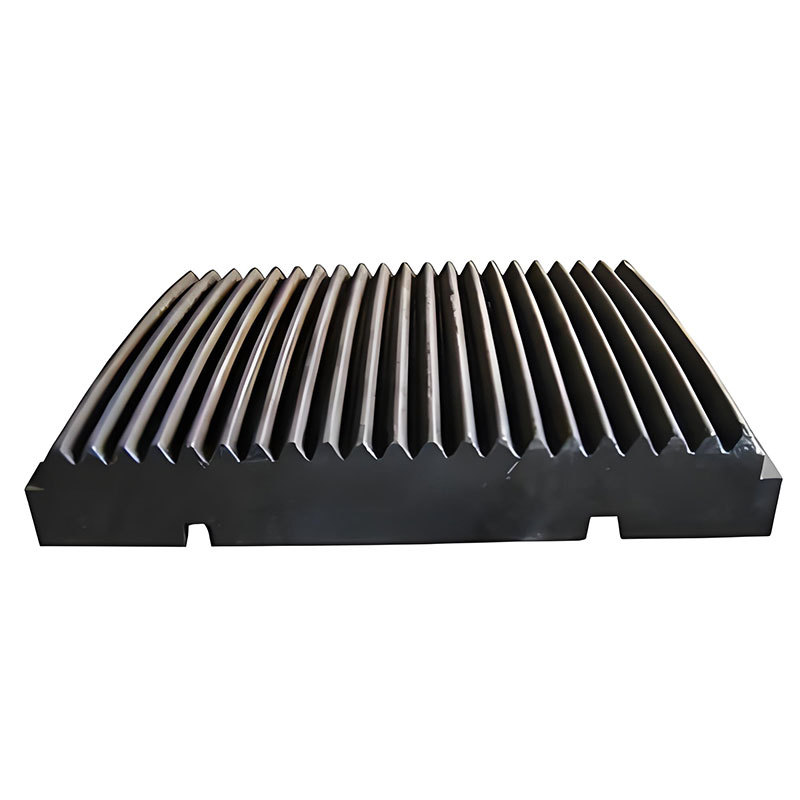
Why Do Bearings Directly Affect Jaw Crusher Output?
Jaw Motion Precision Depends on Bearing Condition
The crushing action of a jaw crusher relies on the movable jaw following a consistent, controlled stroke path on every cycle. The movable jaw bearing is what makes this possible — it locates the jaw relative to the eccentric shaft and transfers rotational motion into the reciprocating jaw movement that fractures feed material. When bearing clearance increases through wear, the jaw stroke becomes less precise, feed material is crushed less efficiently, and output particle size becomes less consistent. Maintaining bearing condition is therefore a direct lever on crusher productivity.
Load Capacity and Material Strength
A jaw crusher processing hard rock generates enormous reactive forces that travel from the jaw plates back through the swing jaw and into the movable jaw bearing. A bearing cast from high-manganese steel or high-carbon steel with sufficient strength and rigidity absorbs these forces without deformation, keeping the jaw in correct geometric alignment throughout the crushing cycle. In harder rock applications, this load capacity advantage becomes especially significant — a movable jaw bearing that deflects under peak load effectively reduces the crusher’s usable capacity by compromising jaw positioning accuracy during the highest-stress moments of the cycle.
Corrosion Resistance in Wet Operating Environments
Jaw crushers in mining operations frequently work in wet conditions — either from process water, underground seepage, or high-humidity environments. A movable jaw bearing with good corrosion resistance maintains its dimensional and surface integrity in these conditions, whereas a bearing that corrodes progressively loses its fit and surface quality, which in turn accelerates wear and increases operating clearance. Selecting bearing components with appropriate corrosion resistance for the site’s actual operating environment is a simple procurement decision that has a measurable effect on bearing service life and crusher availability.
What Bearing Qualities Have the Greatest Impact on Crusher Performance?
Dimensional Accuracy and Fitment Quality
The movable jaw bearing must fit correctly in its housing and on the shaft journal to carry load evenly. Dimensional inaccuracies — in bore size, roundness, or concentricity — result in uneven load distribution across the bearing surface, creating high-stress zones that wear faster than the surrounding material. Bearings produced through precise casting and machining processes, with dimensional verification at key features, install correctly and maintain their load-carrying geometry throughout their working life. This directly translates into more consistent jaw motion and higher sustained crusher output.
Impact Resistance for High-Frequency Loading
Every jaw crusher stroke delivers an impact load to the movable jaw bearing as the jaw contacts feed material and the reactive force travels back through the system. Over a full production shift, this amounts to thousands of individual impact events. A movable jaw bearing cast from high-quality steel with strong fracture resistance handles this loading without developing the micro-cracks that eventually propagate into structural failure. This resistance to impact fatigue is what separates a bearing that achieves its rated service life from one that fails prematurely and forces an unplanned production stoppage.
Correct Lubrication Interface Design
Bearing service life and crusher output are also influenced by how effectively the bearing retains and distributes lubricant across its working surfaces. A well-designed movable jaw bearing incorporates lubrication passages and surface geometry that promote an adequate oil film under load, reducing metal-to-metal contact and the associated wear rate. Combined with properly maintained dust seals — made from high-manganese steel or high-chromium alloy steel to survive the abrasive environment — effective lubrication is one of the most cost-effective means of extending bearing service intervals and maintaining the jaw motion quality that drives output performance.
How to Source and Maintain Movable Jaw Bearings for Best Results?
Sourcing the Right Bearing for Your Crusher Model
Not all movable jaw bearings are dimensionally equivalent — different crusher manufacturers and models use different shaft diameters, housing bores, and assembly configurations. Sourcing a replacement movable jaw bearing requires confirmed dimensional compatibility with the specific crusher in use. For standard and widely produced crusher models, lead times are generally predictable. For older or non-standard equipment where drawings need to be verified or developed from a measured reference, lead times may extend depending on the level of engineering confirmation required before production can begin.
Planned Replacement Over Reactive Maintenance
Waiting for a movable jaw bearing to fail in service is among the most costly maintenance strategies available to a crushing operation. Bearing failure under load can cause secondary damage to the eccentric shaft, the swing jaw casting, and adjacent components — turning a planned bearing replacement into a far more expensive and time-consuming repair. Monitoring bearing clearance during scheduled maintenance intervals, tracking the rate of wear progression, and scheduling replacement at the appropriate point before failure gives the maintenance team full control over timing, parts availability, and production impact.
Evaluating Supplier Quality for Long-Term Reliability
For operations that run jaw crushers continuously, the quality consistency of replacement movable jaw bearings directly affects the predictability of maintenance intervals and crusher availability. A supplier with a professional production team managing quality throughout the entire casting and machining process delivers bearing components that perform to specification reliably across production batches — not just on the first order. For larger machinery manufacturers and mining operations with structured quality requirements, material traceability, dimensional certification, and supplier experience in heavy engineering applications are all meaningful factors in the sourcing decision.
Conclusion
Upgrading to better movable jaw bearings is one of the most practical steps an operation can take to improve jaw crusher output and reduce unplanned downtime. Strong, precise, and correctly fitted bearings keep jaw motion consistent, protect adjacent components from overload, and extend the intervals between maintenance stoppages. Combined with proactive replacement scheduling and a reliable supply chain, bearing quality is a direct contributor to sustained crusher productivity.
FAQ
Q1: What material is a movable jaw bearing typically made from?
Movable jaw bearings are commonly cast from high-manganese steel or high-carbon steel, selected for their strength, toughness, and ability to withstand the sustained impact loading typical of jaw crusher applications.
Q2: How does bearing wear affect crusher output?
As bearing clearance increases with wear, jaw stroke precision decreases — leading to inconsistent crushing action, variable output particle size, and reduced throughput efficiency. Regular clearance measurement helps detect wear before it affects production.
Q3: Can movable jaw bearings be custom produced?
Yes. Non-standard or legacy crusher models often require bearings produced to custom dimensions. Lead times for custom orders vary depending on drawing confirmation and manufacturing process requirements.
Q4: How often should movable jaw bearings be inspected?
Bearing clearance and surface condition should be checked at each scheduled maintenance interval. High-throughput operations typically inspect more frequently to catch wear progression early.
Q5: What role do dust seals play in bearing service life?
Dust seals prevent abrasive particles and moisture from entering the bearing housing. Maintaining effective dust seals — made from high-manganese steel or high-chromium alloy steel — is one of the most cost-effective ways to extend movable jaw bearing service life.
Upgrade Your Crusher Performance With Reliable Components
At Xian Huan-Tai Technology and Development Co., Ltd., we have 30 years of experience supplying customized non-standard mechanical parts for mining and heavy engineering applications. Our engineering and production teams manage quality at every stage — from material selection through casting, machining, and final inspection. Whether you need a standard movable jaw bearing or a custom-produced component built to your drawings, we are ready to support your operation with professional service and dependable delivery. Contact us: inquiry@huan-tai.org.
References
- Wills, B. A., & Finch, J. A. (2015). Wills’ Mineral Processing Technology: An Introduction to the Practical Aspects of Ore Treatment and Mineral Recovery (8th ed.). Butterworth-Heinemann.
- Harris, T. A., & Kotzalas, M. N. (2007). Essential Concepts of Bearing Technology (5th ed.). CRC Press.
- Budynas, R. G., & Nisbett, J. K. (2011). Shigley’s Mechanical Engineering Design (9th ed.). McGraw-Hill.
- Metso Corporation. (2018). Crushing and Screening Handbook (6th ed.). Metso Minerals.
- Zum Gahr, K. H. (1987). Microstructure and Wear of Materials. Elsevier.
- Gupta, A., & Yan, D. S. (2016). Mineral Processing Design and Operations: An Introduction (2nd ed.). Elsevier.
