
In crushing equipment, a side plate is the steel wall that protects the sides of the crusher frame or rotor assembly. The body of the machine is protected from the rough effects of the rock pieces that are thrown out during the breaking process. The Side Plate, which is an important part of the crusher, takes a lot of abuse while the frame doesn’t. It’s a wear part that can be replaced and directly protects a structure that is much more expensive and hard to replace.
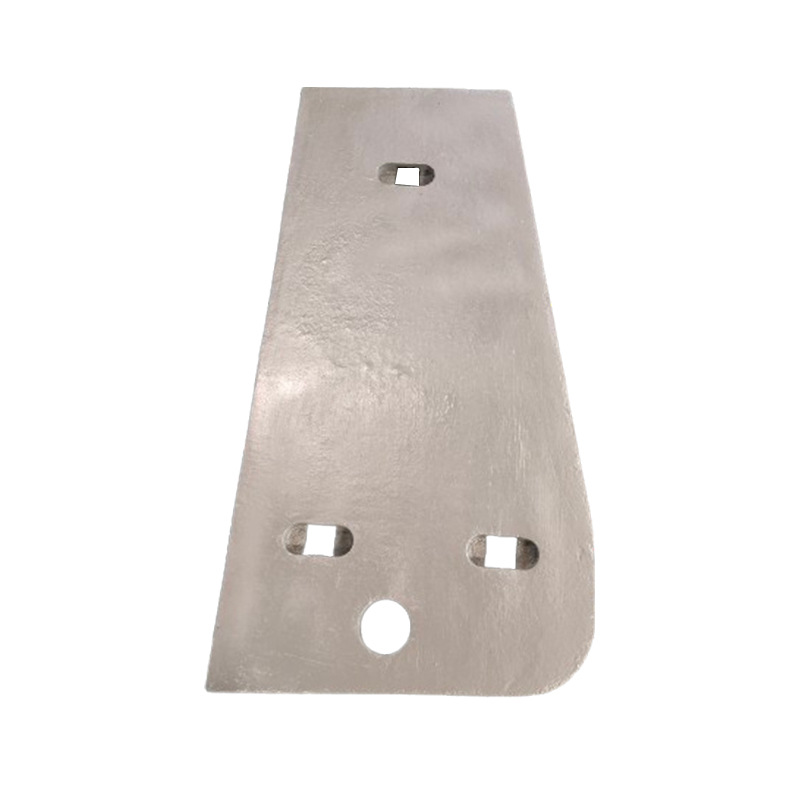
Protecting the Crusher Frame from Impact and Abrasion
Absorbing Lateral Impact Forces During Crushing
Rock breaks into pieces that move in different ways inside a crusher. The Side Plate stops the moving material that is heading for the side walls and soaks up the impact energy before it gets to the main frame. The Side Plate is an important part of the crusher, so it needs to be very strong and rigid so that it can handle these forces over and over again without breaking or deforming. The frame stays together for thousands of hours thanks to a well-cast Side Plate.
Preventing Direct Wear on the Machine Body
The crusher frame is an important part of the structure and can’t just be switched out when it gets old. The Side Plate takes the wear and tear instead of the frame and acts as a sacrifice layer. Huan-Tai’s Side Plate is made from high manganese steel or high carbon steel and is designed to survive both contact and surface wear. This means that frame checks can be put off longer and there is a much lower chance of structural damage that would need expensive repairs or machine replacement.
Handling Hard and Corrosive Material Conditions
Hard rock with sharp minerals is often worked with in mining and blasting, which can happen in wet or chemically hostile conditions. The Side Plate has to work in these situations without the surface wearing down too quickly. The Side Plate from Huan-Tai is good for harder rocks and doesn’t rust easily, so it’s a reliable crusher part for people who work with granite, basalt, iron ore, and other tough feed materials on the ground or on the surface.
How Side Plate Material and Design Affect Crusher Performance
High Manganese Steel for Impact-Dominated Applications
High manganese steel work-hardens at the surface when struck repeatedly, building up a progressively harder protective layer while remaining tough in the core. This makes it the material of choice for side plate applications where impact is the dominant wear mechanism. As a critical crusher component, a Side Plate made from properly specified high manganese steel delivers measurably longer service life compared to lower-grade alternatives, particularly in jaw crushers and hammer crushers handling hard feed.
High Carbon Steel for Abrasion-Heavy Environments
Where sliding abrasion is more prominent than direct impact — for example, in applications with fine, sharp feed material — high carbon steel offers a harder initial surface that resists scratching and gouging effectively. Huan-Tai selects the appropriate grade of cast steel based on the specific wear mode the customer’s application presents. This material selection process, backed by 30 years of experience with crusher components, is one of the reasons Huan-Tai’s Side Plate consistently meets customers’ service life expectations.
Structural Design That Distributes Load Evenly
Beyond material, the geometry of a Side Plate determines how well it handles the uneven load distribution that occurs during crushing. A plate with uniform thickness and well-placed mounting surfaces spreads reactive forces across the full panel area rather than concentrating stress at bolt holes or edges. Huan-Tai’s casting and design process ensures each Side Plate achieves the structural rigidity needed to function as a reliable crusher component without stress-related cracking during normal operation.
Sourcing, Replacement Planning, and Customization
Identifying the Right Side Plate for Your Equipment
Crusher models vary widely in frame geometry, mounting arrangement, and loading conditions. A side plate that fits one machine may not transfer to another even within the same product family. Huan-Tai works from customer drawings or physical part samples to manufacture Side Plate components that match the exact dimensions and mounting pattern of the target crusher, eliminating the fitting issues that commonly arise with generic replacement parts.
Planning Replacement Intervals to Avoid Unplanned Downtime
Because the Side Plate protects the frame, allowing it to wear through entirely defeats its purpose. Maintenance teams should inspect Side Plate thickness at regular intervals and schedule replacement before the plate reaches its minimum usable thickness. Having replacement crusher components in stock before they are critically needed is sound practice — and for customized Side Plate orders, lead times depend on drawing confirmation, casting, and any required machining, so advance planning pays off directly.
Custom Side Plates for Non-Standard and Older Equipment
Older crushers and machines from less common manufacturers often cannot be sourced through standard OEM channels. Huan-Tai’s technical team regularly produces custom Side Plate components for repair companies and operators maintaining aging equipment, working from worn originals or hand sketches when formal drawings are unavailable. This capability makes Huan-Tai a practical supply partner for small repair operations as well as larger manufacturers managing diverse equipment fleets.
Conclusion
The side plate is a straightforward component with a critical function: it protects the crusher frame from the impact and abrasion that would otherwise degrade it rapidly. Choosing a Side Plate made from the right material, cast to accurate dimensions, and backed by proper quality control is the most cost-effective way to extend crusher service life and reduce unplanned maintenance across any crushing operation.
FAQ
Q1: What materials are crusher Side Plates made from?
High manganese steel and high carbon steel are the most common choices, selected based on whether impact or abrasion is the dominant wear mechanism in the application.
Q2: How often should a Side Plate be replaced?
Replacement frequency depends on feed material hardness, throughput volume, and plate thickness. Regular measurement against minimum thickness specifications is the most reliable guide.
Q3: Can Side Plates be customized for non-standard crushers?
Yes. Huan-Tai manufactures Side Plate components to customer drawings or samples, covering a wide range of crusher types including older and non-OEM equipment.
Q4: Does a Side Plate affect crushing performance?
Indirectly, yes. A worn or damaged Side Plate allows material to contact and damage the frame, which can affect crusher geometry and output consistency over time.
Q5: Is a Side Plate the same across different crusher types?
No. Jaw crushers, impact crushers, and hammer crushers each have different Side Plate geometries and load requirements. Always specify your crusher model and dimensions when ordering.
Source Side Plates You Can Rely On — From a Manufacturer With 30 Years of Experience
At Xian Huan-Tai Technology and Development Co., Ltd., we manufacture Side Plates and other crusher components for mining and engineering customers worldwide. Our professional technical team handles custom specifications carefully, our production team manages quality at every stage, and our 30 years of experience means we understand what these parts actually need to do in the field. Ready to get a quote or discuss a custom requirement? Contact us today: inquiry@huan-tai.org.
References
- Wills, B. A., & Finch, J. A. (2015). Wills’ Mineral Processing Technology: An Introduction to the Practical Aspects of Ore Treatment and Mineral Recovery (8th ed.). Butterworth-Heinemann / Elsevier.
- Gupta, A., & Yan, D. S. (2006). Mineral Processing Design and Operations: An Introduction. Elsevier Science.
- Bearman, R. A., & Briggs, C. A. (1998). The active use of crushers to control product requirements. Minerals Engineering, 11(9), 849–859.
- Lindqvist, M., & Evertsson, C. M. (2006). Liner wear in jaw crushers. Minerals Engineering, 16(1), 1–12.
- Nikolov, S. (2004). Modelling and simulation of particle breakage in impact crushers. International Journal of Mineral Processing, 74(S1), S219–S225.
