
Picking the right hammerhead for your impact crusher affects everything about it, from the quality of the output to the cost of running it. Since the hammerhead is always hit at high speed, the material, casting method, and application fit are all very important. This guide shows you the most important things operators look for in a hammerhead that is built to last in tough conditions.
Before we start, there is one important thing to keep in mind: the hammerhead is a wear part for hammer crushers that is different from other wear parts for crushers in both function and form. If you choose well, the splitting will be stable, and the cost per tonne will go down over time.
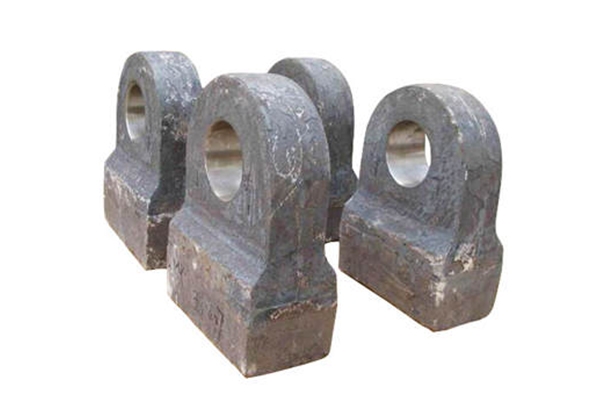
What Materials Make the Best Hammerhead?
High Manganese Steel for Toughness
High manganese steel is still the most popular choice for a strong hammerhead because it hardens when hit and keeps its tough core. This means that the piece can take a lot of hits without breaking. A hammerhead made of high manganese steel is very strong and doesn’t break easily when hit. This makes it perfect for high-load, high-strength breaking jobs where dependability is important over long production runs.
Alloy Steel for Balanced Performance
Combining strength and toughness, stainless steel works well for a hammerhead. It doesn’t wear down easily and is still flexible enough to handle quick shocks. A hammerhead made of alloy steel works well with a range of feed conditions and has a long service life for tasks that use mixed or fairly rough materials on a daily basis.
High-Chromium Cast Iron for Wear Resistance
For very rough feed, high-chromium cast iron makes a hammerhead that is very hard and doesn’t wear down easily. Its structure is much more resistant to surface grinding than softer ones. A hammerhead made of high-chromium cast iron or a composite material with a hard face and a tough back will last the longest in the roughest conditions and still be very resistant to impact.
Which Casting Method Ensures Quality?
Lost-Wax Casting for Precision
The lost-wax method makes a hammerhead that is very accurate in terms of size and has a smooth finish. Because it is so precise, it needs less work to fit on the rotor and is better. If you choose a hammerhead that was made by lost-wax casting, it will have tight tolerances. This makes it more stable at high rotational speeds and lowers vibrations that could shorten the life of parts.
Resin Sand Casting for Strength
Resin sand casting makes a strong hammerhead that holds together well, which is great for bigger pieces. The process controls the quality of the grain and cuts down on flaws inside the grain. This method of making a hammerhead gives it reliable strength and good dimensional consistency, which makes it a good choice for heavy-duty crushing where both toughness and reliability are important.
V-Method Casting for Consistency
The V-method makes a hammerhead with smooth, clean sides that can be used again and again in different production runs. When you need several units that are exactly the same for a rotor set, this stability is important. When you choose a hammerhead made using the V-method, every piece meets the same level of accuracy. This means that the whole set works well together and wears evenly.
How Do You Match a Hammerhead to Your Application?
Assessing Feed Hardness and Size
First, look over your feed. When working with hard, abrasive rock, you need a hammerhead that is very resistant to wear. When working with heavy impacts, you need something tough. If you match the grade of the material to the qualities of the feed, it won’t fail too soon. A properly chosen hammerhead strikes a good balance between hardness and fracture resistance, so it works well in your specific crushing setup without breaking or wearing out too quickly.
Considering Rotor Speed and Load
Every hammerhead is put under more stress when the rotor speed is higher and the load is greater. In these situations, it is very important to pick a piece that has been shown to be resistant to breaking and contact force. A well-cast hammerhead that works well in high-load, high-strength situations keeps its shape and balance even when it’s being used hard, which protects both the output and the machines around it.
Verifying Dimensional Accuracy and Fit
If the hammerhead doesn’t fit right, even the best material won’t work as well. With accurate measurements, you can be sure that the item will fit securely, be balanced, and turn easily. A precisely cast hammerhead that matches your rotor drawings is easy to install and runs steadily, which cuts down on vibration-related wear and helps the whole crusher give reliable, consistent performance shift after shift.
Conclusion
Choosing the best hammerhead means matching material—high manganese steel, alloy steel, or high-chromium cast iron—to your feed, selecting a precise casting method, and verifying accurate fit. This ensures strong impact resistance, longer life, and lower cost per ton crushed.
FAQ
Q1: Which material is best for a hammerhead?
It depends on feed. High manganese steel offers toughness, alloy steel balances performance, and high-chromium cast iron excels in highly abrasive conditions.
Q2: Why does casting method matter?
Methods like lost-wax, resin sand, and V-method ensure dimensional accuracy, which improves balance, fit, and overall hammerhead service life.
Q3: How do I match a hammerhead to my crusher?
Assess feed hardness, rotor speed, and load, then choose a material grade and size that suit those specific operating conditions.
Q4: Does a hammerhead handle high-load environments?
Yes. A properly cast hammerhead offers excellent resistance to fracture and impact force, suiting high-load, high-strength crushing applications.
Q5: How long does a custom hammerhead take to produce?
Lead times vary. Custom pieces may take longer when drawings require repeated confirmation or specific casting processes are needed.
Partner With Huan-Tai for Premium Crusher Wear Parts
Looking for a hammerhead engineered to your exact needs? At Xian Huan-Tai Technology and Development Co., Ltd., our 30 years of industry experience, skilled production team, and expert engineers deliver customized castings with full-process quality control. We help mining and machinery buyers achieve the stability, consistency, and on-time delivery they depend on. Contact us today for a tailored quote and let our specialists solve your crushing challenges—email inquiry@huan-tai.org.
References
- Wills, B. A., & Finch, J. A. Wills’ Mineral Processing Technology: An Introduction to the Practical Aspects of Ore Treatment and Mineral Recovery.
- Gupta, A., & Yan, D. S. Mineral Processing Design and Operations: An Introduction.
- Campbell, John. Complete Casting Handbook: Metal Casting Processes, Metallurgy, Techniques and Design.
- Napier-Munn, T. J., Morrell, S., Morrison, R. D., & Kojovic, T. Mineral Comminution Circuits: Their Operation and Optimisation.
- Davis, J. R. ASM Specialty Handbook: Cast Irons.
