
Gearbox housing failure in tractors is rarely a sudden event — it is usually the result of one or more underlying conditions that have been building over time. The gearbox housing carries the full structural load of the transmission, maintains precise gear bore alignment, and seals the lubrication system that keeps every internal component running correctly. When the housing cracks, distorts, or develops a leak, the consequences cascade quickly through the drivetrain. Understanding what drives these failures is the first step toward preventing them.
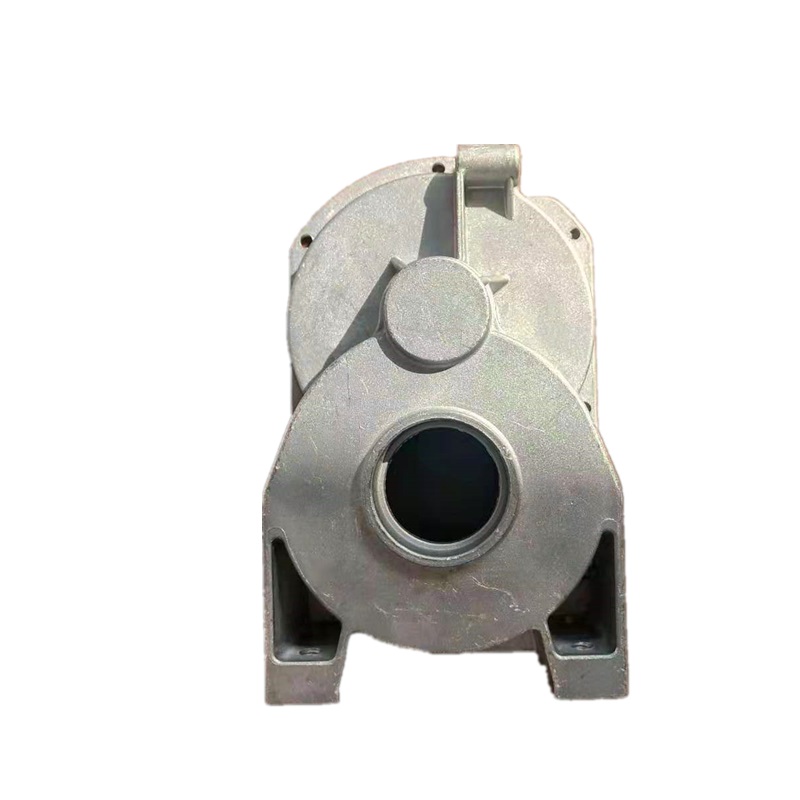
Operating Conditions That Lead to Gearbox Housing Failure
Shock Loads from Implement Engagement and Field Obstacles
Tractors working in demanding field conditions — engaging heavy implements, hitting buried rocks, or pulling out of heavily loaded positions — generate sudden torque spikes that pass through the drivetrain and into the gearbox housing structure. Cast iron, which is the most common material for tractor gearbox housings due to its vibration-damping properties and machinability, handles sustained loading well but is brittle under sudden tensile stress. Repeated shock events concentrate stress at casting features such as bolt bosses, bearing bore flanges, and rib junctions, eventually initiating cracks at these points.
Operating Beyond the Machine’s Rated Capacity
Large farm operations sometimes use tractors for tasks that exceed their design rating — pulling oversized equipment, operating on gradient conditions the machine was not specified for, or running continuously at high PTO loads for extended periods. Under these conditions, the gearbox housing experiences structural loads beyond what the original design accounted for. The housing may not fail immediately, but cumulative fatigue damage accumulates with each overload event, reducing the remaining service life until a crack appears — often with little warning during a subsequent normal operation.
Sustained Vibration from Driveline Imbalance
A driveline with a worn universal joint, imbalanced PTO shaft, or misaligned implement connection transmits cyclic vibration into the gearbox housing at every revolution. Over thousands of operating hours, this vibration drives fatigue crack initiation at stress concentration points in the casting. Vibration-related fatigue failures are particularly insidious because they develop slowly and may go undetected until a visible crack or lubricant leak appears. Keeping the driveline in good condition — replacing worn universal joints and checking shaft alignment at implement connection — reduces the vibration input that drives this failure mode.
How Lubrication and Contamination Contribute to Housing Failure
Oil Starvation Accelerates Bearing and Gear Wear
A gearbox housing that has developed a minor leak — or one operating with chronically low oil level — allows bearings and gears to run with reduced lubrication film. As these components wear, they generate larger metal particles that circulate through the remaining oil and accelerate wear on other surfaces. The combined effect of elevated operating temperature, abrasive contamination, and increased bearing loads places secondary stress on the housing bores and internal walls, contributing to a failure mode that started with a simple maintenance oversight.
Contaminated Oil Damages Internal Surfaces
Water ingress, crop residue contamination, and oil that has degraded past its service life all reduce the lubricating film’s ability to separate metal surfaces. In a tractor gearbox housing, the bearing bores and shaft seal seats are the surfaces most vulnerable to damage from contaminated oil — abrasive particles score the bore surfaces, increasing bearing running clearance and the vibration transmitted to the housing walls. Maintaining clean oil through regular changes and ensuring all breathers and seals are intact is one of the most cost-effective measures for protecting the gearbox housing over the long term.
Seal Failure and Its Downstream Effects
Input and output shaft seals on the gearbox housing are consumable components that degrade with age, heat cycling, and shaft wear. A failed shaft seal allows oil to escape and — critically — allows external contamination to enter the housing. Once abrasive particles are circulating inside the gearbox housing, wear accelerates across all running surfaces simultaneously. Replacing shaft seals at the first sign of weeping, rather than waiting for visible oil loss, prevents the contamination ingress that initiates a much more expensive repair sequence.
Replacement Gearbox Housing: Sourcing and Key Considerations
Selecting the Right Material for the Replacement
Replacement gearbox housings for tractors are typically produced in cast iron or cast steel depending on the application’s load and impact requirements. Cast iron remains standard for most agricultural gearbox applications due to its cost-effectiveness and damping characteristics. Where the operating environment involves higher impact loads — or where the original cast iron housing has cracked under shock loading — a cast steel replacement offers greater toughness and resistance to brittle fracture. Matching the material to the actual operating conditions of the machine rather than defaulting to the cheapest option reduces the likelihood of repeating the failure.
Custom Production for Non-Standard Tractors
Older tractor models and specialist machines frequently require gearbox housing components that are no longer available through standard parts channels. In these situations, a replacement housing can be produced from the original engineering drawing or from a dimensional survey of the failed part. The casting and machining review process — covering wall thickness, bore geometry, draft angles, and critical face dimensions — is essential to getting a housing that fits correctly and holds alignment under load. Lead times for custom housing castings depend on complexity and how smoothly the drawing confirmation proceeds; buyers with fixed maintenance windows should communicate their schedule requirements at the inquiry stage.
Pre-Installation Inspection of the Replacement Housing
Before a replacement gearbox housing is fitted to the machine, dimensional inspection at all critical features — bearing bore diameters and roundness, mounting face flatness, and shaft seal seat dimensions — confirms the casting and machining have been executed correctly. For procurement teams managing fleet maintenance, requesting material certificates and dimensional inspection reports as part of the standard delivery package provides documentation that supports quality tracking across multiple replacement events. Identifying a non-conforming housing before installation is far less costly than discovering the problem after the machine has been reassembled and returned to work.
Conclusion
Gearbox housing failure in tractors stems from shock loading, sustained overload, driveline vibration, and lubrication neglect — conditions that are largely preventable with sound maintenance practice. When failure does occur, selecting a replacement housing in the correct material and manufactured to accurate dimensions is what determines whether the repair holds. Working with a supplier who understands the application and delivers properly documented quality gives fleet managers the confidence that the replacement will last.
FAQ
Q1: What is the most common cause of gearbox housing cracks in tractors?
Shock loads from implement engagement and field obstacles are among the most frequent causes, concentrating stress at casting features in the housing structure over time.
Q2: Can a cracked tractor gearbox housing be repaired by welding?
Welding cast iron requires skilled execution with pre-heating and stress relief. For cracks near bearing bores or load-bearing faces, replacement is generally more reliable than repair.
Q3: What material is a tractor gearbox housing made from?
Most tractor gearbox housings use cast iron. Cast steel is specified where higher impact toughness is required for demanding operating conditions.
Q4: How do I know if my gearbox housing is failing?
Oil leaks at non-seal locations, visible cracks, increased vibration, and difficulty maintaining gear engagement are common early indicators of housing damage.
Q5: How long does it take to source a custom gearbox housing?
Lead times vary with casting complexity and drawing confirmation requirements. Communicating your maintenance schedule at inquiry stage allows realistic production planning.
Source Your Replacement Gearbox Housing from Huan-Tai
At Xian Huan-Tai Technology and Development Co., Ltd., we have over 30 years of experience producing customized cast and machined mechanical components for agricultural, engineering, and heavy equipment applications worldwide. Our technical team can work from your drawings or samples to deliver a replacement gearbox housing built to the correct material specification and dimensional accuracy, supported by thorough quality control throughout production. Tell us your requirement — we are ready to help you get back to work. Contact us: inquiry@huan-tai.org.
References
- Shigley, J. E., Mischke, C. R., & Budynas, R. G. (2004). Mechanical Engineering Design (7th ed.). McGraw-Hill.
- Goering, C. E., Stone, M. L., Smith, D. W., & Turnquist, P. K. (2003). Off-Road Vehicle Engineering Principles. American Society of Agricultural and Biological Engineers.
- Bloch, H. P., & Geitner, F. K. (1994). Machinery Failure Analysis and Troubleshooting (3rd ed.). Gulf Professional Publishing.
- Metals Handbook Editorial Committee. (1988). ASM Handbook, Volume 15: Casting. ASM International.
- Naunheimer, H., Bertsche, B., Ryborz, J., & Novak, W. (2011). Automotive Transmissions: Fundamentals, Selection, Design and Application (2nd ed.). Springer.
