
A side plate might not be the first component that comes to mind when evaluating jaw crusher performance, but its contribution to machine longevity is substantial. The side plate lines the interior walls of the crushing chamber, shielding the main frame from direct abrasive contact with feed material. When it wears unevenly or fails prematurely, the structural components beneath it begin to take damage — turning what should be a routine wear part replacement into a far more costly repair.
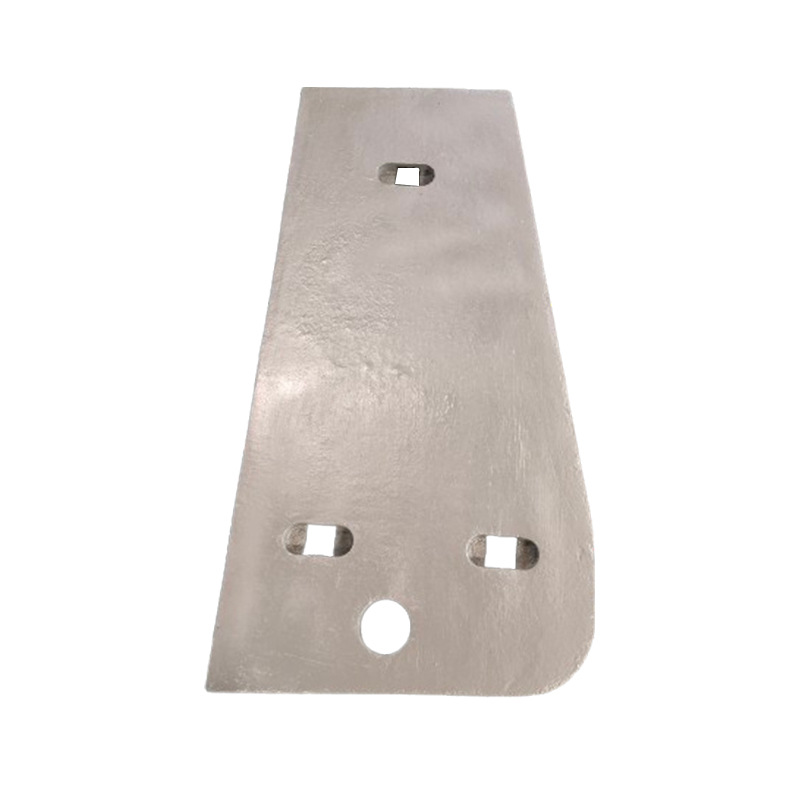
How Side Plates Protect the Jaw Crusher Frame
Acting as the Primary Wear Barrier
The core function of a side plate in a jaw crusher is to absorb abrasion before it reaches the main frame casting. In mining and aggregate applications, feed material entering the jaw chamber is highly abrasive — even material that appears relatively soft at the surface can contain hard mineral inclusions that accelerate wear. A properly fitted side plate intercepts this abrasion consistently across its surface, allowing the frame to remain structurally intact through extended production campaigns.
Distributing Load Across the Chamber Wall
Beyond abrasion resistance, the side plate plays a role in how compressive and impact loads distribute across the jaw crusher frame during each crushing cycle. A worn or poorly seated side plate creates uneven contact between the material and the chamber wall, concentrating stress at localized points on the frame. Over time, this stress concentration can initiate fatigue cracking in the frame itself — a repair outcome that is significantly more expensive and time-consuming than replacing a worn side plate on schedule.
Maintaining Correct Chamber Geometry
The internal geometry of the jaw crushing chamber — defined by the positions of the fixed jaw, swing jaw, and side plates — directly determines product gradation and crushing efficiency. As a side plate wears down, the effective chamber width changes, affecting how material flows through the crush zone. Keeping side plate thickness within specification maintains the designed chamber profile and ensures the crusher produces consistent output without requiring continual closed-side setting adjustments to compensate for wear-related geometry drift.
Material Selection and Its Impact on Side Plate Service Life
High Manganese Steel for Heavy Impact Conditions
For jaw crushers handling hard, coarse feed material in primary crushing stages, high manganese steel is the standard choice for side plate manufacture. Its capacity to work-harden progressively under repeated impact loading means that the surface becomes harder in service, improving wear resistance as operating hours accumulate. This property makes high manganese steel side plate components particularly well-suited to the high-energy, variable-load conditions typical of mining primary crushers.
High-Chrome Alloy Steel for Abrasive Fine Material
Where feed material is fine-grained and highly abrasive — secondary crushing stages processing sand-rich or silica-heavy rock, for example — high-chrome alloy steel offers superior performance. Unlike high manganese steel, which relies on impact to develop its hardness, high-chrome alloy steel delivers its wear resistance from the as-manufactured microstructure. Selecting a side plate material based on the dominant wear mechanism in your specific application is the most reliable way to maximize service life and minimize replacement frequency.
Dimensional and Fit Precision in Replacement Parts
Material grade alone does not determine side plate performance — dimensional accuracy matters equally. A side plate that does not sit flush against the frame leaves gaps where fine material can pack and migrate, accelerating wear at the edges and on the frame surface behind the plate. Sourcing replacement side plate components from a manufacturer with rigorous dimensional inspection capability ensures that the part fits correctly from first installation and performs as the material specification intends.
Maintenance Practices That Extend Side Plate Service Life
Establish a Wear Measurement Programme
Tracking side plate thickness at defined measurement points — documented at each scheduled inspection — builds a clear picture of wear rate under your operating conditions. This data allows maintenance teams to project replacement timing accurately, order parts with sufficient lead time, and avoid the unplanned shutdowns that result from a side plate reaching failure without warning. For custom or non-standard side plate profiles, factoring in supplier lead time is especially important, as production scheduling and drawing confirmation can extend the delivery window.
Check Fastening and Seating Integrity Regularly
A side plate that has shifted, loosened, or developed movement at its mounting interface will wear at an accelerated and uneven rate. Vibration from the jaw crushing cycle gradually works fasteners loose if they are not secured correctly or checked at appropriate intervals. Part of any routine jaw crusher inspection should include verifying that each side plate remains fully seated and that fastening hardware is holding specified torque — a straightforward check that protects both the plate and the frame behind it.
Replace Side Plates Before They Reach Structural Risk
The temptation to run side plate components beyond their practical wear limit — to extract maximum value before replacement — carries a risk that is rarely worth taking. Once a side plate wears through to a critical minimum thickness, the margin of protection it provides to the crusher frame drops sharply. Replacing side plate components at the right point in their wear cycle, rather than at the point of failure, keeps total maintenance cost lower and avoids the frame damage that turns a parts cost into a structural repair cost.
Conclusion
Side plates are a critical line of defence for jaw crusher frame integrity and operational consistency. The right material grade, precise dimensional fit, and a disciplined inspection and replacement programme together determine how well this component does its job. Treating the side plate as a planned maintenance item — rather than a reactive replacement — is what separates operations with reliable crusher uptime from those managing constant unplanned shutdowns.
FAQ
Q1: What materials are jaw crusher side plates made from?
High manganese steel and high-chrome alloy steel are the primary options. High manganese steel suits high-impact primary crushing; high-chrome alloy steel performs better in fine, highly abrasive secondary crushing applications.
Q2: How often should side plates be replaced?
Replacement interval depends on feed material abrasiveness, crusher throughput, and actual measured wear. A thickness monitoring programme at each inspection gives the most reliable replacement timing.
Q3: Can a worn side plate damage the crusher frame?
Yes. A side plate worn beyond its minimum thickness allows abrasive material to contact the frame directly, and uneven loading from a failed side plate can initiate fatigue cracking in the frame casting.
Q4: Are custom-dimension side plates available?
Experienced manufacturers can produce side plates to customer drawings or reverse-engineered samples. Lead times for custom profiles vary based on drawing approval and production requirements.
Q5: Does side plate fit quality affect crusher performance?
Significantly. A poorly fitted side plate creates gaps that accelerate edge wear and allow fine material migration behind the plate, reducing both service life and crusher output consistency.
Built for the Demands of Heavy Industry — Let’s Talk
At Xian Huan-Tai Technology and Development Co., Ltd., over 30 years of manufacturing experience goes into every customized part we produce for mining and engineering customers worldwide. Our engineering team works from your drawings or samples, and our production team controls quality from raw material through final inspection — every time. If you need reliable side plate components or any other customized crusher parts, we are ready to support your requirements. Contact us at inquiry@huan-tai.org and let’s get to work.
References
- Wills, B. A., & Finch, J. A. (2015). Wills’ Mineral Processing Technology: An Introduction to the Practical Aspects of Ore Treatment and Mineral Recovery (8th ed.). Elsevier.
- Bearman, R. A., & Briggs, C. A. (1998). The active use of crushers to control product requirements. Minerals Engineering, 11(9), 849–859.
- King, R. P. (2001). Modeling and Simulation of Mineral Processing Systems. Butterworth-Heinemann.
- Mobley, R. K. (2002). An Introduction to Predictive Maintenance (2nd ed.). Butterworth-Heinemann.
- Napier-Munn, T. J., Morrell, S., Morrison, R. D., & Kojovic, T. (1996). Mineral Comminution Circuits: Their Operation and Optimisation. JKMRC Monograph Series in Mining and Mineral Processing, University of Queensland.
