
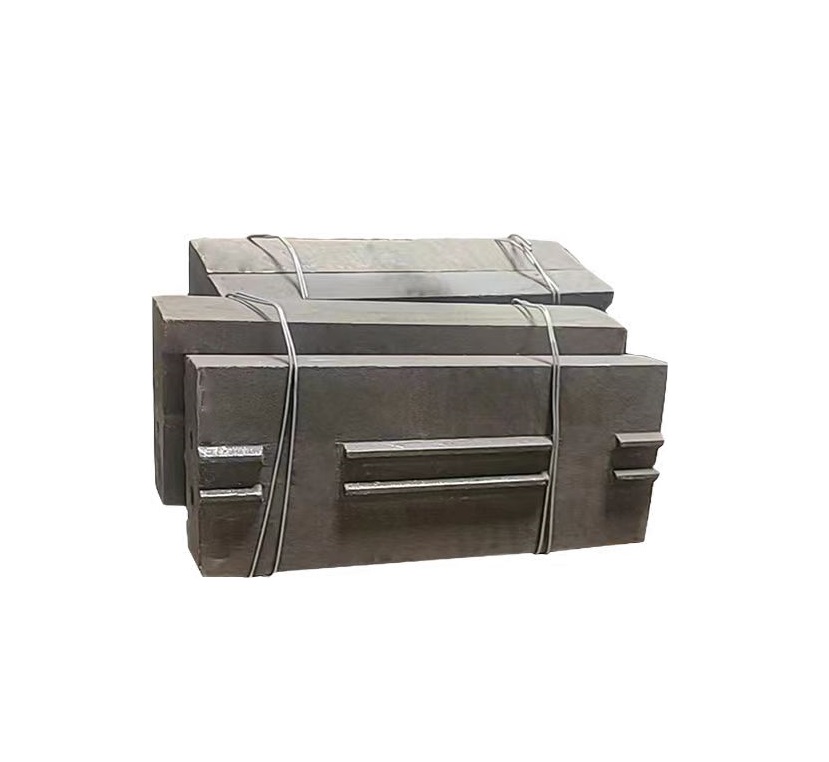
The impact hammer is the defining wear component of a hammer crusher — the part that delivers kinetic energy directly to feed material and drives the entire size-reduction process. When an impact hammer is correctly specified, properly maintained, and replaced at the right time, hammer crusher output is consistent, energy-efficient, and predictable. When it is worn or mismatched to the application, throughput drops, power consumption rises, and secondary wear on the rotor and liner system accelerates. Getting the impact hammer right is getting the crusher right.
How the Impact Hammer Drives Crushing Efficiency
Energy Transfer and Particle Breakage
The primary job of an impact hammer in a hammer crusher is to accelerate feed material to the point of fracture through direct impact. The mass, geometry, and surface hardness of the impact hammer determine how effectively kinetic energy transfers into the material on contact. A well-designed impact hammer delivers clean, efficient fracture across a wide range of feed sizes — minimizing the proportion of material that passes through the chamber without being adequately reduced.
Rotor Balance and Operational Stability
Hammer crushers run at high rotational speeds, and the impact hammer arrangement on the rotor must remain balanced throughout service. As hammers wear unevenly — whether from inconsistent feed distribution or material variation — rotor imbalance develops, increasing vibration loads on bearings and the machine frame. Replacing impact hammer sets as complete matched groups, rather than individually, maintains rotor balance and protects the machine’s structural components from the cumulative effects of operating out of balance.
Influence on Product Gradation
The condition and profile of the impact hammer directly affects the particle size distribution of crusher output. A worn impact hammer with reduced mass and face area delivers less energy per blow, resulting in coarser product and increased recirculation load. For operations with tight product specification requirements — in mining, aggregate, or construction material applications — maintaining impact hammer condition within serviceable limits is as important as any other process control variable.
Material Selection for Impact Hammer Performance
High Manganese Steel for High-Impact Conditions
For hammer crushers processing hard, coarse feed material where impact energy is the dominant loading mode, high manganese steel is a well-established impact hammer material. Its work-hardening characteristic allows the striking face to develop increasing hardness in service as it absorbs repeated impact, improving wear resistance progressively during operation. This makes high manganese steel impact hammer components particularly suited to primary crushing stages where feed size and hardness vary considerably.
Alloy Steel for Balanced Strength and Wear Resistance
Alloy steel is widely used for impact hammer manufacture in applications where both impact toughness and resistance to abrasive wear are required. The combination of alloying elements — typically chromium, molybdenum, or nickel — is selected to deliver the specific mechanical property balance the application demands. An impact hammer manufactured from properly specified and heat-treated alloy steel provides consistent performance across a broader range of operating conditions than single-property materials.
High-Chrome Cast Iron for Abrasion-Intensive Applications
Where feed material is fine-grained and highly abrasive, high-chrome cast iron offers the hardness needed to resist surface wear at the impact hammer face. This material is selected when abrasion — rather than impact — is the primary mechanism consuming the hammer. The choice between material grades for an impact hammer is not a general preference but a site-specific decision based on the hardness, abrasiveness, and particle size of the material being processed.
Maintenance Practices That Maximise Impact Hammer Service Life
Monitor Wear Systematically, Not Reactively
Tracking impact hammer weight or dimensional loss at each scheduled inspection — rather than waiting for visible failure — gives maintenance teams accurate data on actual wear rate under site conditions. This data makes replacement timing predictable, ensures replacement parts are on hand before they are urgently needed, and prevents the rotor damage that results from hammers worn beyond serviceable limits continuing in operation. Systematic monitoring is the foundation of efficient impact hammer management.
Rotate Hammer Positions to Even Out Wear
Feed distribution across the rotor width is rarely perfectly uniform in practice, and certain hammer positions experience higher wear rates than others. A planned rotation programme — moving impact hammer sets between high-wear and lower-wear rotor positions at each maintenance interval — evens out cumulative wear across the full set and extends the service life of the group before replacement is required. This straightforward practice reduces parts consumption without compromising crusher performance.
Plan Replacement Lead Times Into Your Maintenance Schedule
Standard impact hammer profiles for common hammer crusher models can typically be sourced and delivered within a manageable timeframe. Custom impact hammer dimensions — for older machines, non-standard rotor configurations, or specific alloy requirements — involve drawing confirmation, material procurement, and production scheduling that extends the timeline. Engaging your supplier early, with clear technical specifications, is the practical approach to ensuring replacement parts are ready when your maintenance schedule calls for them.
Conclusion
The impact hammer is central to hammer crusher performance — it determines energy efficiency, product gradation, and machine reliability in equal measure. Choosing the right material for your feed conditions, monitoring wear systematically, and planning replacements proactively are the three practices that keep hammer crushers producing at full capacity. With the right impact hammer and the right supply relationship, this critical component becomes a managed variable rather than an unpredictable maintenance liability.
FAQ
Q1: What materials are impact hammers for hammer crushers made from?
Common materials include high manganese steel, alloy steel, and high-chrome cast iron. The right choice depends on whether impact toughness, balanced wear resistance, or high abrasion hardness is the primary requirement for your application.
Q2: How often should impact hammers be replaced?
Replacement interval depends on feed material characteristics and operating hours. A weight or dimensional measurement programme at each maintenance inspection gives the most reliable replacement timing.
Q3: Is it necessary to replace all impact hammers at the same time?
Replacing as a complete matched set is recommended to maintain rotor balance. Individual replacement without balancing the full set can introduce vibration that damages bearings and the machine frame.
Q4: Can impact hammers be custom-manufactured to non-standard dimensions?
Yes. Manufacturers with in-house engineering capability can produce impact hammers to customer drawings or reverse-engineered samples. Lead times for custom specifications depend on drawing confirmation and production requirements.
Q5: What is the difference between an impact hammer and a blow bar?
An impact hammer is the wear component on a hammer crusher. A blow bar serves a similar wear function on an impact crusher. They are designed for different machine types and crushing mechanisms and are not interchangeable.
Partner With a Manufacturer That Delivers on Every Order
At Xian Huan-Tai Technology and Development Co., Ltd., we bring over 30 years of manufacturing experience to mining and engineering customers who need impact hammer components and crusher parts they can rely on. Our technical team works from your drawings or samples, our production team controls quality from raw material to final inspection, and our service team is responsive when you need answers. If you’re ready to source impact hammer parts that perform to specification every time, contact us at inquiry@huan-tai.org — we’re ready to help.
References
- Wills, B. A., & Finch, J. A. (2015). Wills’ Mineral Processing Technology: An Introduction to the Practical Aspects of Ore Treatment and Mineral Recovery (8th ed.). Elsevier.
- Bearman, R. A., & Briggs, C. A. (1998). The active use of crushers to control product requirements. Minerals Engineering, 11(9), 849–859.
- King, R. P. (2001). Modeling and Simulation of Mineral Processing Systems. Butterworth-Heinemann.
- Napier-Munn, T. J., Morrell, S., Morrison, R. D., & Kojovic, T. (1996). Mineral Comminution Circuits: Their Operation and Optimisation. JKMRC Monograph Series in Mining and Mineral Processing, University of Queensland.
- Aldrich, C. (2013). Consumption of steel grinding media in mills: A review. Minerals Engineering, 49, 77–91.
