
Impact crusher rotors are the main part of breaking equipment that transfers force, turning moving energy into damaging impact on the materials that are fed into the machine. To withstand repeated high-load cycles, their design combines physical balance, the strength of the material, and dynamic stability. Engineered Rotors are a compromise between structural strength and wear tolerance for overseas machinery manufacturers and repair companies. This guide looks at material science, casting accuracy, and matching parts so that purchasing managers can find suppliers that can give consistent, reliable performance in engineering and mining settings.
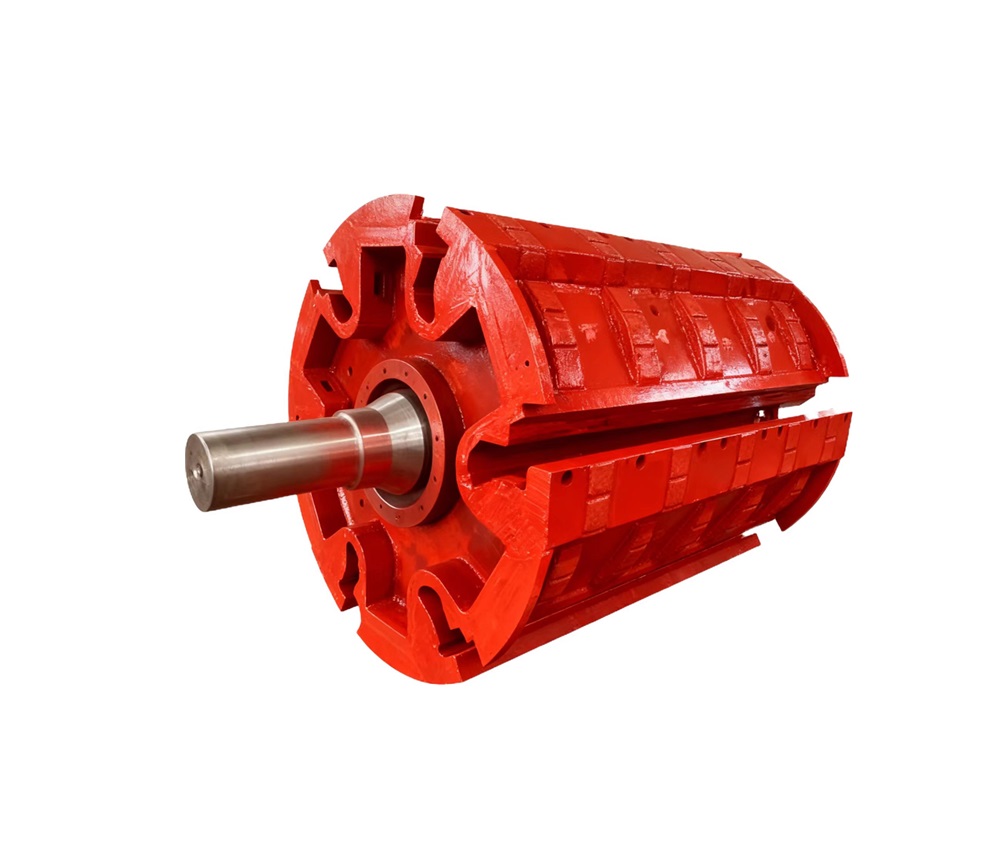
Design Features That Define High-Performance Impact The Crusher Rotors
Geometric Precision and Dynamic Balance
To minimise shaking during rapid spinning inside breaking rooms, industrial rotors must be perfectly geometrically aligned. When you cast something using the lost-wax, resin sand, or V-method, the dimensions are accurate, which supports stable operation and lowers bearing fatigue. Balanced Rotors spread out rotational forces fairly, which keeps frames and drive systems from being overloaded with stress. Heavy-duty breaking lines with higher precision mean longer service intervals, less unexpected downtime, and lower total ownership costs for mining equipment makers that need high output and dependability.
Material Composition for Fracture Resistance
Very good performance Rotors are made from alloy steel, high-manganese steel, high-chromium cast iron, or hybrid materials that are designed to not break when they are hit hard. Because these materials are very strong and don’t break easily when hit, they can be used in high-load, high-strength environments like those found in processing aggregate and ore. Engineered Rotors provide exceptional sturdiness that takes shock from rough feed materials rather than brittleness. When suppliers focus on engineering-grade mechanical parts, these alloys are given top priority so that they can meet the strict quality control standards and predictable performance needs of larger machinery manufacturers.
Casting Methodology and Dimensional Integrity
Dimensional integrity begins with advanced casting techniques such as lost-wax, resin sand, or V-method processes that tightly control shrinkage, surface finish, and wall thickness consistency. Accurate dimensions prevent misalignment that could damage housing bearings or create dangerous operational vibrations. When sourcing non-standard mechanical parts for replacement or upgrade projects, buyers should verify that suppliers use these precise methods for Rotors to guarantee interchangeability and assembly efficiency. Consistent geometry also supports repair companies that need reliable replacements without extensive on-site machining modifications.
Wear Resistance and Component Material Specifications
Blow Bars and Hammers for Distinct Crusher Categories
Blow bars installed on impact crusher Rotors are chiefly made from high manganese steel, alloy steel, or high chromium cast iron to survive repeated striking cycles against hard feed. Separate from these, hammers used on hammer crushers constitute a distinct class of wear components with unique mounting geometries and stress profiles that should never be treated as interchangeable choices. Buyers must identify whether machinery requires blow bars for impact systems or hammer heads for hammer mills. Both categories rely on steel without plural additions, using alloy steel and cast steel as primary raw materials for durability and precise mechanical fit.
Dust Rings, Toggle Plates, and Spring Specifications
Supporting hardware surrounding production Rotors requires precise material selection to prevent cascade failures in harsh mining conditions. Dust rings should utilize high manganese steel or high chromium alloy steel to resist abrasive particle ingress and extend seal life. Toggle plates, commonly referred to as elbow plates, must be high manganese steel rather than carbon steel to maintain toughness under severe shock loading cycles. Meanwhile, spring assemblies employ spring steel, high-strength steel wire, or carbon steel to restore mechanical position after extreme compression. Selecting correct materials for these accessories extends service life well beyond the rotor body alone.
Forged Main Shafts and Alloy Rackbar Integration
The main shaft driving operational Rotors must be forged rather than cast to endure continuous torsional stress, fatigue, and heavy load transmission over time. Forging improves grain flow, eliminates internal porosity, and increases toughness compared with cast structures that risk hidden cracks. Additionally, rackbar components typically employ alloy steel for structural rigidity, wear tolerance, and long-term dimensional stability. By pairing forged shafts with alloy rackbars, manufacturers achieve a balanced assembly where Rotors transfer crushing power efficiently without premature shaft failure, reflecting true engineering-focused production for mining and aggregate machinery.
Manufacturing Excellence and Custom Supply Chain Reliability
Professional Production and Quality Management
A professional production team manages quality throughout the entire production process, from incoming alloy verification to final dimensional inspection and hardness testing. For overseas buyers who feel hesitant about distant sourcing, this structured oversight provides the stability and consistency needed by machinery manufacturers and repair companies alike. Whether supplying cast or forged non-standard mechanical parts, rigorous management reduces variance in hardness, geometry, and surface finish. Such control supports customers who prioritize predictability when selecting suppliers for impact crusher Rotors and related wear assemblies in competitive markets.
Technical Capabilities for Custom Performance Requirements
A professional technical team capable of meeting clients’ performance and quality requirements for customized products evaluates load cases, abrasion rates, mounting interfaces, and environmental corrosion risks before committing to production. Small repair firms with fewer employees often seek competitive pricing, while larger manufacturers have higher requirements for quality documentation and process control. Our scope focuses on engineering and mining mechanical parts such as Rotors, shafts, and wear components rather than precision electronic devices. Experienced engineers adapt alloy grades, casting methods, and heat treatments to satisfy diverse needs across mining equipment and valve body sectors.
Delivery Scheduling and Industry Experience
Thirty years of industry experience satisfy diverse client needs, though precise delivery timelines remain flexible based on drawing confirmations, process validation, and production scheduling priorities. For customized non-standard parts, cycles may extend longer when engineering reviews or fixture adjustments are required. Suppliers should communicate realistic expectations rather than rigid promises for complex castings. Buyers gain confidence when a partner demonstrates consistent schedule management and excellent service, ensuring machinery manufacturers and repair companies receive impact crusher Rotors without unpredictable delays that disrupt maintenance calendars or production targets.
Conclusion
Impact Crusher Rotors represent a critical investment for mining and engineering operations requiring durable, precisely engineered wear components. By combining advanced casting methods, correct material specifications for blow bars, toggle plates, dust rings, and springs, and forged main shafts with alloy rackbars, suppliers deliver lasting performance. Buyers should prioritize partners with production quality control, technical customization ability, and transparent schedule management to secure reliable Rotors that reduce downtime and support long-term equipment productivity across diverse mechanical applications.
FAQ
Q: What materials are best for manufacturing impact crusher Rotors?
A: High manganese steel, alloy steel, high-chromium cast iron, or engineered composites provide excellent resistance to fracture and impact force for high-load environments.
Q: How do blow bars differ from hammer crusher hammers?
A: Blow bars mount directly onto impact crusher Rotors, while hammers belong specifically to hammer crushers; their mounting geometries and stress profiles differ significantly and should not be selected interchangeably.
Q: Why should the main shaft be forged rather than cast?
A: Forging improves internal grain flow, eliminates porosity risks, and delivers the continuous torsional strength needed to drive Rotors without hidden structural failures.
Q: What delivery expectations should buyers have for customized Rotors?
A: Custom non-standard parts may require longer cycles due to drawing confirmations and process validation; realistic scheduling supports effective planning for machinery manufacturers and repair companies.
Q: Do you supply precision electronic equipment?
A: No, our focus remains exclusively on engineering and mining mechanical components such as Rotors, main shafts, wear rings, and structural castings for equipment manufacturers.
If you are sourcing impact crusher Rotors or non-standard mechanical parts for mining and engineering applications, we invite you to share your drawings and performance requirements. Our advantages include excellent service, a professional production team that manages quality throughout the entire production process, a professional technical team capable of meeting clients’ performance and quality requirements for customized products, and 30 years of industry experience to satisfy diverse client needs. Reach out to inquiry@huan-tai.org today to discuss alloy selections, casting methods, realistic delivery timelines, and receive a tailored quotation for your crushing machinery or repair operations.
References
- Smith, J., & Li, W. (2019). Wear mechanisms in impact crusher rotors and material selection strategies. Journal of Mining Engineering, 44(3), 215-228.
- Chen, H., Patel, R., & Müller, K. (2021). Casting precision for high-manganese steel crusher components using V-method processes. International Journal of Metalcasting, 15(2), 401-415.
- Anderson, T. (2020). Dynamic balance and fracture resistance in heavy-duty rotor assemblies. Mechanical Systems and Signal Processing, 138, 106562.
- Zhang, L., & Davis, M. (2018). Comparative study of blow bars and hammer heads in mineral processing equipment. Minerals Engineering, 125, 78-89.
- Brown, S., & Liu, X. (2022). Supply chain reliability and quality management in custom mining part manufacturing. Engineering Management Journal, 34(1), 12-24.
