
Choosing the right grid plate for a cone crusher means matching the material’s make-up, width, and hole size to the hardness of the rock and the amount of output you need. Using the right grid plate increases the efficiency of screening, lowers the risk of clogs, and increases the service life under constant working pressure.
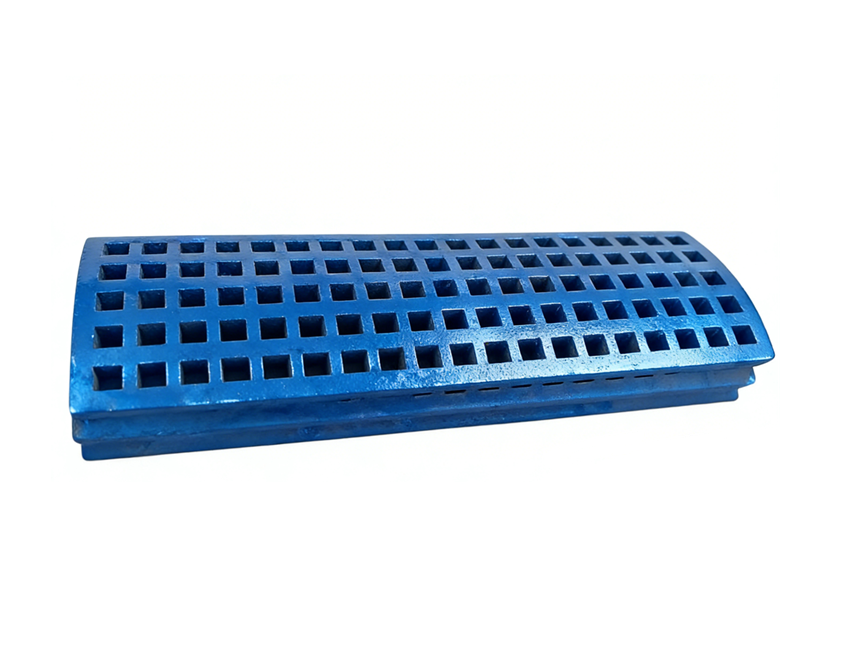
Key Factors to Consider When Selecting a Grid Plate
Matching Aperture Size to Material Feed Characteristics
The final particle size that goes through the crushing chamber is directly related to the opening size of a grid plate. When you choose an opening that is too big, the output is too big, and when you choose one that is too small, it gets clogged up a lot. A grid plate that is the right size and is made to fit your equipment model and drawing will give you consistent screening performance without lowering the throughput.
Evaluating Load Capacity and Structural Reinforcement
Grid plates have to be able to take multiple hits from falling objects without breaking or deforming. The structural stability of the plate is improved by methods for reinforced casting that use alloying elements to increase density and decrease internal gaps. This support makes it possible for the grid plate to keep working well even when it’s constantly handling thick, hard rock materials.
Considering Installation Compatibility with Existing Equipment
Not every grid plate will work with all brands and types of cone crushers. Before you buy, compare the dimensions, mounting hole locations, and thickness to the ones that are already in your chamber. Customised grid plate production based on client drawings ensures a precise mechanical fit, which cuts down on installation changes and prevents operational misalignment that could shorten the life of a component.
Material Options That Affect Grid Plate Performance and Longevity
High Manganese Steel for Maximum Wear Resistance
Because it is so good at hardening when it hits something, high manganese steel is still one of the most popular materials for making grid plates. The surface gets harder over time as it takes repeated stress, making it more resistant to wear. Due to this quality, manganese steel grid plate options are perfect for heavy-duty mining and aggregate crushing tasks.
Alloy Steel for Balanced Toughness and Hardness
Alloy steel grid plate options provide a strong balance between hardness and toughness, making them suitable for operations involving mixed material hardness levels. Unlike pure manganese steel, alloy compositions offer more predictable performance across varying load conditions. Manufacturers often recommend alloy steel grid plate when equipment processes moderately abrasive materials requiring consistent structural stability over long production cycles.
Enhanced Casting Additives That Improve Anti-Sticking Performance
Adding manganese and other alloying components during the casting process significantly reduces sand sticking and clamping defects common in traditional castings. This enhancement produces a smoother, denser grid plate surface that resists material buildup during operation. The result is a more durable component with improved anti-clamping performance and a notably extended service life.
Matching Grid Plate Specifications to Your Cone Crusher Model
Verifying Dimensional Accuracy Through Drawing Confirmation
Because cone crusher models from different manufacturers are so different, it is important to double-check the exact sizes before placing an order. By sending makers technical models, you can get a grid plate that perfectly fits the shape of the chamber in your equipment. As part of this customisation process, drawings may need to be changed and confirmed. This means that production wait times are variable and rely on how complicated the part is and how the specifications need to be changed.
Selecting Heat-Treated Components for Demanding Applications
When high-impact crushing is happening all the time, choosing a grid plate that has been through special heat treatment processes makes it much more resistant to wear. The internal grain structure is fine-tuned by this heat processing, making the top layer harder without lowering the overall hardness. When used in harsh situations for a long time, heat-treated grid plate choices always work better than normal castings.
Working with Experienced Manufacturers for Custom Solutions
If you choose a grid plate provider with a history of strong engineering skills, you can be sure that your unique part will meet all of your requirements for size and performance. Precision machining and knowledge of material science are used by experienced manufacturers to make sure that parts fit right the first time. This saves you money by avoiding expensive trial-and-error buying and guarantees that your grid plate will work properly from the moment it is installed.
Conclusion
Selecting the right grid plate requires careful attention to aperture size, material composition, and dimensional accuracy. Combining quality castings, proper heat treatment, and customized manufacturing ensures reliable screening performance and extended service life for cone crusher operations.
FAQs
Q1: What material is best for a grid plate in mining applications?
A1: High manganese steel is commonly preferred for mining applications due to its excellent work-hardening properties and superior wear resistance under repeated impact.
Q2: Can grid plate be customized for different crusher brands?
A2: Yes, grid plate components can be manufactured according to client drawings and specific models to ensure accurate fit with various crusher brands.
Q3: How does heat treatment affect grid plate performance?
A3: Heat treatment refines the internal structure, improving hardness and wear resistance, allowing the grid plate to withstand prolonged abrasive operating conditions.
Q4: How long does customized grid plate production take?
A4: Lead times vary based on drawing confirmation and manufacturing complexity, so custom orders typically require more time than standard parts.
Q5: Does aperture size affect crushing output quality?
A5: Yes, selecting the correct aperture size ensures consistent particle size output and prevents clogging during continuous crushing operation.
Get a Quote from Huan-Tai
For over 30 years, Xian Huan-Tai Technology and Development Co., Ltd. has helped overseas customers source reliable, customized grid plate and other cone crusher components. Our professional production and technical teams manage every stage from drawing confirmation to final inspection, ensuring stability and consistency you can count on. Ready to discuss your requirements? Contact us today at inquiry@huan-tai.org and let our engineering expertise support your next project.
References
- Wills, B.A., & Finch, J.A. Wills’ Mineral Processing Technology. Butterworth-Heinemann.
- Gupta, A., & Yan, D.S. Mineral Processing Design and Operations. Elsevier Science.
- Napier-Munn, T.J., Morrell, S., Morrison, R.D., & Kojovic, T. Mineral Comminution Circuits: Their Operation and Optimisation. Julius Kruttschnitt Mineral Research Centre (JKMRC).
- Totten, G.E. Steel Heat Treatment: Metallurgy and Technologies. CRC Press.
- Lynch, A.J. Mineral Crushing and Grinding Circuits: Their Simulation, Optimisation, Design and Control. Elsevier Scientific Publishing.
