
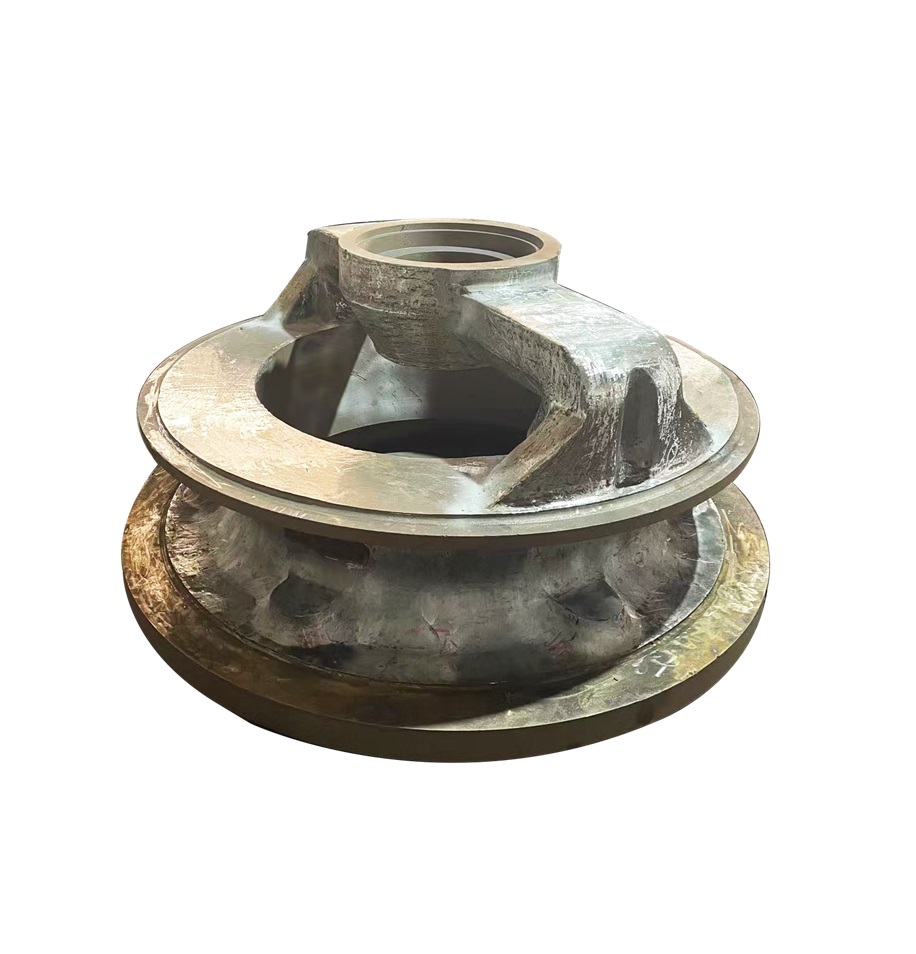
The crusher frame is the main structural part of any crushing system. It supports the weight of the other parts inside and takes shock loads continuously during each shift. Picking the right frame material has a direct effect on how long the machine lasts, how often it needs upkeep, and the total cost of ownership. This guide looks at the different types of materials and engineering ideas that make a Crusher Frame last for years of hard work in mining, quarrying, and making aggregate.
Why Material Selection Defines Crusher Frame Longevity
Cast Steel as the Industry Standard
Cast steel is the main material used for the structure of almost all heavy-duty Crusher Frame designs. The tensile strength, impact toughness, and weldability of cast steel are all very good. This makes it perfect for frames that have to withstand repeated dynamic loads in continuous breaking operations. In contrast to grey cast iron, which can break without notice when hit suddenly, cast steel deforms slowly over time, giving maintenance teams clear signs before the structure fails. This level of predictability is very helpful in industries like mining and aggregates, where unplanned downtime hurts profits.
Welded Steel Plate Construction for Flexibility
Welded steel plate is a tried-and-true option for building a strong Crusher Frame. Designers have more freedom than with a casting pattern because heavy-gauge carbon steel and high-strength plates can be precisely cut, shaped, and welded into the right shape. This method lets you strategically add strength to areas that are under a lot of stress while removing weight from other areas that aren’t needed. A welded Crusher Frame can be made faster than a new casting, which makes it a good choice when equipment downtime costs a lot of money.
Heat Treatment and Material Conditioning
Post-production heat treatment is very important for the long-term performance of a crusher frame, no matter if it is cast or made from plate steel. Stress-relief annealing gets rid of any internal residual stresses that were created during cooling or welding. This makes fatigue cracking much less likely over millions of load cycles. Normalising processes smooth out the grain structure even more, making the frame stronger and making sure that the mechanical properties are the same all the way through. As part of Huan-Tai’s production process, every Crusher Frame goes through controlled heat treatment. This makes sure that the material behaves the same way from the time it is first used until it is no longer needed.
Matching Crusher Frame Materials to Application Demands
Primary Crushing and Heavy Mining Workloads
In main crusher stations that break down hard rocks like granite, basalt, or iron ore, the Crusher Frame is hit hard and shakes all the time. For these tough conditions, you need the best cast steel, which usually has a yield strength of more than 300 MPa and great toughness at low temperatures. The frame also has to hold up heavy internal parts like forged main shafts, bearing housings, and wear-resistant parts like high manganese steel toggle plates and alloy steel rackbar. A well-designed Crusher Frame for basic mine work has thick walls, strengthened rib structures, and precision-machined bearing seats that keep the frame in line even when it’s under heavy loads.
Secondary and Aggregate Production Applications
When making aggregate, the crusher frame experiences lower peak forces during secondary and tertiary crushing, but it still works nonstop for long periods of time. For the best balance between structural performance and cost, medium-grade cast steel or quality welded steel plate is usually the best choice. The most important thing is to make sure that the frame material is strong enough to last through the predicted working cycle, which could include several shifts per day. Our technical team looks at the specifics of each client’s situation, such as the hardness of the feed material, their throughput goals, and their operating schedules, to suggest the Crusher Frame specification that will give them the most long-term value without over-engineering.
Replacement and Repair Scenarios
Equipment repair companies frequently require replacement Crusher Frame components on compressed timelines when existing machines suffer structural damage. Material compatibility with the original crusher design becomes paramount in these situations, as the replacement must match the original mechanical properties for proper fit and performance. We manufacture Crusher Frame assemblies from client-supplied drawings using equivalent or improved materials. While production timelines naturally depend on design complexity and the degree of engineering review involved, our established manufacturing workflow ensures clients receive their replacement frames as efficiently as technically feasible, helping minimize costly production interruptions.
Engineering Design Features That Protect Frame Integrity
Optimized Geometry to Eliminate Stress Risers
A well-designed crusher frame distributes operational loads evenly across its structure, preventing stress concentration points where fatigue cracks typically initiate. Computational structural analysis allows engineers to trace force paths through the frame and optimize wall thickness, rib positioning, and transition radii accordingly. This philosophy mirrors our approach to all crushing components—just as a bimetallic composite hammerhead solves breakage through intelligent material pairing, a properly contoured Crusher Frame solves fatigue failure through intelligent geometry. The resulting structure maintains integrity across millions of impact cycles, delivering the stability and consistency customers depend on for predictable production schedules.
Environmental Protection for Outdoor Installations
Many Crusher Frame installations operate outdoors, continuously exposed to moisture, temperature fluctuations, and abrasive dust contamination. Over extended periods, corrosion progressively weakens structural members and can compromise precision-machined surfaces critical for bearing alignment and component mounting. Selecting corrosion-resistant steel grades, applying industrial protective coatings, and incorporating drainage features into the frame design are all effective countermeasures. We integrate these considerations during the design and production phases, ensuring every Crusher Frame is prepared for real-world site conditions rather than idealized operating environments.
Seamless Integration with Internal Wear Components
The Crusher Frame does not function in isolation—it must integrate precisely with the wear parts and mechanical assemblies performing the actual material reduction. Components including high manganese steel toggle plates, high chromium alloy steel dust rings, and hammer heads for hammer-type crushers all depend on accurate frame mounting surfaces. Our integrated manufacturing capability controls quality across the entire assembly, from the primary frame structure to every internal fitting. This comprehensive approach ensures each Crusher Frame delivers as a cohesive, optimized system, meeting the high expectations overseas customers place on reliability and consistency.
Conclusion
Selecting the best crusher frame material demands careful evaluation of application severity, operating environment, and structural design. Cast steel and welded steel plate both deliver proven long-term reliability when combined with proper heat treatment, optimized geometry, and quality-controlled manufacturing—ensuring dependable performance across years of demanding crushing operations.
FAQ
Q1: What is the most common material used for Crusher Frames?
Cast steel is the industry standard, offering superior strength, impact toughness, and weldability for continuous heavy-duty crushing operations.
Q2: Can you manufacture a Crusher Frame from my existing drawings?
Yes. We produce custom Crusher Frame assemblies from client-supplied technical drawings, using equivalent or improved materials to match original specifications.
Q3: How does heat treatment improve Crusher Frame lifespan?
Stress-relief annealing and normalizing eliminate internal stresses and refine grain structure, significantly reducing the risk of fatigue cracking over millions of load cycles.
Q4: What affects the lead time for a custom Crusher Frame?
Design complexity, material sourcing, and the extent of engineering review all influence production timelines. We provide a clear schedule after evaluating your specifications.
Q5: Do you serve industries outside of mining and construction?
Our expertise focuses on engineering, mining, and heavy industrial mechanical components. We do not supply parts for precision electronics or light-duty consumer products.
Get Expert Guidance on Your Next Crusher Frame Project
With 30 years of experience in custom non-standard mechanical parts, Xi’an Huan-Tai Technology delivers Crusher Frame solutions engineered for lasting performance. Our professional production team manages quality at every stage—from material selection and casting through machining and final inspection. Whether you are building new equipment or replacing a damaged frame, our technical team is ready to develop a solution tailored to your exact needs. Reach out today at inquiry@huan-tai.org and let us help you reduce downtime and improve operational reliability.
References
- Wills, B. A., & Finch, J. A. (2016). Wills’ Mineral Processing Technology (8th ed.). Butterworth-Heinemann.
- Napier-Munn, T. J. (2014). Mineral Comminution Circuits: Their Operation and Optimisation. JKMRC, University of Queensland.
- Kalpakjian, S., & Schmid, S. R. (2020). Manufacturing Engineering and Technology (8th ed.). Pearson.
- Dowling, N. E. (2013). Mechanical Behavior of Materials (4th ed.). Pearson.
- Davis, J. R. (Ed.). (1998). Metals Handbook Desk Edition (2nd ed.). ASM International.
