
The benefits of a wear resistant side plate for jaw crushers boil down to three things: it shields the crusher frame from abrasive wear, holds the crushing chamber’s shape so output stays consistent, and stretches the interval between changeouts. Cast from high manganese steel or high carbon steel, a well-made side plate quietly pays for itself in uptime.
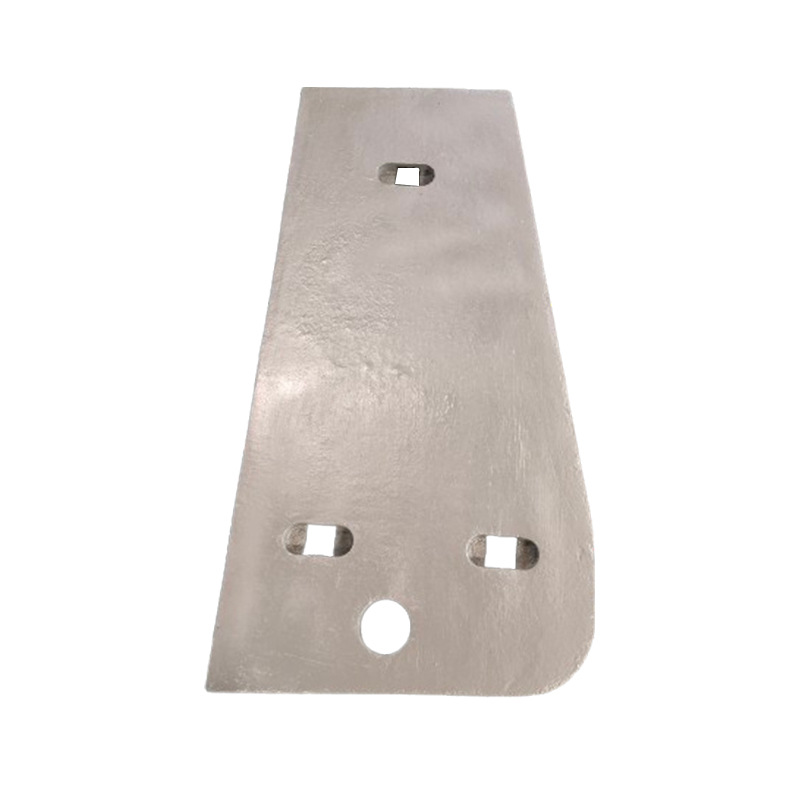
The Core Benefits of a Wear Resistant Side Plate
Strip the sales talk away and the value shows up in three places on the machine.
What Does It Do for the Crusher Frame?
The frame sidewalls sit inches from tumbling, sharp-edged rock every shift. A side plate takes that scouring as a sacrificial layer, so the frame itself never becomes the wear part. Swapping a plate costs a fraction of rebuilding a worn frame, and ours carry the strength and rigidity to stand up to the reactive force of fragmentation.
How Does It Cut Downtime?
Every time crews open the crusher, the line stops earning. A side plate that survives through several sets of jaw dies means fewer openings, shorter maintenance windows, and less crane time. Crews change it during planned liner swaps instead of emergency shutdowns, which is exactly where the real savings hide for quarries and mines.
Why Does Chamber Shape Matter?
Once the sidewalls wear hollow, the nip zone widens, gradation drifts, and recirculating load climbs. A sound side plate keeps the chamber square, so the crusher produces the size you set on day one. Consistent geometry also protects downstream screens and conveyors from the surge loads that ragged chambers create.
What Makes a Side Plate Genuinely Wear Resistant
Two plates can look identical on the pallet. The difference lives in the melt, the mold, and the heat treatment.
Why High Manganese Steel?
High manganese steel work-hardens where the rock hits hardest: the surface toughens under impact while the core stays ductile. We cast each side plate from high-quality steel such as high manganese steel, so it absorbs impact force instead of cracking, and service life stretches well beyond what a bargain casting delivers.
Where Does the Rigidity Come From?
A plate that flexes pumps its bolts loose and chews up its seating surface. High carbon steel gives the side plate its backbone—high strength and rigidity that carry the reactive force of fragmentation without distortion. Sound casting practice and proper heat treatment are what turn that chemistry into real stiffness on the machine.
Can It Handle Harder Rock and Wet Pits?
Yes, and that’s where specification matters most. Our side plate castings apply well to harder, more abrasive rock, and they offer good corrosion resistance where pits run wet or the water turns aggressive. Matching the material to the conditions is how a plate reaches its full wear life instead of half of it.
Squeezing Full Value Out of Every Side Plate
Even a great casting underperforms when the machine around it gets neglected.
Does Installation Really Change Wear Life?
More than most crews expect. Clean seating surfaces, correct bolt torque, and a healthy toggle plate cast from high manganese steel keep the swing jaw tracking true, while tension springs in spring steel, high-strength steel wire, or carbon steel hold return tension. A side plate seated flat wears evenly; one seated crooked wears out early.
Should the Plate Match the Feed?
Always. Feed hardness, abrasiveness, and moisture decide which specification earns its keep. Tell your supplier what you’re crushing and check the side plate whenever liners come off—thickness readings over a few shutdowns build a wear curve, and that curve turns replacement from guesswork into scheduled purchasing.
Who Should Cast Your Next Side Plate?
Pick a partner who controls quality through the whole production process, not just at final inspection. Custom plates built to your drawings fit the first time, and a forged main shaft alongside them keeps everything aligned. Simple jobs can move within weeks; complex custom work takes longer when drawings need repeated confirmation and process planning.
Conclusion
A wear resistant side plate protects the frame, holds chamber geometry, cuts downtime, and lowers cost per ton. Cast in high manganese or high carbon steel with real strength and rigidity, it handles harder rock and wet conditions—especially when installation, feed matching, and supplier quality all pull in the same direction.
FAQ
What does a side plate do in a jaw crusher?
It shields the frame sidewalls from abrasion and keeps the crushing chamber’s shape intact.
Which material works best for a side plate?
High manganese steel for impact and work-hardening; high carbon steel where rigidity matters most.
When should I replace it?
Measure thickness at each liner change and plan replacement from the wear trend, not guesswork.
Can you make side plates to our drawings?
Yes. Timelines vary with drawing confirmation and process complexity.
Is it suitable for hard rock and wet pits?
Yes—our castings suit harder rock and offer good corrosion resistance.
Let’s Put Your Drawings to Work
For 30 years, Xian Huan-Tai has supplied customized non-standard mechanical parts for mining and engineering machinery—backed by responsive service, a production team managing quality through the entire process, and a technical team that meets your performance requirements. Send us a drawing, a photo of your worn plate, or just your crusher model and feed conditions. We’ll reply with a practical proposal and a clear quote: inquiry@huan-tai.org.
References
- Lindqvist, M., & Evertsson, C. M. (2003). Liner Wear in Jaw Crushers. Minerals Engineering, 16(1).
- Oduori, M. F., Mutuli, S. M., & Munyasi, D. M. (2016). Analysis of the Single Toggle Jaw Crusher Force Transmission Characteristics. Journal of Engineering.
- Cao, J., Rong, X., & Yang, S. (2006). Jaw Plate Kinematical Analysis for Single Toggle Jaw Crusher Design. IEEE International Conference Proceedings.
- Gupta, A., & Yan, D. S. (2016). Mineral Processing Design and Operations: An Introduction, 2nd Edition. Elsevier.
- Bharule, A. S. (2009). Computer Aided Design and Analysis of Swing Jaw Plate of Jaw Crusher. National Institute of Technology Rourkela.
