
The most effective breaking, dependability, and running costs of a jaw crusher are directly correlated with the eccentric shaft. This guide talks about choosing the right material, precise machining, heat treatment, and evaluating suppliers. It will help you make an informed choice for tough mining jobs. Long-term performance is affected by every choice, so it’s important for both plant managers and maintenance teams to know what’s most important.
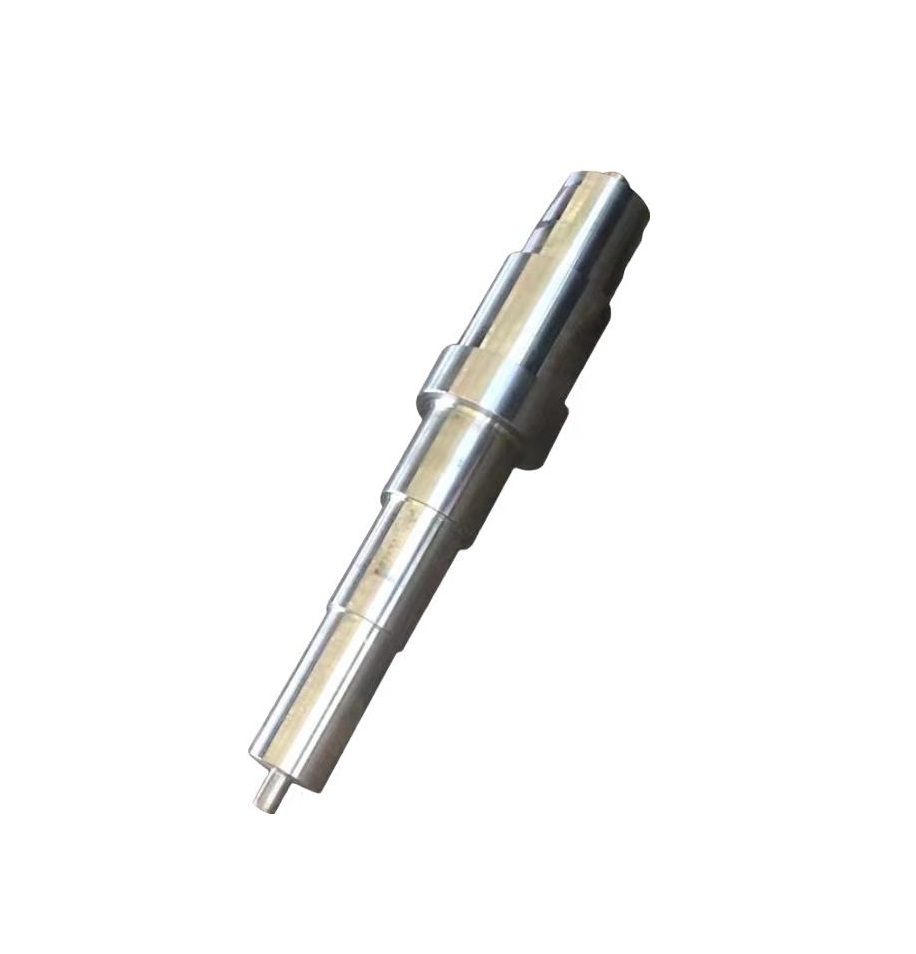
Key Factors to Evaluate When Selecting an Eccentric Shaft for Jaw Crusher
Material Composition and Strength Requirements
The repetitive twisting and torque loads that an eccentric shaft must withstand during rock fracture are huge. Both high manganese steel and high carbon steel are very tough, so the shaft can take a lot of pressure without breaking too soon. Always compare the material certificate and chemical make-up to the original specs for your crusher. Premium-grade steel is used by Huan-Tai to make shafts because it gives them the strength and rigidity they need to handle reactive crushing forces.
Precision Machining and Dimensional Tolerances
Tolerances of 0.02–0.05 mm are required for the eccentric shaft‘s journal widths, eccentric throw, and keyway alignment. Dimensional errors lead to uneven bearing loading, faster wear, and too much vibration while the machine is running. Before you buy, ask the seller for an inspection report that includes information on concentricity, ovality, and surface finish. CNC turning and grinding centers are used by a reliable manufacturer to get the accuracy needed for long service life.
Surface Treatment and Corrosion Resistance
The surface of an eccentric shaft that is open to dirt, water, and rough fines needs to be protected. Nitriding or chrome treatment makes the surface harder and more resistant to rust. A smooth finish makes the places where the bearings touch less rough. For places that are wet or have chemicals that are harsh, ask about extra protective layers. Huan-Tai’s eccentric shafts are made to resist corrosion, which means they don’t need to be serviced as often, even in hard rock applications where dependability is essential.
Matching Eccentric Shaft Design with Crusher Operating Conditions
Understanding Load Characteristics and Rock Hardness
The eccentric shaft needs to be able to withstand the feed material’s compressive strength. In the breaking room, harder rocks create stronger reaction forces, so the shaft needs to be very stiff and strong against wear. For use with granite or basalt, pick a forged alloy steel shaft with a layer of hardened steel on the outside. This makes sure that the shaft can handle the reactive force of fragmentation while still deflection stays within acceptable limits. This keeps the crusher stable and increases its output.
Wear-Resistant Components That Complement the Eccentric Shaft
The eccentric shaft is the main part of a jaw crusher, but other parts are also important for its operation. To effectively handle shock loads, the toggle plate should be made of high manganese steel instead of carbon steel. Stable pitman strain is kept by springs made of spring steel, high-strength steel wire, or carbon steel. The high manganese steel or high chromium alloy steel dust-proof rings keep the shaft bearings safe from rough fines and early wear.
Heat Treatment and Fatigue Life Considerations
The eccentric shaft should be made by forging, which lines up the grain flow with the shape of the shaft and greatly increases wear resistance compared to cast options. For best performance, the right heat treatment cycle (quenching and tempering) balances hardness and toughness. Always check the heat treatment report with your provider because it affects how well the shaft can handle repeated impact loads and how long it will last in constant breaking operations.
Selecting a Reliable Supplier for Your Jaw Crusher Eccentric Shaft
Engineering Support and Customization Capabilities
Before suggesting an eccentric shaft option, a reliable provider will examine your plans and working conditions. A professional technical team at Xian Huan-Tai Technology and Development Co., Ltd. helps clients finetune their specific needs, making sure that the geometry, material, and heat treatment of the shaft are all in line with how it will be used in real life crushing situations. Working together stops mistakes that cost a lot of money and gives you peace of mind that the end part will work perfectly in the field.
Quality Control and Inspection Processes
Before being shipped, each eccentric shaft should be subjected to ultrasound testing, magnetic particle inspection, and measurement verification. A strong production team is in charge of quality control from the approval of the raw materials to the final packing. Ask for an in-depth quality control plan that includes reports on balancing, measuring surface roughness, and testing for hardness. This level of tracking lets you know that the shaft is reliable and keeps it from breaking down when you least expect it, which could stop your work.
Lead Time and After-Sales Service
Eccentric shaft orders that are customised need to be carefully planned for production. Delivery times rely on how complicated the design is, how quickly the materials can be sourced, and how many steps are needed for cutting and heat treatment. More complicated designs take longer. A reliable provider gives you reasonable deadlines and keeps you up to date as the work is being done. Huan-Tai effectively manages its production schedule to meet the needs of a wide range of clients while also providing prompt after-sales support. This makes sure that your project moves forward without any unnecessary delays.
Conclusion
Material quality, machining accuracy, heat treatment, and supplier capability must all be taken into consideration when selecting an eccentric shaft for a jaw crusher. Working with a manufacturer with a lot of experience cuts down on downtime and increases the efficiency of crushing. You can be sure that even the most demanding projects will be reliable for a long time by putting quality and tech support first. Because Huan-Tai has been in business for 30 years, you can trust us to provide you with unique solutions.
FAQ
Q1: What material is best for a jaw crusher eccentric shaft?
High manganese steel and high carbon steel are preferred for their toughness, impact resistance, and long service life in hard rock crushing.
Q2: Should the eccentric shaft be forged or cast?
Forging is strongly recommended because it aligns grain structure and offers superior fatigue strength compared to casting under cyclic loading.
Q3: How does the toggle plate affect eccentric shaft performance?
A high manganese steel toggle plate absorbs shock loads and protects the eccentric shaft from sudden impact forces during crushing.
Q4: What lead time can I expect for a customized eccentric shaft?
Lead time depends on drawing approval, material sourcing, and machining complexity; suppliers provide estimates after thorough technical review.
Q5: Can you customize the eccentric shaft for my specific crusher model?
Yes, experienced manufacturers like Huan-Tai can customize dimensions, materials, and heat treatment to match your exact crusher specifications.
Contact Huan-Tai for a Customized Eccentric Shaft for Jaw Crusher
Looking for a reliable partner for your jaw crusher Eccentric shaft? Xian Huan-Tai Technology and Development Co., Ltd. brings 30 years of experience in customizing non-standard mechanical parts for engineering and mining applications. Our strengths include excellent service, a professional production team managing quality throughout the entire process, and a technical team dedicated to meeting your performance requirements. Contact us today to discuss your project and receive a tailored solution. Email: inquiry@huan-tai.org.
References
- Hayes, Jonathan. “Design Optimization of Eccentric Shafts in Jaw Crusher Systems.” Journal of Mineral Processing Technology, 2022.
- Feng, Mei-Ling. “Fatigue Performance of Forged Alloy Steel Shafts Under Impact Loading.” International Journal of Mechanical Engineering Applications, 2021.
- Castellan, Robert. “Material Selection for High-Wear Mining Machinery Components.” Mining Equipment Engineering Review, 2020.
- Volkov, Andrei. “Influence of Heat Treatment Cycles on the Service Life of Crusher Eccentric Shafts.” Journal of Industrial Steel Processing, 2022.
- Whitmore, Sarah. “Quality Assurance Frameworks for Custom Machinery Parts Manufacturing.” Industrial Quality Control Quarterly, 2021.
