
The blow bars and hammerhead of a crusher are both high-wear parts, but they are made for different tools and shouldn’t be compared to the same service life. In a hammer crusher, the hammerhead is used. In an impact crusher, the blow bars are used. How long they last relies on the material, the feed hardness, the impact force, how well they are installed, and how they are used.
Are Hammerheads and Blow Bars Used in the Same Crusher?
Hammerheads Are Designed for Hammer Crushers
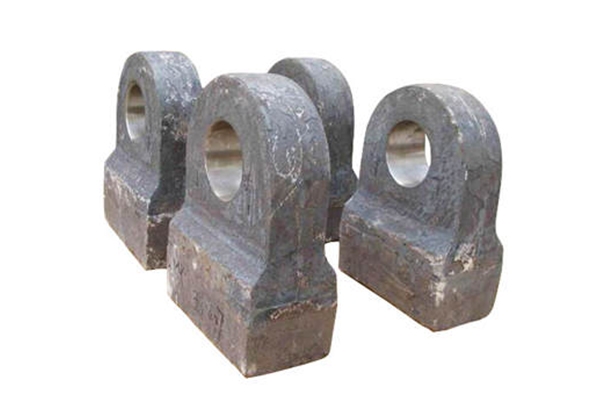
The rotor of a hammer crusher is equipped with a Hammerhead, which hits the material repeatedly to break it up into smaller pieces. It is often used in cement, coal, mining, quarrying, and aggregate work. The hammerhead is hit directly by the material being processed, so it needs to be able to resist breaking, be mounted securely, and be made of a material that is the right size and strength for the material being processed.
Blow Bars Belong to Impact Crushers
Impact crushers, not hammer crushers, use blow bars. They are attached to the rotor of the impact crusher and hit the material coming in very quickly before it hits the impact plates or chamber walls. Despite the fact that a blow bar and a hammerhead both move breaking force, their forms, fitting techniques, rotor configurations, and working conditions vary. Parts should be ordered based on the OEM plan and the real type of the crusher.
Service Life Cannot Be Compared Directly
Because they are used in different machines and face different material paths, there is no one answer to the question of whether a hammerhead or Blow Bar lasts longer. In a hammer crusher, the hammerhead may take repeated direct hits. In an impact crusher, the blow bars work inside a separate crushing chamber. Each factor that affects service life should be looked at separately, such as feed size, rock hardness, rotor speed, production capacity, maintenance methods, and the material that was chosen.
What Determines Hammerhead Service Life in Hammer Crushers?
Material Selection Must Match the Feed
High manganese steel, high chromium cast iron, alloy steel, and composite materials can all be used to make a Hammerhead. When rough wear is a big problem, high chromium cast iron might be a better choice than high manganese steel for heavy-duty jobs. For certain situations, alloy steel can be strong and tough enough to be helpful. What kind of material works best depends on the type of crusher and the material being crushed.
Casting Quality Affects Impact Resistance
A durable Hammerhead requires controlled casting quality, particularly in high-load and high-strength working environments. Huan-Tai can use lost-wax casting, resin sand casting, or V-process casting according to the design and dimensional requirements. Appropriate casting methods help create accurate mounting areas, reliable working profiles, and stable structural integrity. These factors are important because poor fitment can increase uneven loading and shorten component life.
Installation and Rotor Balance Matter
Even a high-quality Hammerhead needs correct installation to operate reliably. Mounting surfaces, pins, rotor connections, and clearances should be inspected during maintenance. Unevenly worn or poorly secured hammerheads can affect rotor balance and create abnormal vibration. Maintenance teams should also review feed conditions and material distribution because oversized or irregular feed can place extra stress on hammer crusher wear components during continuous crushing operations.
How Can Blow Bar Performance Be Improved in Impact Crushers?
Choose Blow Bar Materials by Operating Conditions
Blow bars for impact crushers may be produced from high manganese steel, alloy steel, high chromium cast iron, or composite materials. As with a hammerhead, material selection should be based on actual working conditions rather than purchase price alone. High manganese steel can support high-impact applications, while high chromium cast iron may offer useful wear resistance in abrasive conditions. Technical evaluation helps match the component to the crusher and feed material.
Protect the Complete Impact Crusher Chamber
Blow bar life is influenced by the condition of related impact crusher parts, including side liner plates, impact plates, fastening systems, and rotor components. A Hammerhead is not installed in this equipment, but the same maintenance principle applies: connected parts must be inspected together. Side liner plates may use alloy steel, high manganese steel, high chromium cast iron, or composite materials according to their working position and required wear performance.
Monitor Wear Before Output Is Affected
Operators should inspect blow bars before they lose their intended impact profile or develop damage near locking areas. Common warning signs include uneven wear, cracks, reduced throughput, poorer product shape, higher vibration, and abnormal crushing noise. A Hammerhead should be inspected using similar maintenance discipline in its own hammer-crusher application. Timely replacement helps protect production stability and makes spare-parts purchasing more predictable.
How Should Buyers Source the Correct Crusher Wear Part?
Confirm the Crusher Type First
The first step is confirming whether the machine is a hammer crusher or an impact crusher. A hammerhead must be specified for a hammer crusher, while blow bars must be specified for an impact crusher. Buyers should provide the crusher brand, model, OEM part number, drawing, sample, or detailed photographs. Confirming the machine type avoids costly ordering mistakes and gives the manufacturer a clear foundation for technical evaluation.
Provide Detailed Technical Information
For custom Hammerhead production, useful information includes overall dimensions, mounting-hole size, fixing method, weight, material preference, and feed characteristics. The same level of detail is valuable when ordering blow bars. Huan-Tai’s technical team reviews drawings, samples, and operating requirements to support suitable material and manufacturing recommendations. This approach is especially helpful for older crushers or repair projects where original documentation may be incomplete.
Plan Custom Production Before Shutdowns
Lead time for a custom Hammerhead or blow bar depends on drawing confirmation, material preparation, casting method, heat treatment, machining needs, quantity, and inspection requirements. Repeat orders with approved specifications may proceed more smoothly. However, complex customized components can require a longer production cycle when drawings are repeatedly revised or special processes are needed. Early planning supports better maintenance scheduling and spare-parts inventory control.
Conclusion
A Hammerhead and blow bar should not be directly compared for lifespan because they serve different crusher types and operating conditions. Long service life depends on correct material selection, accurate casting, secure installation, and routine inspection. Huan-Tai supports customized crusher wear parts for mining and engineering equipment with practical technical guidance and controlled manufacturing quality.
FAQ
Q1: Is a Hammerhead used in an impact crusher?
No. A Hammerhead is used in a hammer crusher. Blow bars are used in impact crushers.
Q2: What materials can be used for hammerheads?
Options include alloy steel, high manganese steel, high chromium cast iron, and composite materials.
Q3: Can Huan-Tai produce custom hammerheads from samples?
Yes. We can manufacture from drawings, samples, photographs, part numbers, and confirmed dimensions.
Q4: What affects hammerhead service life?
Feed hardness, abrasiveness, rotor speed, material selection, installation quality, and maintenance all matter.
Q5: Do you supply parts for precision electronic equipment?
No. We focus on mining, engineering, industrial, and heavy mechanical equipment parts.
Source Crusher Wear Parts with Confidence from Huan-Tai
Whether you need a customized Hammerhead for a hammer crusher or blow bars for an impact crusher, Xian Huan-Tai Technology and Development Co., Ltd. can help. With 30 years of experience in non-standard mechanical parts, we provide responsive service, technical support, controlled production, and professional inspection. Our team reviews your drawings, samples, material needs, and operating conditions to support stable quality and realistic delivery planning. Contact us at inquiry@huan-tai.org for a customized quotation.
References
- Wills, Barry A., and James Finch. Wills’ Mineral Processing Technology: An Introduction to the Practical Aspects of Ore Treatment and Mineral Recovery. Butterworth-Heinemann, 2016.
- Gupta, Ashok, and Denis S. Yan. Mineral Processing Design and Operation: An Introduction. Elsevier, 2016.
- Mular, Andrew L., Doug N. Halbe, and Derek J. Barratt. Mineral Processing Plant Design, Practice, and Control. Society for Mining, Metallurgy, and Exploration, 2002.
- Campbell, John. Complete Casting Handbook: Metal Casting Processes, Metallurgy, Techniques and Design. Butterworth-Heinemann, 2015.
- Davis, Joseph R., editor. ASM Specialty Handbook: Cast Irons. ASM International, 1996.
