
High chrome blow bars are used in concrete recycling because they don’t wear down easily and can handle being hit repeatedly by pieces of reinforced concrete. This keeps breaking lines running smoothly and prevents unscheduled part replacements during removal and recycling.
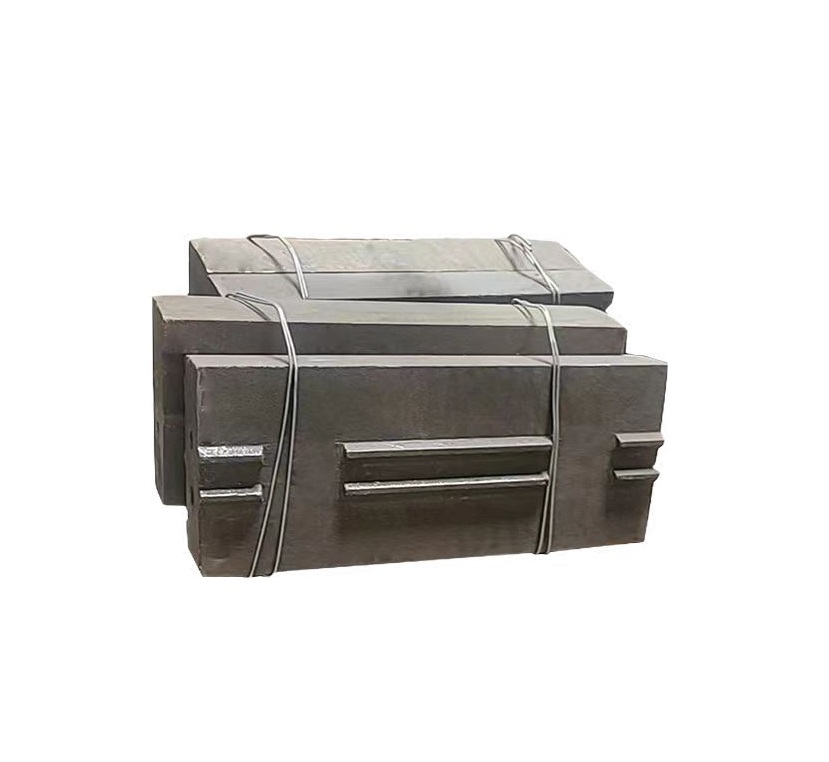
What Makes High Chrome Blow Bars Suited for Concrete Recycling
Impact Resistance Under Heavy Loading
When rebar pieces hit the crushing chamber during the recycling process, they create unpredictable impact forces. Blow bars made for this environment can handle quick shock loads without breaking or chipping too soon. This means that impact crushers can keep working steadily through mixed rubble material without having to stop and start up and down often on the job site.
Consistent Performance Across Abrasive Debris
It is rough inside the breaker because recycled concrete has sand, gravel, and dust in it. Under these conditions, blow bars with dense, wear-resistant structures keep their working edge longer, allowing operators to process more demolition waste before the crushing efficiency noticeably drops.
Stability in High-Throughput Recycling Lines
To meet their material turnover goals, recycling yards often run crushers all the time. Blow bars that are made to rotate steadily and spread impacts evenly help lower the vibration stress on the rotor assembly. This makes it easier to keep things running smoothly during long shifts in tough recycling environments.
How Material Composition and Casting Precision Drive Performance
High-Chromium Cast Iron for Extended Wear Life
Depending on the application intensity, our blow bars can also be made of alloy steel, high-manganese steel, or a composite material. This mix gives the working face the toughness it needs to last against the rough wear of concrete fines and mixed demolition debris over time.
Precision Casting Methods for Dimensional Accuracy
When blow bars must fit rotor parts precisely, dimension precision is crucial. Depending on the shape of the part, we use lost-wax casting, resin sand casting, and the V-method casting. We make sure that each batch stays within the same limits so that new bars fit properly without having to be machined on-site.
Fracture Resistance Engineered Into the Structure
Beyond surface hardness, Blow bars need internal toughness to resist cracking under repeated blows. Our production process balances hardness with impact toughness, giving each bar the fracture resistance required for high-load, high-strength working conditions typical of concrete and demolition recycling lines.
What Buyers Should Evaluate When Sourcing Blow Bars
Matching Material Grade to Application Intensity
Not every recycling operation faces identical wear conditions. Buyers should discuss feed material composition and expected throughput so the right Blow bars composition, whether high-chromium cast iron or an alternative alloy, is matched precisely to their crushing intensity and expected service life.
Verifying Manufacturing Process and Quality Control
Because casting quality directly affects service life, buyers benefit from confirming how a supplier controls dimensional accuracy and internal structure. Asking about casting method and inspection procedures for Blow bars helps buyers avoid inconsistent batches that can shorten wear life or cause fitment issues.
Planning for Custom Specifications and Lead Times
Many recycling operators require Blow bars manufactured to non-standard drawings matching specific rotor models. Custom orders typically involve drawing confirmation and process planning, so lead times can vary depending on specification complexity; discussing this early helps avoid disruption to ongoing recycling schedules.
Conclusion
High chrome Blow bars support reliable, efficient concrete recycling by combining wear-resistant materials with precise casting. Selecting the right specification helps recycling operators maintain consistent crushing performance across demanding, high-throughput production environments.
FAQ
Q1: What material are high chrome Blow bars made from?
A: Primarily high-chromium cast iron, with alloy steel, high-manganese steel, or composite material options depending on the application.
Q2: Are Blow bars the same as hammer heads?
A: No. Blow bars are used in impact crushers, while hammer heads belong to hammer crushers; they serve different machine types.
Q3: Why does casting method matter for Blow bars?
A: Casting method affects dimensional accuracy and internal structure, which directly influence fitment and wear performance over time.
Q4: Can Blow bars be customized to fit specific crushers?
A: Yes, we manufacture Blow bars to customer drawings and rotor specifications for non-standard equipment configurations.
Q5: How do Blow bars perform in concrete recycling specifically?
A: Their wear-resistant, impact-tough structure handles abrasive concrete debris and rebar impact common in recycling operations.
Get a Quote for Custom Blow Bars
Xian Huan-Tai Technology and Development Co., Ltd. has spent 30 years customizing non-standard mechanical parts for mining, engineering, and recycling equipment worldwide. Our production team manages quality through every stage, and our technical team works directly with clients to match performance requirements precisely. If your recycling line needs reliable, precisely cast Blow bars, our engineers are ready to review your drawings and specifications. Contact us today at inquiry@huan-tai.org to start your inquiry and experience service built on decades of manufacturing expertise.
References
- Chen, L. “Wear Mechanisms of High-Chromium Cast Iron in Mineral Processing Equipment.”
- Martinez, R. “Impact Crusher Component Design for Recycling Applications.”
- Thompson, K. “Casting Process Selection for Wear-Resistant Machinery Parts.”
- Singh, A. “Material Selection Strategies for Demolition and Recycling Equipment.”
- Wagner, H. “Alloy Composition and Fracture Toughness in Crusher Wear Parts.”
