
In a jaw crusher, a side plate and a side liner may appear similar, but they serve different roles depending on the crusher design. The side plate is generally a structural or supporting component, while the side liner protects internal chamber surfaces from wear. Understanding this distinction helps buyers select suitable materials, avoid incorrect replacement orders, and improve maintenance planning for mining equipment.
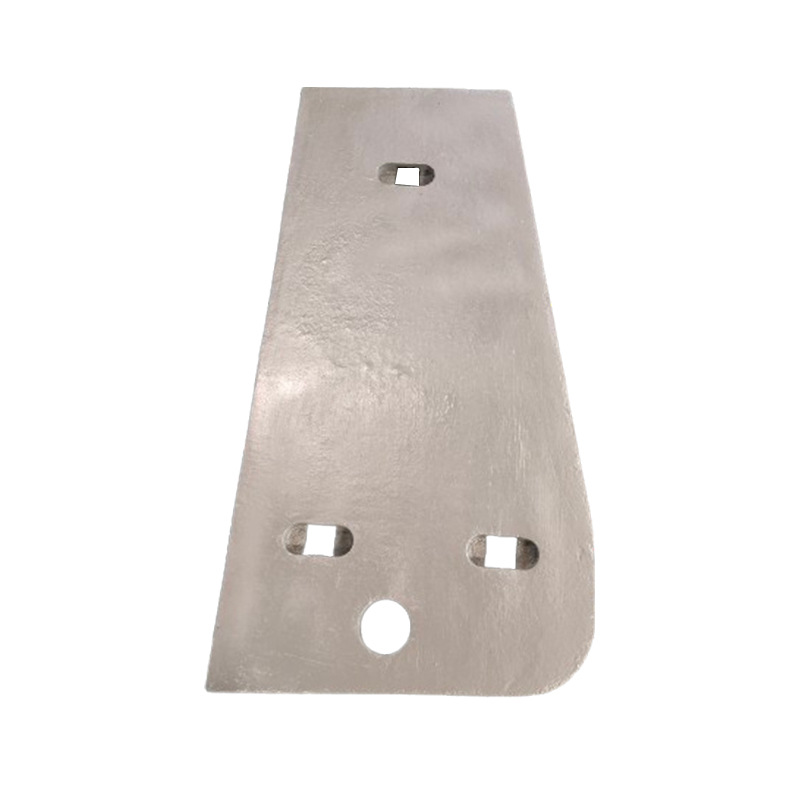
What Is the Main Function of a Side Plate in a Jaw Crusher?
Supporting the Crusher Structure
A Side plate commonly provides structural support for the jaw crusher body, moving-jaw assembly, or side-frame area. It must withstand the reactive force created as rock is compressed and fragmented inside the chamber. High strength and rigidity are therefore essential. In heavy mining and quarry applications, a correctly manufactured side plate helps maintain frame stability and supports consistent crusher operation under repeated working loads.
Connecting Major Mechanical Components
Depending on the crusher model, a Side plate may include mounting points or contact surfaces for related components such as bearings, cheek plates, toggle assemblies, or jaw mechanisms. Accurate holes, thicknesses, and machined surfaces are important for secure installation. A poorly fitting side plate can create alignment difficulties during repair. Customized production based on drawings or samples helps ensure that the part matches the intended jaw crusher arrangement.
Resisting High Load and Vibration
A Side plate experiences vibration and reactive force during continuous crushing cycles. For this reason, its material and manufacturing quality should be matched to the working environment. High-quality steel, including high manganese steel or high carbon steel for suitable designs, can provide useful impact resistance and durability. Material selection should always consider the component’s actual structural function, rather than choosing a grade only because it is commonly used in crushers.
How Is a Side Liner Different from a Side Plate?
A Side Liner Protects the Crushing Chamber
The main purpose of a side liner is to protect the internal surfaces of the jaw crusher from direct contact with abrasive rock. Unlike a structural Side plate, the liner is a wear component installed in areas where material moves, rubs, or impacts the chamber wall. It reduces direct wear on the main crusher body and helps maintenance teams replace a sacrificial part instead of repairing larger structural sections.
Wear Resistance Is the Key Requirement
While a Side plate focuses primarily on strength, rigidity, and support, a side liner must also withstand continuous abrasion from crushed material. High manganese steel is frequently selected for wear components because it offers strong toughness under impact conditions. The correct material still depends on feed size, rock hardness, abrasiveness, moisture, and crusher settings. Harder rock may require a carefully selected wear-resistant liner material and profile.
Terminology Can Vary by Crusher Manufacturer
The names used for crusher components can differ between OEMs, equipment models, and regional markets. In some drawings, a Side plate may refer to a structural side member; in others, it may identify a replaceable protective plate. Buyers should not rely on the name alone. Confirming the drawing, location, mounting method, and working function is the safest way to avoid ordering the wrong replacement part for a jaw crusher.
Which Material and Manufacturing Factors Matter Most?
Select Material According to Working Conditions
A Side plate used in demanding mining machinery needs a material that can handle load, vibration, impact, and environmental exposure. High manganese steel is suitable for many high-impact wear applications, while high carbon steel may be considered for applicable component designs. The chosen material should reflect the crusher model, part location, and expected duty. Huan-Tai’s technical team reviews operating requirements before recommending a practical manufacturing solution.
Accurate Casting and Machining Improve Fitment
Dimensional accuracy is important for every Side plate, particularly around mounting holes, bearing interfaces, fastening positions, and contact surfaces. Huan-Tai manufactures customized non-standard mechanical parts using appropriate casting, machining, and inspection methods. Accurate fitment helps maintenance teams install parts with less adjustment and supports stable assembly performance. It also reduces the risk of loose connections or uneven loading during crusher operation.
Inspection Supports Consistent Replacement Quality
A reliable Side plate should be checked through material preparation, casting, machining, dimensional inspection, and final packing. Huan-Tai’s production and inspection teams control quality throughout the process, helping overseas buyers receive stable and consistent parts. This is important for both small repair companies requiring urgent replacements and larger machinery manufacturers that need repeat orders with reliable dimensional consistency and agreed quality standards.
When Should Buyers Replace Side Plates and Side Liners?
Check Structural Plates for Cracks and Deformation
A Side plate should be inspected during scheduled maintenance for cracks, bent areas, damaged mounting holes, and signs of excessive vibration. Structural damage can affect the alignment and stability of related jaw crusher parts. Early inspection helps maintenance teams plan repairs before a minor issue creates a longer shutdown. For high-load equipment, replacement decisions should be based on actual wear condition and technical evaluation rather than appearance alone.
Monitor Liners for Thinning and Deep Grooves
Side liners should be replaced when wear becomes severe enough to reduce chamber protection or expose the underlying Side plate or crusher frame. Common signs include thinning sections, deep grooves, irregular wear patterns, loose mounting areas, and damaged edges. Monitoring liner condition helps protect the crusher housing and supports more predictable spare-parts planning, especially in operations processing hard, abrasive rock or ore.
Confirm Drawings Before Ordering Custom Parts
Before ordering a customized Side plate or side liner, buyers should provide part numbers, drawings, samples, photographs, or measured dimensions. This is particularly important for older crushers and equipment with previous modifications. Delivery schedules depend on material preparation, casting, machining, inspection, and drawing confirmation. Repeat parts may move through production more smoothly, while complex custom designs may require additional time for technical review and process planning.
Conclusion
A Side plate usually supports the jaw crusher structure, while a side liner mainly protects chamber surfaces from abrasive material. Because terminology varies by crusher model, buyers should confirm the part’s location and function before ordering. Correct material selection, accurate manufacturing, and timely inspection help protect crusher reliability, maintenance budgets, and production continuity.
FAQ
Q1: Is a Side plate always a wear part?
Not always. A Side plate is often structural, while a side liner is usually a replaceable wear component.
Q2: What material is used for jaw crusher side liners?
High manganese steel is commonly used for high-impact, abrasive crushing conditions.
Q3: Can Huan-Tai make parts from samples?
Yes. We can manufacture customized parts from samples, drawings, part numbers, or confirmed dimensions.
Q4: How can I identify the correct replacement part?
Provide the crusher model, drawing, installation location, dimensions, and clear photos for technical confirmation.
Q5: Do you manufacture precision electronic components?
No. We focus on customized mechanical parts for mining, engineering, and industrial equipment.
Choose the Right Jaw Crusher Side Components with Huan-Tai
Avoid costly ordering mistakes by confirming whether your required part is a structural Side plate or a replaceable side liner. Xian Huan-Tai Technology and Development Co., Ltd. brings 30 years of custom mechanical-part experience, responsive service, engineering support, controlled production, and professional inspection to every project. Send us your drawing, sample, equipment model, or worn part details, and our team will help assess a practical solution. Email inquiry@huan-tai.org for a customized quotation.
References
- Wills, Barry A., and James Finch. Wills’ Mineral Processing Technology: An Introduction to the Practical Aspects of Ore Treatment and Mineral Recovery. Butterworth-Heinemann, 2016.
- Gupta, Ashok, and Denis S. Yan. Mineral Processing Design and Operation: An Introduction. Elsevier, 2016.
- Mular, Andrew L., Doug N. Halbe, and Derek J. Barratt. Mineral Processing Plant Design, Practice, and Control. Society for Mining, Metallurgy, and Exploration, 2002.
- Davis, Joseph R. ASM Specialty Handbook: Manganese Steels. ASM International, 2000.
- Oberg, Erik, Franklin D. Jones, Holbrook L. Horton, and Henry H. Ryffel. Machinery’s Handbook. Industrial Press, 2020.
