
Choosing the right crusher hammer head means finding the right balance between hardness, toughness, and casting accuracy. This is because the hammer head is what takes the full force of hard rocks hitting the machine. The best crusher hammer head keeps the rotor balanced during long production runs on rough material and doesn’t chip or wear out quickly.
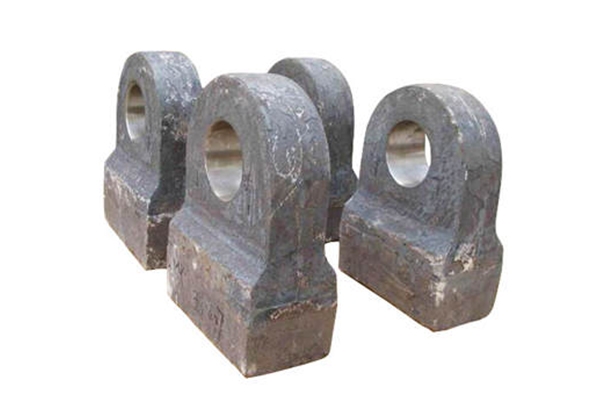
Why Hard Rock Crushing Demands a Tougher Hammer Head
Constant Impact Accelerates Wear
A crusher hammer head gets hit thousands of times an hour by hard rock, which wears down the working edge much faster than with soft rock. When working with granite or abrasive ore, operators need a crusher hammer head that is made from a tougher grade so that it doesn’t need to be replaced often and has less unplanned downtime.
Uneven Wear Throws Off Rotor Balance
If the crusher hammer head wears unevenly, it can throw the rotor out of balance. This causes vibrations that wear out the bearings and shorten the life of the machine. If you choose a crusher hammer head with a hitting face that is the same hardness all the way across, the machine will run more smoothly, even when it’s loaded with hard rocks.
Softer Materials Fail Faster Under Load
A crusher hammer head made of regular carbon steel can’t handle being hit by hard rocks over and over again, but one made of alloyed steel can. If the operators don’t think about how hard the feed is, the crusher hammer head often chips or cracks before the scheduled repair interval.
What Makes a Crusher Hammer Head Perform Well in Hard Rock?
Alloy and High-Manganese Steel Castings
The parts of Huan-Tai’s crusher hammer heads are made of alloy steel or high-manganese steel, which are both chosen because they can handle shocks without breaking. When high-manganese steel is hit over and over, it hardens on the surface. This makes the crusher hammer head stronger over time.
High-Chromium Cast Iron for Extreme Abrasion
When it comes to the roughest, hardest rocks, a crusher hammer head made of high-chromium cast iron will last longer than one made of regular steel. In mining and quarrying operations that run continuous production schedules, this choice of material greatly extends the service life.
Precision Casting Locks In Accuracy
Huan-Tai uses lost-wax casting, resin sand casting, or the V-method, based on the part shape, to make sure that the crusher hammer head fits well on the rotor. Tolerances are kept tight enough by these steps to ensure a precise fit.
How to Get the Best Crusher Hammer Head for Your Operation
Match Specifications to Your Rock Type
To choose the best crusher hammer head, you must first match the material grade to the feed size and strength of the rock. Huan-Tai looks at plans or worn models before telling you what size and type of casting material will work best for your needs.
Confirm Quality Control at Every Stage
Before being sent out, every crusher hammer head is hardness tested and measured to make sure it fits correctly. There is also a production team that oversees quality during casting, machining, and finishing to make sure that every order gets the same results.
Plan Around Realistic Delivery Timelines
Delivery times for a custom crusher hammer head depend on how complicated the part is and how long it takes to check the plan and make the pattern. Huan-Tai tells customers about realistic lead times up front so they can confidently plan when to replace their products.
Conclusion
The best crusher hammer head for breaking up hard rocks is made from the right casting material, is the right size, and is consistently checked for quality to make sure it can handle constant pressure. Huan-Tai uses its 30 years of experience in making things to make a crusher hammer head that can handle hard rock operations that go on all the time.
FAQ
Q1: What material works best for hard rock crushing?
A1: High-manganese steel or high-chromium cast iron typically performs best, depending on rock abrasiveness and impact intensity.
Q2: How often should a crusher hammer head be replaced?
A2: Replacement intervals depend on rock hardness and operating hours, so inspect the hammer head regularly during maintenance checks.
Q3: Can Huan-Tai produce a custom crusher hammer head?
A3: Yes, our technical team can reproduce a hammer head from worn samples or drawings to match your specific rotor design.
Q4: Does uneven wear affect crusher performance?
A4: Yes, uneven wear can unbalance the rotor and increase vibration, so consistent hardness across the hammer head matters.
Q5: How long does a custom order take to produce?
A5: Lead time depends on drawing confirmation and casting complexity, so timelines vary rather than following a fixed schedule.
Custom Crusher Hammer Heads for Long-Lasting Performance
Need a crusher hammer head built to handle hard rock without frequent replacement? Huan-Tai brings 30 years of industry experience, a professional production team that manages quality throughout casting and machining, and a technical team ready to match your exact rotor specifications. Whether you need a single replacement or a full set of custom hammer heads, we respond quickly with realistic timelines. Send your drawings or samples to inquiry@huan-tai.org and keep your crusher running at full capacity.
References
- Beeley, P., Foundry Technology, Butterworth-Heinemann.
- Wills, B.A. and Napier-Munn, T.J., Wills’ Mineral Processing Technology, Elsevier Science.
- Gupta, A. and Yan, D.S., Mineral Processing Design and Operations, Elsevier Science.
- Lynch, A.J., Mineral Crushing and Grinding Circuits: Their Simulation, Optimisation, Design and Control, Elsevier Scientific Publishing Company.
- Davis, J.R. (ed.), ASM Handbook, Volume 15: Casting, ASM International.
