
High-manganese steel, alloy steel, and high-chromium cast iron are all good materials for side liner plates, but the best one depends on the load and wear conditions. For tough crushing environments, the right choice of side liner plate strikes a balance between impact toughness and wear resistance.
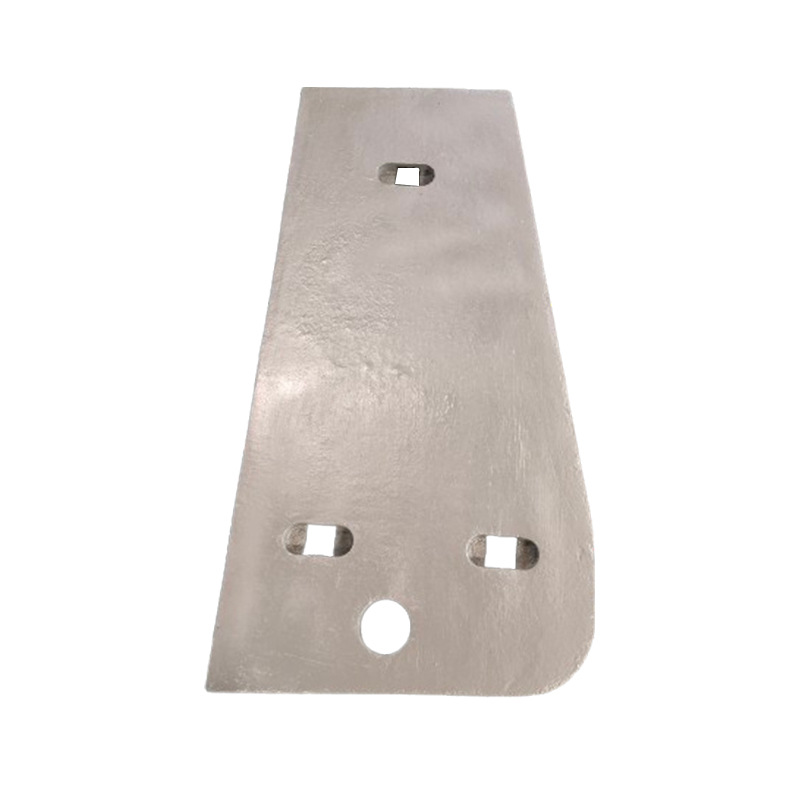
What Materials Make the Best Side Liner Plates?
Alloy Steel Side Liner Plates for Balanced Performance
A side liner plate made of alloy steel strikes a good balance between hardness and wear resistance, so it can be used for basic crushing tasks with a variety of feed materials. When rebuilding crushing chambers, many engineering teams pair these plates with eccentric bushings because both parts must be able to handle repeated mechanical stress without deforming under long-term working pressure. Alloy steel also cuts easily, which helps keep fit errors low during special production runs for non-standard chamber designs.
High-Manganese Steel for Impact-Heavy Applications
When hit over and over, high-manganese steel side liner plates work-harden, making the top layer stronger and less likely to crack. Because they can strengthen themselves, they are perfect for situations where eccentric bushings and liner plates are constantly crashing into each other, like in mine and gravel crushers that process hard, uneven rock material every day. Over time, the harder surface keeps not deforming while the underlying material stays flexible. This makes the product last longer when it is continuously loaded with big loads.
High-Chromium Cast Iron for Abrasive Wear Resistance
High-chromium cast iron gives the side liner plate a very hard surface where scratching is stronger than contact. This material doesn’t get scratched or lose material even when fine, thick feed material rubs against it continuously. When used with reliable eccentric bushings, it stretches the time between service visits for crushers that are used to process very rough rock, which means that chamber inspections and part replacements are done less often in demanding production settings.
How Does Manufacturing Process Affect Side Liner Plate Quality?
Lost-Wax Casting for Precision Geometry
Lost-wax casting makes it possible to make a side liner plate with complex shape and close size limits, which cuts down on the amount of work that needs to be done after casting. This level of accuracy is important because the plate has to fit perfectly with the eccentric bushings and other frame parts around it. This makes sure that the assembly goes smoothly and that the load is spread evenly throughout the crushing chamber. It also cuts down on the amount of work that needs to be redone when the parts get to the site.
Resin Sand Casting for Complex Structural Parts
Resin sand casting is good for making thick, uniform casts that can handle heavy mechanical loads. It works best for bigger or more complicated side liner plate designs. When carefully machined eccentric bushings are added to this process, it allows for customized non-standard configurations for customers whose crusher frames don’t have the standard industry sizes. It’s still a good choice when the plans call for bigger cross-sections or stronger fixing points.
V-Method Casting for Dimensional Consistency
With the V-method casting method, a side liner plate is made that has a smooth surface and the same exact dimensions in every production batch. This level of consistency is important for customers who are ordering more than one set of eccentric bushings, because matching tolerances across replacement parts makes installation easier and helps keep crusher performance stable over time, even if orders are placed months apart.
Why Does Material Selection Matter for Crusher Performance?
Fracture and Impact Resistance in High-Load Environments
When properly specified, a side liner plate must be able to withstand both breaking and sudden impacts that are common in mining and quarrying. When eccentric bushings are used in high-load situations, they are put through similar stresses. This means that the selection of materials for the whole crushing chamber should be based on a unified engineering approach, rather than treating each part separately. If you don’t pay attention to this balance, the cracking will happen faster during peak loading cycles.
Compatibility with Eccentric Bushings and Other Wear Parts
How well a side liner plate works depends on how well it fits with eccentric bushings and other wear parts nearby. Parts that don’t match in terms of hardness or fit wear out more quickly and can shorten the life of well-made parts that would otherwise last a long time. Huan-Tai designs arrangements where liner plates and bushings are ordered together. This makes the whole crushing system work in a stable and reliable way.
Matching Material to Mining and Engineering Applications
A side liner plate has to work in a lot of different ways for mining, building, and farming equipment. Working with abrasive ore is different from working with dense aggregate or recycled construction waste. By looking at the specs of the eccentric joints and the feed material, you can figure out whether alloy steel, high-manganese steel, or high-chromium cast iron will work best in a certain production setting.
Conclusion
Which material to use for the right side liner plate relies on the type of grinding setting, load strength, and amount of wear. Huan-Tai has been making custom mechanical parts for 30 years. They help their clients match the right material and casting process to the real-world conditions so the parts work reliably and for a long time.
FAQ
What is a side liner plate used for?
It keeps the walls inside a crushing room safe from direct impact and rough wear while it’s working.
Can the side liner plates be changed?
Huan-Tai does make non-standard side liner plates that are made to fit certain crusher models and plans.
What kind of material lasts the longest when it’s rough?
In general, high-chromium cast iron is the most resistant to wear from rough surfaces.
Can all eccentric bushings be used with side liner plates?
Frame design affects compatibility, and Huan-Tai experts check the fit before production.
How does Huan-Tai cast her spells?
Choose from lost-wax, resin sand, and V-method casting based on the part’s complexity and accuracy needs.
Get a Customized Side Liner Plate Quote Today
It has taken Xian Huan-Tai Technology and Development Co., Ltd. 30 years to become the best at making special, non-standard mechanical parts for mining, building, and farming equipment. Our production team is in charge of quality at every step, and our technical engineers work directly with you to solve problems with fit and performance that other sources miss. We’re ready to talk about your plans and needs, whether you just need one new side liner plate or a whole set of parts. Email us at inquiry@huan-tai.org right now to talk about what you need for your next project.
References
- Anderson, R. — Wear-Resistant Materials in Crushing Equipment Design
- Chen, M. — Casting Methods and Their Influence on Component Durability
- Okafor, T. — Manganese Steel Applications in Heavy Mining Machinery
- Petrov, D. — Mechanical Load Analysis of Crusher Wear Components
- Silva, J. — High-Chromium Alloys and Abrasion Resistance in Industrial Equipment
