
A track link is a core structural component of the undercarriage system on tracked mining equipment such as excavators, bulldozers, and mining crawlers. Each link connects to form a continuous chain that wraps around the drive sprocket, idler, and rollers, allowing the machine to move across uneven, soft, or rocky terrain. The Track Link transfers drive force from the sprocket to the ground while supporting the full weight of the machine above it.
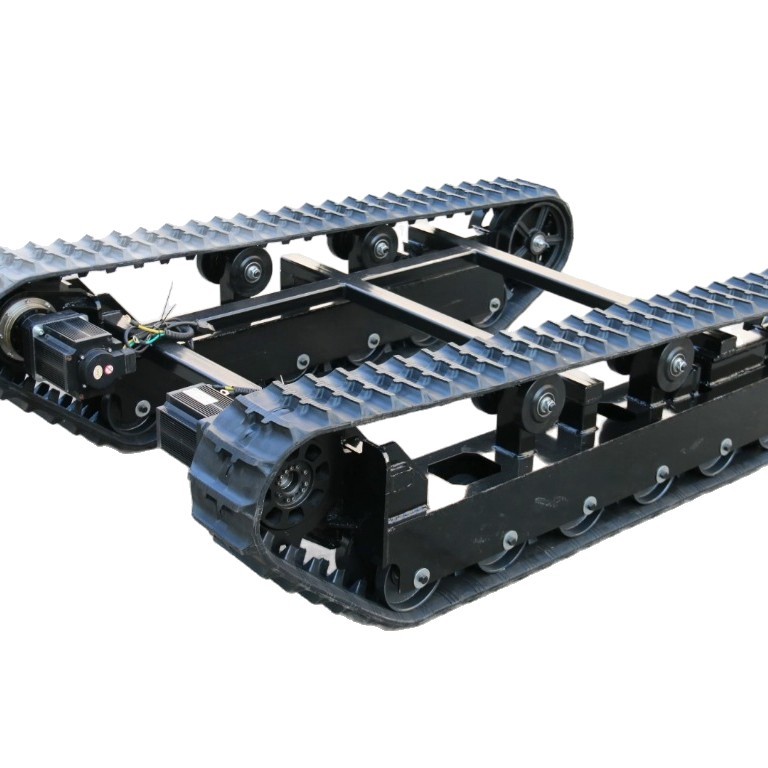
What a Track Link Does in a Mining Machine’s Undercarriage
The Chain Assembly and How It Transmits Drive Force
The undercarriage chain on a tracked machine is made up of dozens of individual Track Link sections pinned together. When the drive sprocket rotates, it engages the link’s pin bushings and pulls the chain forward, propelling the machine across the ground. Each track link must handle both tensile loads from the drive system and compressive loads from the machine’s weight bearing down through the rollers — simultaneously and continuously throughout every work shift.
Pin and Bushing Interface
At the heart of every Track Link assembly is the pin-and-bushing connection. The pin passes through the bore of adjacent links, held in place by press-fit bushings that allow controlled rotation as the chain articulates around the sprocket and idler. The wear rate at this interface largely determines the service life of the entire track assembly. Precision in bore diameter and surface hardness at the Track Link pin hole is therefore one of the most important quality checkpoints during manufacturing.
Contact With Ground and Wear Surfaces
The bottom face of each track link — or the track shoe bolted to it — is the surface that contacts the ground directly. In mining applications, this means constant abrasion from rock fragments, gravel, and compacted earth. The Track Link must resist this wear without cracking or deforming, which is why material selection and heat treatment are critical. A link that wears unevenly will cause the entire chain to run out of pitch alignment, leading to accelerated sprocket and roller wear.
Material and Structural Requirements for Mining-Grade Track Links
High-Strength Cast Steel for Demanding Conditions
Mining environments place extreme demands on undercarriage components. Track links used on excavators and crawlers in open-pit or underground operations must handle far greater loads than those in standard construction applications. High-quality cast steel is the preferred base material — it provides the toughness and tensile strength needed to absorb shock loads without fracturing, while remaining machinable enough to achieve the tight dimensional tolerances required for proper chain pitch and pin fit.
Structural Design That Handles High-Load Cycles
The geometry of a track link is not arbitrary — it is engineered to distribute stress evenly across the body during both drive loading and ground contact. The reasonable structural design and precise casting process allow each link to withstand the high-load, high-cycle operation typical of mining machinery without developing fatigue cracks at stress concentration points. This design discipline is what separates purpose-built mining track components from lower-grade alternatives that may appear dimensionally similar but fail much sooner in service.
Ease of Replacement and Long Service Life
Even well-designed track links will eventually wear out — the question is how long they last and how difficult they are to replace. A good Track Link design allows for straightforward disassembly and reassembly using standard tools, reducing the time machines spend out of service during scheduled maintenance. With a relatively long service life built in through proper material and heat treatment choices, the total cost per operating hour for the undercarriage system is kept as low as possible — an important factor for any mining operation managing tight equipment budgets.
Sourcing and Customizing Track Links for Your Equipment
Matching Link Dimensions to Your Machine Model
Track links are machine-specific — pitch, link height, shoe bolt pattern, and pin bore diameter must all match the OEM specification precisely. When sourcing replacements, the safest approach is to provide the manufacturer with either the OEM part number, a detailed drawing, or a physical sample. This eliminates guesswork and ensures the replacement Track Link will run correctly on your existing sprocket, idler, and roller system without accelerating wear on surrounding components.
Custom Manufacturing and Lead Time
Standard track link profiles for widely used machine platforms can typically be produced within a predictable timeframe. However, non-standard or application-specific links — particularly those requiring multiple rounds of drawing review, specialized casting tooling, or unique heat treatment specifications — may take longer to complete. Sharing your project timeline at the inquiry stage allows the manufacturer to schedule production accordingly and flag any potential delays before they affect your maintenance window.
Quality Control From Casting Through Inspection
Every track link should be subject to dimensional inspection, hardness testing, and surface quality checks before shipment. For mining equipment operating in remote or underground locations, a failed undercarriage component can mean significant logistical cost to get a replacement to site. Suppliers who provide inspection documentation with each batch give procurement and maintenance teams the traceability they need to manage equipment reliability with confidence.
Conclusion
The track link is the backbone of any tracked mining machine’s mobility system. Its performance under load, resistance to wear, and ease of replacement all directly affect equipment uptime and operating cost. Choosing a manufacturer with genuine expertise in cast steel undercarriage components — and the quality control processes to back it up — is one of the most impactful procurement decisions a mining equipment team can make.
FAQ
Q1: What is the standard material for mining-grade Track Links?
High-quality cast steel is the most common choice, offering the right balance of toughness, strength, and wear resistance for heavy mining applications.
Q2: How do I know when a Track Link needs replacing?
Visible elongation of the chain pitch, uneven wear on the link body, or cracking around the pin bore are reliable indicators that replacement is due.
Q3: Can Track Links be customized for non-standard machines?
Yes. Custom links can be manufactured from drawings or samples to match any machine’s undercarriage geometry and load requirements.
Q4: What affects Track Link service life the most?
Ground conditions, machine load, and the quality of the original casting and heat treatment all play significant roles in how long a Track Link lasts.
Q5: How are Track Links connected in the chain assembly?
Adjacent links are joined by hardened steel pins pressed through matched bushings, forming a flexible, load-bearing chain that articulates smoothly around the sprocket and idler.
Let’s Build the Right Track Link for Your Equipment
At Xian Huan-Tai Technology and Development Co., Ltd., we’ve spent over 30 years manufacturing precision mechanical parts for mining and engineering machinery customers around the world. Our dedicated production and technical teams control quality at every stage — from casting through final inspection — so you receive components that perform exactly as specified. If you need standard or custom Track Links, send us your drawings or samples and let’s get to work. Reach our team at inquiry@huan-tai.org.
References
- Caterpillar Inc. (2010). Undercarriage Systems: Application and Maintenance Guide. Caterpillar Service Publications, Peoria, IL. Chapter on track link wear patterns and replacement criteria.
- Frimpong, S., Hu, Y., & Awuah-Offei, K. (2005). Mechanics of cable shovel-formation interactions in surface mining excavations. Journal of Terramechanics, 42(1), 15–33.
- Shoop, S. A., Coutermarsh, B., & Diemand, D. (2006). Vehicle Mobility Modeling for Winter Conditions. U.S. Army Cold Regions Research and Engineering Laboratory. Section on tracked vehicle ground interaction and undercarriage loading.
- Peng, S. S. (2006). Longwall Mining (2nd ed.). West Virginia University Press. Coverage of tracked mining equipment undercarriage design and maintenance.
- Edwards, J. D. (2001). Electrical Motor Drive Systems: Mechanical Drive Train and Applications. Pearson Education. Background on drive chain mechanics and load transfer in continuous track systems.
