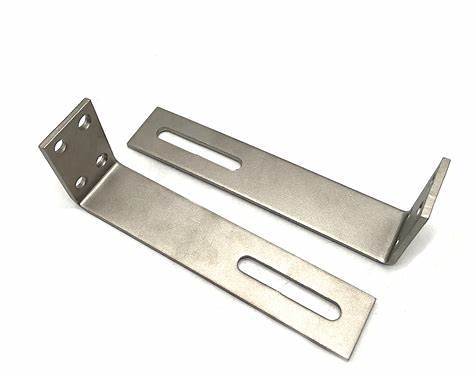
How High-Strength Brackets Improve Structural Integrity in Applications

How High-Strength Brackets Improve Structural Integrity in Applications

High-strength brackets revolutionize structural applications by providing enhanced load distribution, superior stress resistance, and exceptional durability compared to standard mounting solutions. These engineered components utilize premium materials and advanced manufacturing techniques to optimize load-bearing capacity while maintaining dimensional accuracy under extreme conditions. When properly integrated into machinery and equipment assemblies, high-strength brackets significantly reduce stress concentrations at critical connection points, extending operational lifespan and improving overall system reliability across demanding industrial applications.

Comprehending Structural Integrity and the Role of Brackets

It is the basic capacity of any mechanical structure to continue what it was designed to do while resisting diverse loads, environmental stressors, and operating demands without encountering failure. This ability is referred to as structural integrity. This approach serves as the foundation for engineering processes that are both safe and dependable across a wide range of sectors, from minerals extraction machinery to components for precision forklifts with accuracy.

The Critical Function of Mounting Hardware in Load Distribution

Brackets are vital components that function as intermediate components, transferring loads across various structural parts while simultaneously preserving alignment and avoiding distortion throughout the process. Mounting hardware, in contrast to simple fasteners, is required to support complicated stress patterns, which include bending, compression, and shear stresses that occur concurrently during the functioning of the equipment. How well these components disperse concentrated loads over larger surface areas is strongly influenced by the shape of these components as well as the material qualities that they possess.

The ideas of stress analysis are included into contemporary bracket designs in order to optimize the arrangement of materials in areas where stresses are concentrated the highest. This engineering method assures that locations for mounting can manage both permanent loads from apparatus weight and changing forces produced during operating cycles. The outcome is a more durable connecting system that maintains fundamental alignment even under demanding situations.

Material Selection and Manufacturing Standards

The performance parameters of mounting hardware rely largely on material composition along with manufacturing procedures. High-grade steel alloys, steel with aluminum combinations, and specialist materials provide varying benefits based on application needs. Precision forging, computer numerical control (CNC) machining, and specific coating treatments are examples of advanced manufacturing processes that improve both the strength as well as corrosion resistance of a product.

It is equally crucial to ensure that quality control standards are adhered to in order to guarantee consistent performance throughout all manufacturing batches. Rigorous testing processes assure that each component fulfills required load classifications and dimensional limits before reaching end customers. This emphasis to manufacturing quality immediately translates into better dependability for technology and machinery applications.

Challenges in Structural Applications Without High-Strength Brackets

Equipment failures related to inadequate mounting hardware create significant operational and financial risks for manufacturing and repair facilities. Understanding these challenges helps procurement teams recognize the value of investing in superior bracket solutions that prevent costly downtime and safety incidents.

Common Failure Modes and Their Consequences

Standard mounting gear commonly encounters premature failure owing to material fatigue, low load capacity, or insufficient environmental resistance. Joint failures often emerge as progressive loosening, fracture propagation, or total structural separation under stress. These failure mechanisms become especially troublesome in large equipment applications when dynamic forces surpass the design limitations of traditional hardware.

Material deterioration offers another key difficulty, particularly in areas with exposure to chemical substances, temperature extremes, or dampness. Corrosion degrades places for attachment over time, producing unsafe scenarios where equipment may move or detach abruptly. Such occurrences may result in damages to machinery, production interruptions, and possible safety issues for people.

Financial and Operational Impact

The real cost of mounting mechanism failures goes much beyond the replacement element price. Production delay while patching broken connections may cost thousands of US dollars every hour in lost output. Emergency repairs sometimes involve accelerated parts purchases at premium pricing and extra labor expenditures to avoid operational disruption.

Liability considerations add an additional component to the economic danger equation. malfunctions in equipment which outcome in destruction to property or people harm may cause considerable legal liability and insurance claims. These concerns underscore the need of choosing mounting hardware that offers acceptable safety margins for planned uses.

How High-Strength Brackets Enhance Structural Integrity: Key Features and Benefits

Advanced bracket designs combine various technical advances that give demonstrable performance gains over standard mounting systems. These changes address the basic issues that generate failures while offering extra capabilities for applications that are challenging.

Enhanced Load-Bearing Capacity and Stress Distribution

High-strength mounting gear has optimized shapes that redistribute loads more efficiently across connecting interfaces. Reinforced locations for attachment and selective material thickness variations guarantee that stress concentrations stay below acceptable limits even during peak loading circumstances. This design style enables the same attachment size to bear substantially larger loads than typical alternatives.

The technical methods underlying these advances include analysis of finite elements and pressure modeling to discover optimum material location. Manufacturers may build brackets that give optimum strength while reducing weight and material use. This efficiency leads into economical alternatives that give outstanding performance characteristics.

Advanced Materials and Coatings

Modern high-strength brackets incorporate specialty steel alloys and advanced heat treatment processes that enhance both strength and toughness properties. These materials maintain their mechanical properties across wide temperature ranges while resisting fatigue damage from cyclic loading. Surface treatments and coatings provide additional protection against corrosion and wear in harsh operating environments.

The selection of acceptable materials relies on particular application requirements involving load magnitudes, ambient conditions, and life expectancy expectations. Premium metals provide remarkable strength-to-weight ratios that allow lighter bracket configurations without sacrificing performance. This benefit becomes especially helpful in instances where weight reduction increases overall equipment efficiency.

Selecting the Right High-Strength Brackets for Your Application

Effective bracket selection requires careful evaluation of multiple factors that influence performance and longevity in specific applications. A systematic approach helps procurement teams identify solutions that provide optimal value while meeting technical requirements.

Load Analysis and Environmental Considerations

The selection procedure starts with precise estimation of projected loads including the direction and magnitude of the load. Static loads due equipment weight constitute just one element in the whole loading spectrum. Dynamic forces from the operation of equipment, vibration, and unexpected loading sometimes exceed static estimates and need extra care during bracket design.

Environmental considerations include temperature extremes, contact with chemicals, and humidity levels considerably impact the choice of material and coating needs. Brackets designed for applications outdoors must withstand UV damage and temperature cycling effects. Industrial situations may demand particular materials that preserve qualities while confronted with oils, chemical solvents, or corrosive substances.

Industry Standards and Certification Requirements

Compliance with applicable industry standards assures that chosen brackets satisfy minimum performance as well as security criteria for the applications they are meant for. Standards organizations create testing techniques and processes for certification that check load ratings, material qualities, and dimensional correctness. These certifications give confidence that components will function as described under real service circumstances.

Different sectors may have particular needs that impact bracket selection criteria. Mining equipment applications generally demand components that withstand impact loads and harsh conditions. Food processing equipment demands components and finishing touches that fulfill hygienic requirements. Understanding these unique criteria helps guarantee compliance with relevant rules.

HUAN-TAI: Your Trusted

HUAN-TAI Technology and Development brings three decades of manufacturing expertise to the challenge of producing precision brackets that meet the demanding requirements of modern industrial applications. Our comprehensive capabilities encompass advanced materials processing, complex structural component fabrication, and customized solutions that address unique mounting challenges.

Partner for Custom High-Strength Bracket Solutions

HUAN-TAI Technology & Development adds three decades about manufacturing knowledge to the task of making precision brackets that match the rigorous requirements of current industrial applications. Our broad capabilities span sophisticated materials processing, complicated structural component production, and tailored solutions that handle particular mounting issues.

Advanced Manufacturing Capabilities and Quality Assurance

Our manufacturing strategy combines state-of-the-art technology with stringent quality control procedures to guarantee every bracket meets strict requirements. We process numerous materials including finest steel alloys, aluminum alloy compositions, as well as specialty metals to make components with perfect dimensional precision and outstanding flexibility to varied mounting applications.

The following core advantages distinguish our bracket manufacturing capabilities:

Material Versatility: We process and manufacture brackets from various materials including carbon steel, stainless steel, aluminum alloys, and specialty metals to match specific application requirements and environmental conditions.

Precision Engineering: Our advanced CNC machining centers and quality control systems ensure part accuracy within tight tolerances, enabling reliable fit and performance across complex structural assemblies.

Customization Expertise: Our engineering team collaborates with clients to develop tailored bracket solutions that address unique mounting challenges while maintaining cost-effectiveness and delivery efficiency.

These manufacturing strengths enable us to produce brackets that exceed standard performance expectations while meeting the specific needs of machinery manufacturers, equipment repair facilities, and OEM suppliers across diverse industrial sectors.

Responsive Service and Technical Support

Our commitment to client success goes beyond component manufacture to include extensive technical support and prompt service delivery. We recognize that equipment downtime produces tremendous operating strain, which motivates our emphasis on ensuring quick delivery times without sacrificing quality standards. Our skilled engineering team offers advisory services to assist customers identify best bracket options according to their unique applications.

Quality assurance techniques enable consistent performance across the production process while keeping competitive price structures which encourage both small repair establishments and enormous manufacturing operations. This balanced strategy satisfies the different demands of our client base while developing long-term relationships based on dependability and value.

Conclusion

High-strength brackets represent a critical investment in equipment reliability and operational safety across industrial applications. These engineered components deliver measurable improvements in load-bearing capacity, environmental resistance, and service life compared to conventional mounting hardware. The enhanced structural integrity provided by quality brackets translates directly into reduced maintenance costs, improved equipment uptime, and greater operational confidence for manufacturing and repair facilities. Selecting the appropriate bracket solution requires careful consideration of load requirements, environmental factors, and quality standards that match application demands.

Partner with HUAN-TAI for Superior Bracket Manufacturing Solutions

HUAN-TAI delivers industry-leading high-strength bracket solutions that enhance structural integrity across demanding industrial applications. Our three decades of manufacturing expertise, combined with advanced production capabilities and rigorous quality control, ensures reliable performance for machinery manufacturers and repair facilities worldwide. Contact our engineering team at inquiry@huan-tai.org to discuss your specific bracket requirements and discover how our customized solutions can improve your equipment reliability while maintaining competitive pricing as your trusted brackets supplier.

References

1. American Institute of Steel Construction. “Specification for Structural Steel Buildings: Load and Resistance Factor Design.” AISC 360-16 Standards Manual, 2016.

2. Peterson, R.E. “Stress Concentration Factors: Charts and Relations Useful in Making Strength Calculations for Machine Parts and Structural Elements.” John Wiley & Sons Engineering Reference, 2008.

3. Budynas, R.G. and Nisbett, J.K. “Shigley’s Mechanical Engineering Design: Component Analysis and Fatigue Considerations.” McGraw-Hill Education Engineering Series, 2020.

4. International Organization for Standardization. “Mechanical Properties of Fasteners Made of Carbon Steel and Alloy Steel: Part 1 – Bolts, Screws and Studs.” ISO 898-1:2013 Standards Publication.

5. American Society for Testing and Materials. “Standard Test Methods for Tension Testing of Metallic Materials.” ASTM E8/E8M-21 Testing Standards Manual, 2021.

6. Machinery’s Handbook Editorial Board. “Machinery’s Handbook: Manufacturing Processes and Material Properties for Industrial Applications.” Industrial Press Manufacturing Reference, 31st Edition, 2020.

Share the Post:

Related Posts

Contact us to explore More!

We Help Customer Succeed
Scroll to Top