
Several things can cause a rotor in crushing equipment, especially hammer crushers and impact crushers, to warp or deform: uneven heating that causes thermal stress, impact overload from feed material that is too hard, material imbalance from uneven wear of mounted hammers or blow bars, and poor manufacturing quality in the casting or forging that it was made from. When equipment workers and repair teams know these root causes, they can keep production going smoothly, avoid rotor damage, and extend the life of the equipment.
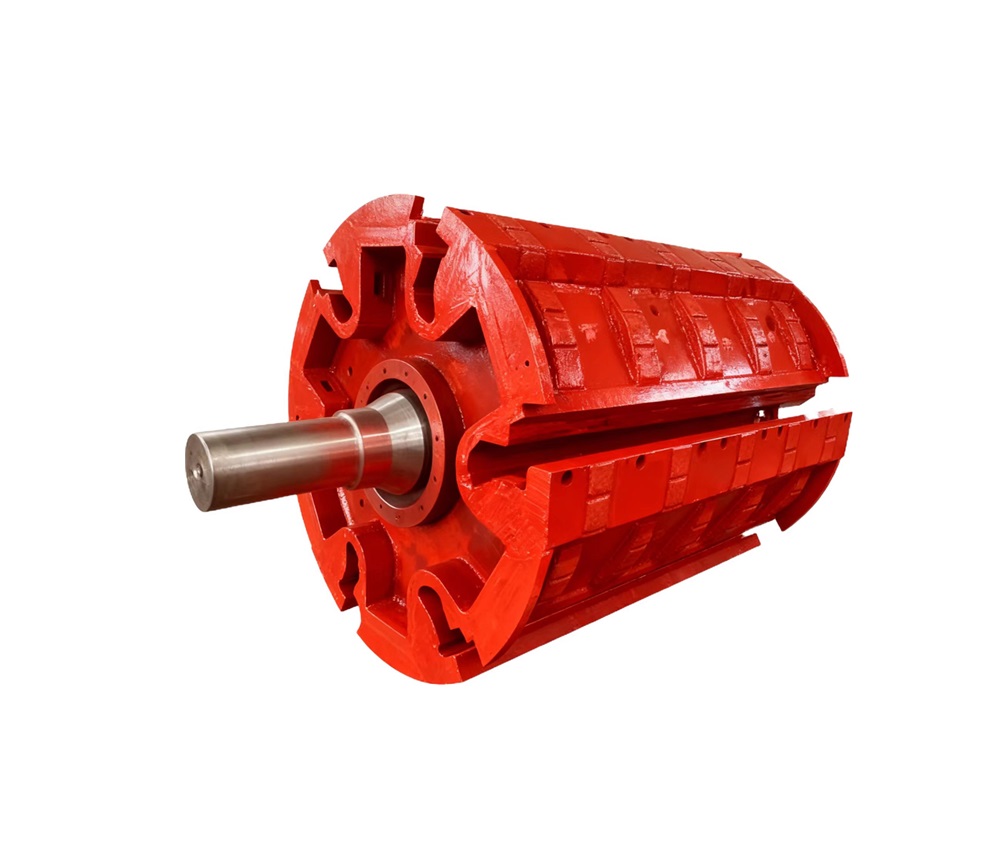
Thermal and Mechanical Stress: Primary Causes of Rotor Warping
Uneven Heat Distribution During Operation
Uneven heat loading during operation is one of the main reasons why rotors twist. Differential thermal expansion happens across the disc or body when one side of the rotor soaks up a lot more heat than the other. This can happen because of uneven feed distribution or localized friction. Over many heating and cooling cycles, this difference in stress builds up and can forever change the shape of the rotor, throwing off the balance and causing vibrations that make bearings and shaft sections wear out faster.
Impact Overload from Oversized or Excessively Hard Feed
Through its fixed hammers or blow bars, a rotor is designed to take a certain range of contact forces. When too much material or tramp metal that can’t be crushed goes into the crushing chamber, the impact force can be higher than what the rotor was designed to handle. When the rotor body is overloaded over and over again, it puts bent stress on it. This stresses the rotor disc and makes it harder for it to spin smoothly and evenly at high speeds, especially if the equipment doesn’t have enough overload safety.
Rotor Imbalance from Uneven Hammer Wear
Hammer crushers have a wheel that has several blades spread out around its edge. The rotor’s mass distribution changes as these hammers wear differently, which can be caused by differences in the feed hardness or in the way the material flows. A rotor that isn’t balanced creates centrifugal forces that bend the shaft and rotor body in a circle with each rotation. If this mismatch isn’t fixed by rotating or replacing the hammer on a frequent basis, it will put more and more stress on the rotor structure, which can lead to lasting cracking or warping.
How Rotor Design and Material Quality Affect Warping Risk
Structural Design and Its Role in Force Distribution
The optimal structural form of a well-engineered rotor spreads the breaking forces evenly across the rotor body and into the shaft. This lowers the amount of high stress in a single area, so the rotor can give a strong breaking force while keeping its structure strong over long periods of use. A better rotor design also helps make the particles more regular by making sure that the impact energy is the same at all positions of the hammer or blow bar during the breaking cycle.
Bimetallic Composite Construction for Reduced Breakage
The use of bimetallic composite hammers is one of the best ways to lower the failure of rotor parts, especially hammer breaking, which directly leads to rotor instability and subsequent bending. This design has a hard, wear-resistant head and a tough, impact-absorbing handle. This stops the usual problem of hammers breaking when they are hit hard. When bimetallic composite hammers are added to a rotor, it stays balanced for longer and works with more types of crushers and feed materials.
Material Grade and Casting Quality in Rotor Production
It is important that the material used to make the rotor body can handle the constant mechanical loads and heat cycles that come with grinding. Cast steel blades with a carefully controlled makeup give them the toughness they need to not bend when they’re loaded with big things. If the casting quality is bad, like having internal holes or uneven material hardness, it makes weak spots that are more likely to bend when heat stress and impact loads happen together in mining and gravel breaking.
Preventing Rotor Warping Through Maintenance and Correct Sourcing
Scheduled Hammer Inspection and Rotation
A regular hammer check and rotation program is the best way to stop rotor imbalance and the bending that comes after. Maintenance teams keep the rotor’s mass distribution within acceptable balance limits by checking the wear on the hammers on a regular basis and turning or changing them in sets that match. This easy action greatly increases the life of the rotor and lowers the vibration-related stress that makes bearings, shaft seals, and the rotor body itself wear out faster.
Feed Control to Avoid Overload Events
Putting in a grizzly screen or pre-screen before the crusher stops big pieces of rock from getting in and overworking the rotor. A magnetic divider upstream adds extra safety for operations that handle mined rock or demolition debris where loose metal is a possibility. Cutting down on the number of overloads is one of the most cost-effective ways to protect the rotor. This is especially true for high-speed hammer crushers, where a single hard hit can damage the rotor assembly right away.
Sourcing Replacement Rotors: Customization and Lead Time
When a rotor needs to be replaced, it is important to find a unit that fits the model of the crusher and the shaft measurements. A rotor made from the customer’s engineering plans, with the right material specifications and a well-optimized structure design, fits perfectly and works as expected from the first day it is used. Customized rotor orders, especially those that need drawing approval and special metal or composite hammer setups, may take longer to make, so it’s always best to plan your purchases ahead of time for operations that have maintenance windows.
Conclusion
Rotor warping in breaking equipment can typically be traced back to one or more clear causes, such as an imbalance in temperature, mechanical stress, uneven hammer wear, or poor material quality in the original part. If these problems are fixed with regular maintenance, good feed control, and getting blades that are built to exact specifications and high standards of quality materials, businesses have the best chance of long periods of trouble-free service between big maintenance events.
FAQ
Q1: What are the main signs that the rotor of a breaker is bent?
More shaking, strange noises during operation, odd product particle size, and faster bearing wear are all signs that a rotor has become warped or out of balance and needs to be inspected.
Q2: Is it possible to fix a bent rotor, or does it have to be replaced?
Changing where the hammers are placed can sometimes fix a small mismatch. When the rotor body warps a lot, it usually needs to be replaced because the changed shape affects both safety and crushing performance.
Q3: How does the building of the bimetallic hybrid hammer help protect the rotor?
Bimetallic hammers don’t break when they’re hit hard because they have a hard, wear-resistant head and a tough, impact-absorbing handle. This keeps the rotor from losing mass all of a sudden, which can cause it to become unbalanced and bend.
Q4: How often should you check and turn hammers?
How often you inspect relies on the feed material and the amount of work you’re doing. In rough or high-throughput settings, it’s a good idea to check the wear level once a week and set the shift plan based on how the wear is distributed.
Q5: Can a rotor be changed to fit a crusher type that isn’t standard?
Yes. Manufacturers who can fully cast, forge, and machine can make rotors based on models provided by customers. Giving full dimensions and material details up front cuts down on wait time and fitting risk.
Need a Rotor Built to Perform? Get in Touch with Huan-Tai
At Xian Huan-Tai Technology and Development Co., Ltd., we have over 30 years of experience supplying customized non-standard mechanical parts to crushing equipment manufacturers, mining machinery operators, and repair companies worldwide. Our technical and production teams manage quality at every stage — from structural design and material selection through to casting, machining, and final inspection. Send us your rotor drawings or part specifications and let us deliver a solution that fits and lasts. Contact us at inquiry@huan-tai.org.
References
1. Wills, B. A., & Finch, J. A. (2016). Wills’ Mineral Processing Technology: An Introduction to the Practical Aspects of Ore Treatment and Mineral Recovery (8th ed.). Butterworth-Heinemann.
2. Metso Outotec. (2021). Crushing and Screening Handbook (6th ed.). Metso Outotec Corporation.
3. Radziszewski, P., & Tarasiewicz, S. (1993). Simulation of ball charge and liner wear. Wear, 169(1), 77–85.
4. Gupta, A., & Yan, D. S. (2006). Mineral Processing Design and Operations: An Introduction. Elsevier Science.
5. Napier-Munn, T. J., Morrell, S., Morrison, R. D., & Kojovic, T. (1996). Mineral Comminution Circuits: Their Operation and Optimisation. Julius Kruttschnitt Mineral Research Centre.
