
One of the most dangerous repair jobs in mine and gravel businesses is taking off worn-out crusher plates. When a liner plate has been used for a long time, it can become stuck, twisted, or physically weak, which makes it much harder to remove than to install. Doing this right will keep your team safe, protect the crusher shell, and prepare it for a clean, reliable liner repair that will bring back the full crushing performance.
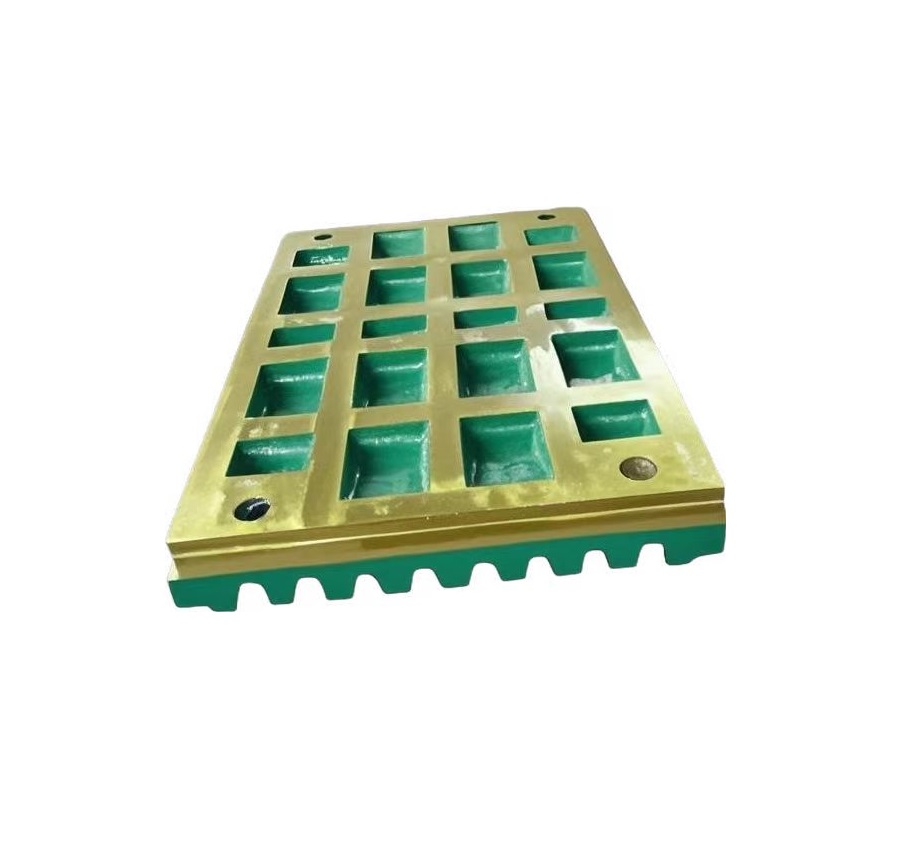
Preparing Safely Before You Start the Removal Process
Isolate the Equipment Completely
Before any work is done on a liner plate, the breaker must be completely shut down. This means that it must be electronically locked out and physically stopped from moving by mistake. The weight and moving risk are made worse by the residual material in the grinding area. As soon as the room is as empty as possible and the zero energy state is confirmed, people can approach the crushing zone.
Assess the Condition of the Worn Liner
When they are taken off, not all old liner plates act the same way. Some get stress fractures or uneven wear profiles that make them move in strange ways when the fasteners are taken off. Visual and physical checks are done on all bolts before they are touched. This helps the team figure out where problems might happen, plan the extraction process, and make sure they have all the right tools before they start the job.
Gather the Right Tools and Lifting Equipment
The liner plates for crushers that are used in mining and building are usually several hundred kilograms heavy for each section. It is imperative to use the right overhead lifting gear, spreading bars, and bracing for the job. One of the most common ways that crusher repair goes wrong and people get hurt is when they try to remove a liner plate without the right moving gear.
Key Techniques for Breaking Loose Seized or Corroded Liners
Apply Controlled Heat to Release Seized Fasteners
Long-term compression loads on bolts and backing material can cause them to stop up. By putting controlled, limited heat on the bolt places, the bond can be broken without hurting the breaker shell. It is common to do this when keeping heavy machinery in mines, where the liner plate is subjected to high pressure, water, and small bits that wear it down over time.
Use Hydraulic Jacking Points Correctly
Most new cone and jaw crushers have lift points or pry points that are meant to be used to remove the cylinder. When these are used properly, with regulated hydraulic jacks, the force of the extraction is spread out evenly, and the base or bowl is less likely to crack. Forcing a liner plate out from a point of contact that wasn’t planned can damage the shell surface and cost more to fix than just the liner itself.
Work in a Planned Sequence, Not All at Once
Load changes can’t be managed when all bolts on a big liner plate are released at the same time. The right way to do it is to loosen the screws in a cross-pattern pattern, which will gradually ease the stress around the whole edge of the liner. This is very important for jaw crusher cheek plates and concave ring sections, because uneven release can make the liner plate drop or turn in a strange way.
Post-Removal Checks and Preparation for New Liner Installation
Inspect the Shell and Seating Surfaces Thoroughly
After taking out the old liner plate, the inside of the shell needs to be carefully checked before new parts are put in. Check for cracks, erosion pits, or backing compound leftovers that might change how the new liner fits. If you don’t fix any surface irregularities, they will pass stress unevenly to the new liner plate. This will speed up wear and shorten its useful life from the start.
Clean and Prepare the Backing Surface
Before a new liner plate is put in, the backing material, which is usually epoxy compound or zinc alloy, has to be completely taken off and the surface has to be prepared according to the manufacturer’s instructions. It doesn’t make sense to rush through this step. One of the main reasons why liner failure happens too soon in high-throughput mine crushers is incomplete surface preparation, which can be easily avoided by following the right steps.
Document and Report the Wear Pattern
The wear curve of a liner plate that has been taken off shows important operating information. Uneven wear, cracks in certain areas, or faster material loss in certain spots can be signs of problems with the feed distribution, wrong closed-side settings, or material properties that are outside the crusher’s design limits. Keeping track of this data helps the engineering and repair teams make better choices in the future about which shell to use and how to run the crusher.
Conclusion
Safe liner removal comes down to preparation, the right tools, and a disciplined sequence of work. Skipping steps — whether in isolation, inspection, or extraction technique — creates risks that outweigh any time saved. For operations that depend on crusher uptime, a well-executed liner plate change is as important as the quality of the replacement part itself.
FAQ
Q1: How do I know when a crusher liner plate needs to be replaced?
Watch for reduced throughput, increased power draw, or visible wear indicators reaching the manufacturer’s minimum thickness. Some liner plates have wear indicator pins built in to take the guesswork out of timing.
Q2: What materials are crusher liner plates typically made from?
Most crusher liner plates are manufactured from high manganese steel, which work-hardens under impact. High-chrome alloy steel is also used in abrasion-intensive applications where impact loads are lower.
Q3: Can a liner plate be reused after removal?
Generally no. Once a liner plate has been removed, its seating geometry is unlikely to match well enough for safe reinstallation. Replacement is almost always the correct course of action.
Q4: How long does it take to receive a replacement liner plate?
Standard profiles can ship relatively quickly. Custom liner plates — particularly those requiring drawing confirmation, special alloy grades, or non-standard dimensions — involve longer lead times that depend on production scheduling and process complexity.
Q5: What causes uneven wear on a crusher liner plate?
Common causes include uneven material feed distribution, incorrect closed-side settings, tramp metal events, and operating outside the crusher’s designed feed size range. A wear analysis after each removal helps identify the root cause.
Partner With a Manufacturer Built for Heavy Industry
At Xian Huan-Tai Technology and Development Co., Ltd., we have been supplying customized non-standard mechanical parts to mining and engineering operations worldwide for over 30 years. Our in-house engineering team works directly with your technical specifications to deliver liner plates and crusher components that meet your performance and quality requirements. From production to final inspection, every part is managed by professionals who understand what heavy industry demands. Ready to discuss your requirements? Reach us at inquiry@huan-tai.org — we respond promptly.
References
- King, R. P. (2001). Modeling and Simulation of Mineral Processing Systems. Butterworth-Heinemann. (Chapter 7: Crusher Wear Components and Maintenance)
- Wills, B. A., & Finch, J. A. (2015). Wills’ Mineral Processing Technology: An Introduction to the Practical Aspects of Ore Treatment and Mineral Recovery (8th ed.). Elsevier.
- Lewis, F. M., Coburn, J. L., & Bhappu, R. B. (1976). Comminution: A Guide to Size-Reduction System Design. SME-AIME Transactions, 260, 161–168.
- Bearman, R. A., & Briggs, C. A. (1998). The Active Use of Crushers to Control Product Requirements. Minerals Engineering, 11(9), 849–859.
- Aldrich, C. (2013). Consumption of Steel Grinding Media in Mills: A Review. Minerals Engineering, 49, 77–91.
