
Blow bars are the rotor-mounted striking elements in an impact crusher, responsible for delivering the high-speed impact that breaks feed material down to the target size. Choosing high chrome blow bars over softer alternatives directly improves crusher efficiency — through longer wear life, more consistent product gradation, and fewer rotor change-outs that interrupt production in mining and engineering operations.
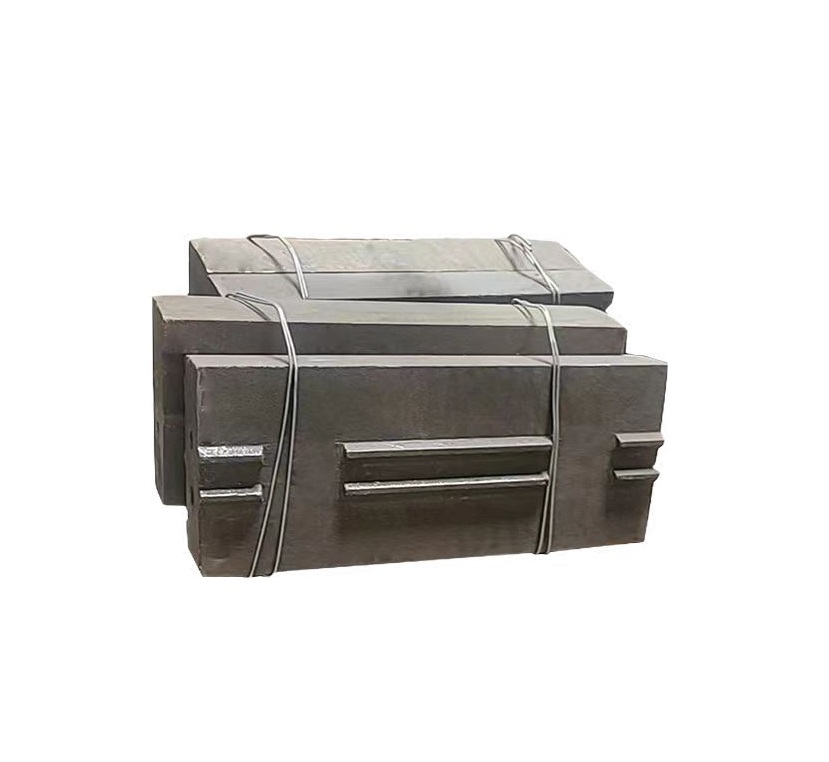
How Do High Chrome Blow Bars Extend Operational Uptime?
Slower Wear Rate Means Fewer Interruptions
Every blow bar change-out requires the crusher to be shut down, the rotor to be locked out, and the worn parts to be removed and replaced — a process that takes time and pulls maintenance personnel away from other tasks. High chrome blow bars wear significantly more slowly than manganese steel alternatives in abrasive feed conditions, which extends the interval between change-outs. For operations running high-volume impact crusher parts programs, this reduction in maintenance frequency has a direct, measurable effect on production availability.
Maintaining Rotor Balance Over the Full Service Life
As blow bars wear, their mass decreases. If bars on opposite sides of the rotor wear at different rates — due to material variability or inconsistent manufacturing — rotor imbalance develops, causing vibration that accelerates bearing wear and stresses the entire machine. High chrome blow bars, cast to tight dimensional tolerances using precision methods such as lost-wax or resin sand casting, wear more uniformly. This consistency in geometry and mass retention helps the rotor stay balanced throughout the service cycle, reducing vibration-related maintenance on other impact crusher parts.
Reducing Total Change-Out Frequency Across the Fleet
For operations running multiple impact crushers — common in large quarrying, aggregate production, and mining environments — the cumulative effect of extended blow bar life is significant. Fewer change-outs across the fleet means lower labor hours per tonne of output, reduced spare parts inventory requirements, and more predictable maintenance scheduling. High chrome impact crusher parts deliver this operational leverage by combining surface hardness with the structural integrity to last through demanding production cycles.
What Properties Make High Chrome Blow Bars More Efficient Than Alternatives?
Surface Hardness That Resists Abrasion Directly
High chromium cast iron achieves a level of surface hardness that outperforms both high manganese steel and standard alloy steel in abrasive crushing conditions. When feed material is consistently hard and abrasive — granite, basalt, silica-heavy aggregate — this hardness advantage translates directly into slower wear rates and longer service intervals. Blow bars made from high chrome cast iron hold their geometry and striking profile through more crushing cycles, maintaining efficiency that softer materials lose as their profiles wear away.
Fracture Resistance Under High-Load Impact
Hardness without toughness is a liability in impact crusher applications, where sudden oversize feed or tramp metal can deliver shock loads well above normal operating levels. Quality high chrome blow bars are engineered to resist fracture under these conditions, balancing hardness with sufficient structural integrity to absorb impact without cracking. This performance characteristic is achieved through controlled casting — whether lost-wax, V-method, or resin sand — combined with proper alloy composition and heat treatment to ensure the finished impact crusher parts meet both hardness and toughness targets.
Dimensional Accuracy for Consistent Striking Performance
A blow bar that is slightly off-dimension — in length, cross-section, or mounting profile — will not seat correctly on the rotor, will create imbalance, and will strike material unevenly. Precision casting methods ensure that each blow bar conforms to the specified geometry, so striking performance is consistent from the first cycle to the last. This dimensional discipline, applied across every batch of impact crusher parts, is what separates suppliers who manufacture with process control from those who simply supply to price.
How Should You Select and Source High Chrome Blow Bars for Your Crusher?
Match Material Grade to Feed Conditions
Not every impact crusher runs the same feed, and the right blow bar material depends on the dominant stress mode in the application. High chrome cast iron excels in high-abrasion conditions. High manganese steel is the better choice when impact intensity is high and abrasion is secondary — its work-hardening behavior provides increasing surface resistance under repeated impact loading. Alloy steel offers a balanced option for mid-range applications. A supplier with genuine application knowledge can help match blow bar material to the actual conditions rather than defaulting to a catalog recommendation.
Plan Procurement Around Lead Times
Standard high chrome blow bars in common profiles are generally available within a workable timeframe. Custom profiles — required for non-standard or older impact crusher models — involve drawing review, material sourcing, and casting process steps that extend the timeline, particularly when drawings need multiple rounds of confirmation. Purchasing managers who identify replacement requirements early and engage suppliers before stock runs critically low avoid the costly scenario of running worn impact crusher parts past their safe service limit.
Evaluate Suppliers on Quality Documentation, Not Price Alone
The performance gap between high chrome blow bars from different suppliers often comes down to manufacturing discipline — alloy composition verification, casting process control, dimensional inspection, and hardness testing. Suppliers who can provide material certification and inspection records give buyers meaningful quality assurance. For operations where rotor reliability and consistent output quality are priorities, this documentation is as important as the price per unit.
Conclusion
High chrome blow bars improve impact crusher efficiency by lasting longer, wearing more uniformly, and maintaining the rotor balance and striking geometry that consistent output depends on. Selecting the right material, ensuring precision manufacturing, and planning procurement around realistic lead times are the practical steps that deliver this efficiency advantage in real operations.
FAQ
Q1: Why do high chrome blow bars last longer than manganese steel in abrasive conditions?
High chromium cast iron achieves greater surface hardness, which directly resists abrasive wear. In feed materials with high silica content or hardness, this hardness advantage extends service life measurably.
Q2: Can high chrome blow bars fracture under impact?
A well-manufactured high chrome blow bar balances hardness with toughness to resist fracture under normal operating loads. Casting quality and alloy composition are the key factors in achieving this balance.
Q3: What casting methods are used to produce blow bars?
Precision methods including lost-wax casting, resin sand casting, and V-process casting are used to ensure dimensional accuracy and internal structural quality in finished impact crusher parts.
Q4: Are custom blow bar profiles available for non-standard crushers?
Yes. Custom profiles can be produced from customer drawings or samples. Lead times vary depending on drawing complexity and production requirements, so early engagement with the supplier is advisable.
Q5: How do I know when blow bars need replacing?
Visible wear on the striking face, changes in product gradation, or increasing rotor vibration are the primary indicators. Scheduled inspections based on operating hours are more reliable than waiting for visible symptoms.
Source Impact Crusher Parts You Can Depend On
At Xi’an Huan-Tai Technology and Development Co., Ltd., we manufacture high chrome blow bars and a full range of impact crusher parts for mining and engineering customers — with over 30 years of experience behind every component. Our technical team helps you select the right material for your application, and our production process is quality-controlled from raw material to final inspection. Tell us your crusher model, feed conditions, and volume — and we’ll deliver parts built to perform. Contact us at inquiry@huan-tai.org.
References
- Wills, B. A., & Finch, J. A. (2015). Wills’ Mineral Processing Technology: An Introduction to the Practical Aspects of Ore Treatment and Mineral Recovery (8th ed.). Butterworth-Heinemann.
- Metso Corporation (2015). Crushing and Screening Handbook (5th ed.). Metso Minerals Industries, Inc.
- Albertsson, G., Jonsson, S., & Haraldsson, J. (2015). Influence of Microstructure on Abrasive Wear of High Chromium White Cast Iron. Wear, 332–333, 717–724.
- Lindqvist, M., & Evertsson, C. M. (2003). Wear in Rock Crushing Equipment: Prediction and Influence on Product Quality. Minerals Engineering, 16(12), 1347–1354.
- Tylczak, J. H., Hawk, J. A., & Wilson, R. D. (1999). A Comparison of Laboratory Abrasion and Field Wear Results. Wear, 225–229, 1059–1069.
