
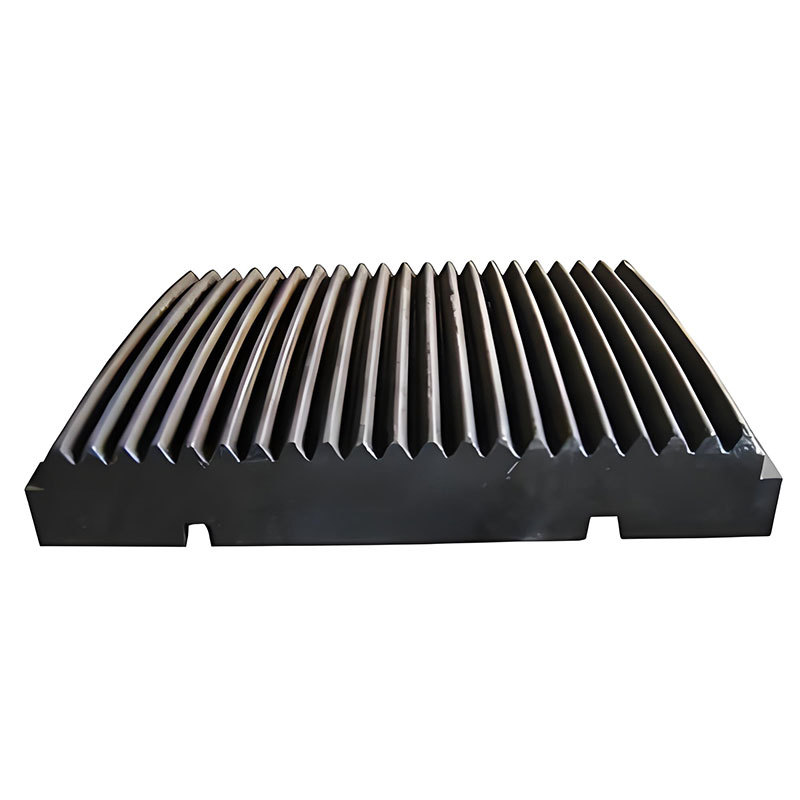
One of the most important things to do to keep a breaking business running smoothly is to choose the right jaw plate. A jaw plate is the main part of a jaw crusher that wears down because it directly contacts hard rock, metal, and gravel material and breaks it down. If you choose the right jaw plate for your feed material, crusher type, and production rate, it will last longer, cost less to maintain, and give you more reliable output in heavy engineering, mining, and quarrying.
How to Match Jaw Plate Material to Your Crushing Application
High Manganese Steel Jaw Plate for General Mining Use
In mining and quarries, high manganese steel (Mn13 or Mn18) is still the most common material used to make jaw plates. It has a great work-hardening property that makes the surface harder over time when it is hit over and over, while the core stays tough and doesn’t crack. A jaw plate made of high manganese steel is the best choice for most basic crusher jobs because it can consistently break down rock, basalt, limestone, and iron ore.
High Carbon Steel Jaw Plate for Precision-Fit Applications
High carbon steel jaw plate is a good combination of strength and machinability for uses that need tighter size limits or more reliable wear rates. This type of jaw plate is made from high-quality steel and is very strong and stiff, so it can handle the force of fragmentation without deforming. It works best with equipment setups where keeping the crusher gap setting steady is important for getting a uniform product size.
Alloy Steel Jaw Plate for Harder and More Abrasive Rock
If you are working with quartzite, porphyry, or high-silica rock, which are harder or more gritty, alloy steel jaw plate will last longer than standard manganese types. These jaw plates are resistant to rust and can be used on harder rocks that would wear down other materials more quickly. For people who work in rough conditions, the higher starting cost of an alloy steel jaw plate is usually more than made up for by the fact that it needs to be replaced less often.
Key Factors That Affect Jaw Plate Performance and Service Life
Feed Material Hardness and Abrasiveness
The type of material being handled has the most impact on the wear life of the jaw plate. A jaw plate will wear through much more quickly if it is made of hard igneous rock or metal that has a lot of quartz in it than if it is made of soft, friable rock. Before choosing a jaw plate grade, you need to know the compression strength and wear index of the material you’ll be using. Picking a material grade that is too soft will cause it to wear out quickly, and picking one that is too hard can make it break easily when hit hard.
Jaw Plate Profile and Tooth Design
How material is grabbed, broken, and released is directly related to the surface shape of a jaw plate. It can be smooth, irregular, or deep-tooth. For harder rocks, corrugated jaw plate shapes work best because they make more surface contact and spread the breaking force more equally. A smoother shape makes it less likely for sticky or clay-rich material to get clogged. When you match the jaw plate tooth shape to the feed type, the flow is higher and there is less chance of bridging at the crusher outlet.
Casting Quality and Dimensional Accuracy
If the jaw plate is badly made or the wrong size, even the best material grade won’t work as well. Internal gaps, an odd spread of hardness, or a bad fit can cause stress concentration places to crack early or wear out faster. The jaw plate that is made under strict quality control, which includes hardness testing, comparing measurements to engineering plans, and material approval, gives maintenance teams in mining and rock operations a reliable idea of how long the plate will last.
Practical Guidance on Sourcing and Replacing Jaw Plates
Custom vs. Standard Jaw Plate: What to Specify
Most crusher OEMs offer standard jaw plate shapes. However, equipment that has been changed, fixed with frames that aren’t original, or made by local machinery builders often needs jaw plate specs that aren’t standard. When people order a personalized jaw plate, they should include full technical plans, information about the material, and, if they have one, a piece of the broken part. When you give correct information up front, the production cycle goes faster and there is less chance of having to do extra work, especially for types that aren’t normal.
Lead Time Considerations for Custom Jaw Plate Orders
Most requests for standard jaw plates can be finished within an acceptable amount of time. Depending on how complicated the equipment and process needs to be, the production cycle can be longer for customized jaw plate setups that involve multiple drawing changes, special metal grades, or complex profile shapes. Buyers are told to plan purchases well ahead of regular repair windows so that parts don’t become unavailable at the wrong time and cause unplanned downtime.
Inspection and Acceptance Criteria for Incoming Jaw Plates
When sourcing and maintenance teams get a new jaw plate package, they should compare the hardness values to the material certificate, the general measurements to the plan, and look for flaws in the casting on the surface. If you buy the right jaw plate, it should come with paperwork that shows its chemical makeup, hardness test results, and production batch records. Before the first sale, make sure you and your seller agree on clear acceptance standards. This will help you avoid problems and build a long-term, reliable supply relationship.
Conclusion
To pick the best jaw plate, you need to make sure that the material grade is right for the type of rock you are working with, that the shape is right for your feed, and that you buy from a company that can back up their product with good quality paperwork. Whether you need a standard high manganese steel jaw plate or a fully customized metal grade, making sure you get these basics right will keep your tools safe and your production on track.
FAQ
What kind of material is best for hard rock mining jaw plates?
Most of the time, high manganese steel is used because it can be worked hard. For rocks that are very hard or rough, alloy steel jaw plate types last longer and don’t wear out as quickly.
How often should I get a new jaw plate?
How often you replace it varies on how hard the feed material is, how much you’re making, and what grade the material is. When a jaw plate is almost at the end of its useful life, it can be told by keeping an eye on the jaw gap settings and looking at the wear patterns.
Can the jaw plate be changed to fit crushers with different sizes?
Yes, makers with a lot of experience can make unique jaw plates from models provided by the customer. The best way to make sure a good fit and cut down on wait time is to provide full and exact plans up front.
Does the material of the jaw plate affect how well it resists corrosion?
Yes. Some types of alloy steel and steels high in manganese are resistant to rust, which is helpful in damp places or when working with rock that contains a lot of water.
What paperwork should be sent with an order for jaw plates?
To help with quality checks when the goods arrive, a dependable seller should give you material certificates, chemical makeup reports, hardness test results, and records of measurement inspections.
Get the Right Jaw Plate from a Manufacturer You Can Trust
We at Xian Huan-Tai Technology and Development Co., Ltd. have been making special, non-standard mechanical parts for 30 years and have sold them to machinery makers and mining equipment users all over the world. From choosing the raw materials to the final inspection, our specialized production and expert teams are in charge of quality at every step. We can make jaw plates that exactly match your needs, on time and as planned. Just send us your plans today. We’re ready to help. Send us a message at inquiry@huan-tai.org.
References
1. Wills, B. A., & Finch, J. A. (2016). Wills’ Mineral Processing Technology: An Introduction to the Practical Aspects of Ore Treatment and Mineral Recovery (8th ed.). Butterworth-Heinemann.
2. Gupta, A., & Yan, D. S. (2006). Mineral Processing Design and Operations: An Introduction. Elsevier Science.
3. Metso Outotec. (2021). Crushing and Screening Handbook (6th ed.). Metso Outotec Corporation.
4. Lindqvist, M., & Evertsson, C. M. (2003). Liner wear in jaw crushers. Minerals Engineering, 16(12), 1173–1181.
5. Bearman, R. A., Briggs, C. A., & Kojovic, T. (1997). The application of rock mechanics parameters to the prediction of comminution behaviour. Minerals Engineering, 10(3), 255–264.
