
One of the most effective ways to extend the life of equipment and avoid unexpected downtime in heavy engineering, mining, and quarries is to keep the bearing housings in good shape. A bearing housing that is checked often, oiled properly, and kept clean will protect the bearing it holds much better than one that is only checked when something goes wrong. Maintenance is mostly about three things: managing lubricant, inspecting and keeping an eye on condition, and knowing when to clean or repair something.
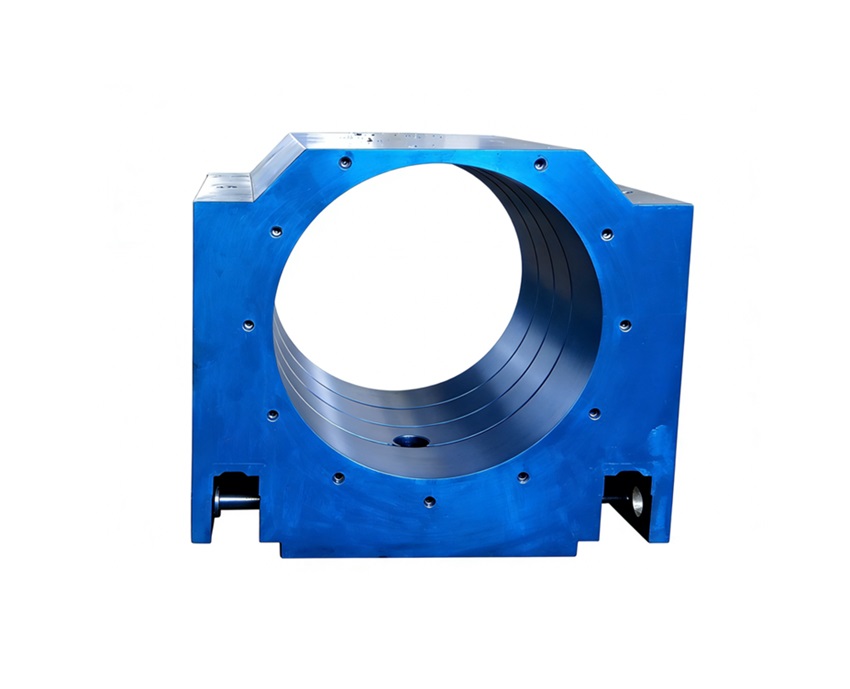
Lubrication: The Foundation of Bearing Housing Maintenance
Choosing the Right Lubricant for the Application
The oil inside a bearing housing does more than just lower friction. It also makes a protecting film that stops metal from touching metal, moves heat away, and keeps dirt and other particles from getting to the bearing surfaces. For mine crusher bearing housing units and heavy engineering equipment, it is important to use a high-quality grease that doesn’t leak and has the right thickness for the temperature where it will be used. Using the wrong grade speeds up wear and cuts the service life of the bearing housing by a large amount.
Establishing a Greasing Schedule and Avoiding Over-Lubrication
Lack of oil is one of the main reasons why industrial equipment bearings break down. A regular greasing plan keeps this from happening. However, over-greasing a bearing housing is just as bad. As the bearing spins through the extra grease, it produces heat, which causes higher working temperatures and faster wear. Setting the right re-greasing frequency and amount based on the size, speed, and load of the bearing keeps the bearing housing working within its intended limits.
Monitoring Lubricant Condition During Routine Checks
At each repair check, you should look and feel inside the bearing housing to see how much grease or oil is there. If the lube is cloudy, gritty, or full of water, it means that the seals around the bearing housing may be broken or that dirt from the work area is getting into the housing. If this is caught early, maintenance teams can clean and refill the housing before damage to the bearings happens. This keeps the cost of repair or replacement from going up in the future.
Inspection Practices That Keep Bearing Housing Problems from Escalating
Visual and Tactile Inspection of the Housing Body and Seals
At every maintenance check, the bearing housing is carefully looked over visually. The outside body is checked for cracks, corrosion, or damage from impacts. The seal faces are checked for signs of wear or deformation, and the mounting surfaces are checked for fretting rust that would show tiny movements when the bearing is loaded. Even though the housing casting has an optimized structural design that spreads stress widely, damage from machine hits or rust in tough mining settings can still weaken the structure if it is not found early.
Vibration and Temperature Monitoring as Early Warning Tools
For bearing housing units on high-speed or heavily loaded machinery — such as crusher main shaft assemblies or conveyor drives in mining operations — vibration monitoring provides the earliest possible warning of developing problems. A shift in vibration signature often precedes visible damage by weeks. Similarly, a bearing housing running consistently hotter than its baseline temperature is a reliable sign that lubrication is insufficient, the bearing is overloaded, or internal clearances are changing. Both measurements are quick, non-invasive, and cost nothing to take.
Checking Bore Condition and Fastener Torque
During planned maintenance shutdowns, the bearing housing bore should be measured for any increase in diameter that would indicate fretting wear of the interference fit. A bearing housing bore that has worn beyond tolerance will allow the bearing outer race to move, generating the fretting corrosion and progressive bore enlargement that leads to rapid bearing failure. At the same time, all fasteners securing the housing to the machine frame should be checked and re-torqued to specification to prevent housing movement under dynamic loading.
Cleaning, Replacement, and Sourcing the Right Bearing Housing
Correct Cleaning Procedures During Bearing Replacement
When a bearing is being replaced, the bearing housing bore, seal grooves, and lubricant passages should be thoroughly cleaned before the new bearing is fitted. Any residual contamination or hardened grease left in the housing will compromise the new bearing from the start. Cleaning should use appropriate solvents, and the bore should be inspected after cleaning for scoring or corrosion pitting that might affect the interference fit. A clean, properly measured bore is the foundation of a successful bearing installation.
When to Replace Rather Than Repair a Bearing Housing
If bore wear, structural cracking, or severe corrosion damage is found during inspection, replacement of the bearing housing is the more reliable choice compared to attempting repair. A replacement bearing housing produced to an optimized structural design and manufactured from quality cast steel or cast iron provides a fresh bore surface and correct geometry from day one. For heavy-duty applications in mining and engineering, a housing that is suitable for various types of equipment and dimensionally consistent with the original drawing delivers the best long-term result.
Sourcing Custom Bearing Housings: Specifications and Lead Time
Standard bearing housing sizes cover many common applications, but equipment in mining, crushing, or specialized engineering configurations frequently requires custom dimensions. A bearing housing produced to the customer’s engineering drawings — covering bore diameter, overall dimensions, mounting configuration, and material grade — eliminates the dimensional uncertainty that leads to loose fits and premature wear. Custom orders, particularly those involving drawing revisions or special tolerances, may require a longer production cycle, so planning procurement ahead of scheduled maintenance windows is always the practical approach.
Conclusion
Bearing housing maintenance comes down to consistency: regular lubrication, scheduled inspection, and prompt action when wear or contamination is detected. These habits, combined with sourcing replacement housings that are correctly specified and properly manufactured, give industrial equipment the best chance of long, trouble-free service. For mining and engineering operations where uptime directly affects output, a well-maintained bearing housing is one of the most cost-effective investments a maintenance team can make.
FAQ
Q1: How often should bearing housing grease be replenished?
Regreasing frequency depends on bearing size, operating speed, load, and temperature. High-load or high-speed applications in mining machinery may require greasing every few hundred operating hours — always follow the equipment manufacturer’s specification.
Q2: What causes a bearing housing to overheat?
Overheating usually results from insufficient or contaminated lubrication, excessive bearing preload, a bore that has lost its correct fit, or operation beyond the bearing’s rated load or speed capacity.
Q3: Can a corroded bearing housing bore be restored?
Mild corrosion can be cleaned and treated. Where corrosion pitting has altered bore dimensions or surface finish beyond acceptable limits, replacement of the bearing housing is the more reliable solution.
Q4: How do I know if my bearing housing needs replacing?
Key indicators include bore diameter exceeding tolerance, visible cracks in the housing body, persistent overheating despite correct lubrication, and fretting corrosion on the bore or mounting surfaces that cannot be corrected.
Q5: Can bearing housings be produced to non-standard dimensions?
Yes. Manufacturers with full casting and machining capability can produce bearing housing to customer-supplied drawings, including non-standard bore sizes, flange patterns, and material specifications.
Keep Your Equipment Running with the Right Bearing Housing
Xian Huan-Tai Technology and Development Co., Ltd. has over 30 years of experience manufacturing customized non-standard mechanical parts for mining machinery, crushing equipment, and heavy engineering applications worldwide. Our professional production and technical teams oversee quality at every stage — from material selection and casting through to precision machining and final inspection — so you receive a bearing housing that performs as specified and lasts. Send us your drawings or part requirements today: inquiry@huan-tai.org.
References
1. Harris, T. A., & Kotzalas, M. N. (2006). Rolling Bearing Analysis: Essential Concepts of Bearing Technology (5th ed.). CRC Press.
2. SKF Group. (2018). SKF Bearing Maintenance Handbook. SKF Group Publication.
3. Neale, M. J. (Ed.). (1993). The Tribology Handbook (2nd ed.). Butterworth-Heinemann.
4. Mobley, R. K. (2002). An Introduction to Predictive Maintenance (2nd ed.). Butterworth-Heinemann.
5. Eschmann, P., Hasbargen, L., & Weigand, K. (1985). Ball and Roller Bearings: Theory, Design, and Application. John Wiley & Sons.
