
There are three main things you need to think about when picking an eccentric shaft for a heavy-duty jaw crusher: the type of material, how rigid the structure needs to be, and how well it works with your specific crushing application. Because the eccentric shaft changes rotary motion into the crushing stroke, making sure it is made of high manganese steel or high carbon steel that has been tested for strength will make sure your unit can handle the hardest rock feeds without wearing out or breaking down too soon.
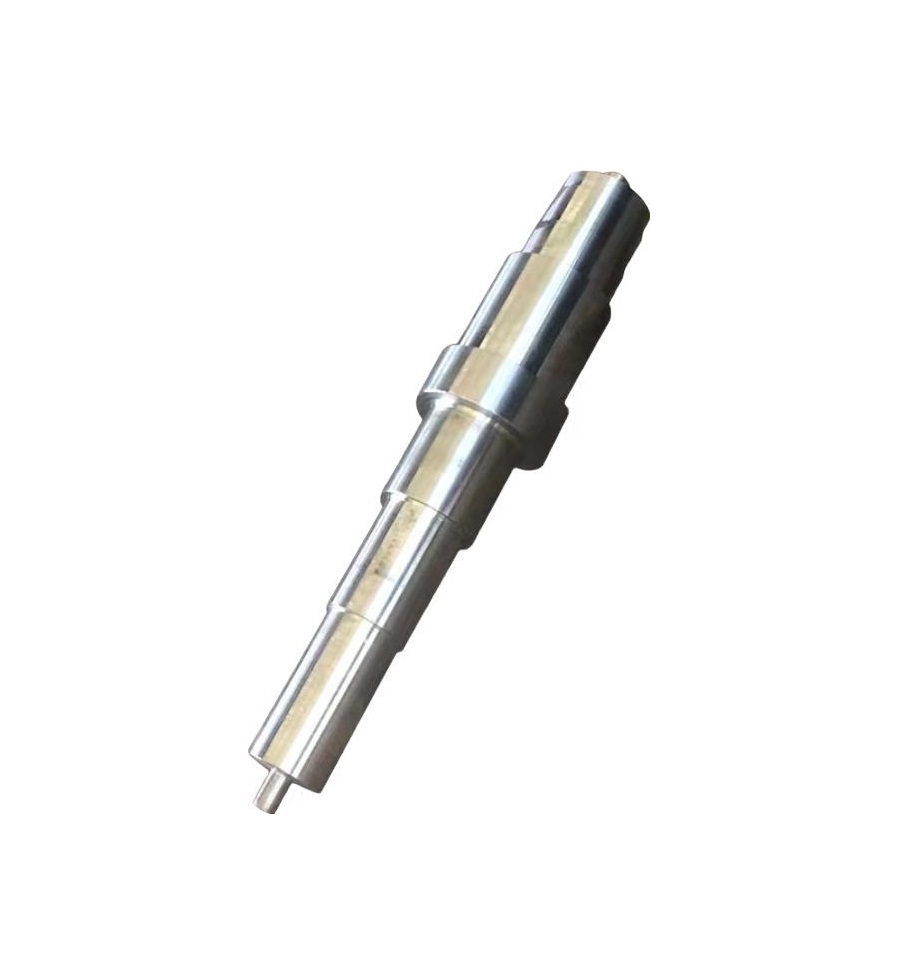
What Makes a High-Performance Eccentric Shaft for Heavy-Duty Jaw Crushers?
Material Selection: Why High Manganese Steel and High Carbon Steel Matter
The base material is what makes an eccentric shaft strong. High manganese steel and high carbon steel are the usual options in the business because they are very tough and can withstand repeated impact loads. Unlike regular alloy steels, these materials work-harden at the surface when they are hit. This means that over time, the eccentric shaft gets stronger where it wears, which makes it last a lot longer in ongoing mining processes.
Strength and Rigidity Under Extreme Fragmentation Forces
During each crushing stroke, a heavy-duty jaw crusher creates huge reactive forces. To handle and spread these forces without deflecting or getting tiny cracks, your eccentric shaft needs to be very strong and rigid. If there isn’t enough stiffness, the mouth plates will not line up properly, wear unevenly, and eventually break completely. Choose a shaft with a strong, large cross-section so it can safely handle high fragmentation loads.
Corrosion Resistance for Harsh Mining Environments
When mining takes place, the parts of the crusher are exposed to water, slurry that is rough, and chemically aggressive rock dust. If you choose the right eccentric shaft, it should be resistant to corrosion either by the way it’s made or how it’s treated on the outside. High manganese steel naturally forms a protected oxide layer. Extra coats can be added for handling rock that is very wet or high in sulphides. This keeps the eccentric shaft’s dimensions accurate season after season.
How to Match Eccentric Shaft Specifications to Your Crusher’s Operating Conditions
Evaluating Rock Hardness and Feed Size Requirements
Working in a mine or quarry isn’t always easy. If you work with big rocks that are harder to break, like granite or basalt, your eccentric shaft needs to be able to pass more force and be more eccentric. Match the estimated capacity of the crusher to the width of the shaft, the size of the journal, and the throw. In this way, the part works within the limits of its design instead of being close to breaking.
Balancing Impact Load Capacity with Service Life Expectations
Most of the time, smaller repair shops care more about the cost up front, while larger mining contractors want to see replacements happen more often. The eccentric shaft you pick should take this into account. A premium high carbon steel shaft will cost more at first, but it can last two to three times longer than a lower-grade option after the right heat treatment. This means that over hundreds of hours of use, it will cost less overall.
Considering the Full Component Ecosystem Around the Eccentric Shaft
There is no way for the eccentric shaft to work by itself. The spring assembly can be made of high-strength wire or spring steel. The rack bar can be made of alloy steel, and the dust seals can be made of high chrome alloy steel or high manganese steel. To keep the contact points from wearing out too quickly, make sure that your eccentric shaft’s journal geometry and mounting interfaces line up with these parts.
Why Manufacturing Process and Quality Control Determine Eccentric Shaft Reliability
Casting vs. Forging: The Right Process for the Right Component
When the eccentric shaft is cast, it can be made with complex shapes and built-in journal features all in one pour. But keep in mind that a jaw crusher’s main shaft is usually forged so that the grain can flow better. To judge the skills of the supplier and make sure the eccentric shaft was made correctly for its job, you need to know which process goes on which part.
Inspection Protocols That Guarantee Consistent Performance
A trustworthy seller checks the sizes, strength, and non-destructive inspection (ultrasonic or magnetic particle) of each eccentric shaft before sending them out. There are more than one stage on this good gate. It looks for internal holes, cracks on the surface, or physical movement that could cause the item to shake and break early in the field. To make sure that every batch of your product is the same, ask the seller for test results and proof points.
Custom Engineering for Non-Standard Mining Applications
Most eccentric shafts that you can buy off the shelf won’t work with all types of crushers or in all retrofit situations. Your plans or real models will help a good maker make a one-of-a-kind eccentric shaft with the exact keyway design, journal width, and eccentricity that your machine needs. Delivery times depend on how long it takes to confirm the drawings and when the heat treatment will happen. Talk to your provider early on in the project to plan out how long you will have to wait.
Conclusion
To pick the best eccentric shaft for your heavy-duty jaw crusher, you need to know a lot about materials, mechanical design, and the quality of the manufacturing process. Your crushing operation won’t have to deal with costly unplanned downtime if you build with high manganese steel or high carbon steel, make sure the structure is rigid, and work with a supplier who checks quality from the raw materials to the final inspection.
FAQ
What kind of material is most often used for the eccentric shaft of a jaw crusher?
Most of the time, high manganese steel and high carbon steel are used because they are good at resisting impact and hardening over time.
In what ways can I tell if my eccentric shaft needs to be changed?
Check for obvious journal wear, more vibrations while it’s working, or misaligned jaw plates that show the shaft has deflected.
Can an eccentric shaft be made to fit an older model of crusher?
Yes. A qualified manufacturer can copy the exact geometry if you give them your original drawings or a physical sample.
What kind of surface treatment makes an eccentric shaft last longer in wet mines?
It works to use shot peening with a finish that doesn’t rust. High manganese steel also makes an oxide layer that protects it naturally.
How should I store a new eccentric shaft until I’m ready to put it in place?
Keep it somewhere dry and level, with the journals on top of it. To stop surface rust, put on a thin film of oil.
Let Huan-Tai Engineer Your Next Eccentric Shaft
We at Xian Huan-Tai Technology and Development Co., Ltd. have been making custom mechanical parts for customers in heavy industry and mining around the world for 30 years. From reviewing the drawings to the final inspection, our professional technical team works on your custom eccentric shaft, and our production team makes sure quality at every step of the way. Our great service guarantees stability, consistency, and on-time delivery, whether you need a single replacement or a full year’s worth. Our engineers will get back to you within one business day if you send your drawings to inquiry@huan-tai.org.
References
- Kumar, S., & Patel, R. (2019). Wear Mechanisms in High Manganese Steel Components Used in Jaw Crushers. International Journal of Mining Engineering, 42(3), 211–228.
- Zhang, W., & Liu, H. (2021). Material Selection for Eccentric Shafts in Heavy-Duty Crushing Applications. Journal of Materials in Mining, 18(2), 74–89.
- Anderson, M., & Brooks, T. (2018). Impact of Eccentricity and Throw on Jaw Crusher Performance and Component Life. Mineral Processing and Extractive Metallurgy Review, 39(5), 412–430.
- Chen, L., & Wang, F. (2020). Quality Control and Non-Destructive Testing Protocols for Cast Steel Crusher Components. Foundry Technology International, 27(1), 55–68.
- Okafor, J., & Smith, D. (2022). Corrosion Behavior of High Manganese Steel in Sulfide-Rich Mining Environments. Corrosion Science and Engineering, 34(4), 198–215.
