
When it comes to impact crushers, alloy steel, high manganese steel, high-chromium cast iron, and engineered composite materials are the best materials for lock blocks. Each lock block material has a different mix of strength, durability, and resistance to breaking. This article compares these choices, talks about how casting methods affect quality, and shows readers how to secure lock blocks that work well in tough crushing environments.
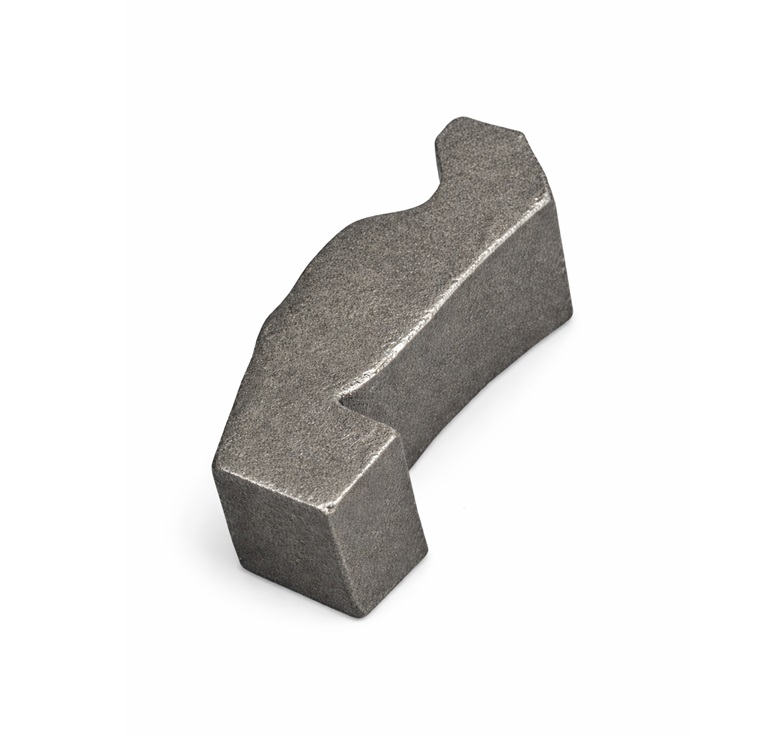
Comparing the Leading Lock Block Materials
Alloy Steel for Strength and Versatility
Alloy steel is still one of the most popular materials for lock blocks because it is strong in both tension and toughness. For an impact crusher to work, the lock block has to keep the blow bar firmly against the rotor and take the shock and vibrations. An alloy steel lock block can safely handle these loads, which makes it a good choice for most basic breaking tasks in mining and quarries.
High Manganese Steel for Severe Impact
High manganese steel lives up to its name when it comes to breaking situations. The top of this material gets harder when it is hit with force, so a high manganese steel lock block gets stronger over time. Workers who crush hard, blocky feed like how well it doesn’t break or get damaged by impact. This keeps the lock block together in the high-load, high-strength conditions that are common in primary crushing.
High-Chromium Cast Iron and Composite Options
Because it has hard carbides all through its structure, high-chromium cast iron gives a lock block great wear protection in places where friction is more common than impact. Composite materials are even better because they have a working area that doesn’t wear down and a backing that is stronger. Which of these lock block choices to use relies on the material you’re feeding, so it’s a good idea to ask an expert maker for help before placing your order.
How Casting Methods Shape Lock Block Quality
Lost-Wax Casting for Dimensional Accuracy
Lost-wax casting makes it possible for the lock block to fit perfectly between the rotor and blow bar. This method makes a lock block straight from the mould with smooth surfaces and tight dimensional tolerances. This cuts down on the time needed for machining and makes sure the part fits correctly the first time it is installed. Lost-wax casting is often the best way to make lock blocks with complicated shapes.
Resin Sand and V-Method Alternatives
For making medium to large lock blocks, resin sand casting is a good option because it gives a smooth surface and stable dimensions at a fair cost. Moulds that are vacuum-sealed are used in the V-method to make casts with clean details and regular accuracy. A good foundry will choose the process that works best for your lock block size, material grade, and order quantity. This way, the dimensions will be correct no matter which method is used.
Why Process Control Matters More Than the Method
If you don’t follow through with your plan, even the best casting method won’t work. The chemistry of the melt, the temperature at which it is poured, and the plan for heat treatment all affect how hard and tough a lock block is when it is finished being made. Foundries that have strict inspection procedures find porosity, shrinkage, and changes in size before the parts are shipped. Before you buy a lock block, you should ask the seller how they handle these factors, not just what process they use.
Getting the Right Lock Block From Drawing to Delivery
Confirming Specifications Before Production
A lock block isn’t always a common part, especially for older or changed crushers. Orders that go well start with accurate drawings or a worn sample that can be used for reverse engineering. Making sure of the sizes, grade of the material, and hardness needs ahead of time saves a lot of money in rework later on. This step takes time for reputable providers, and buyers who review the drawings get a lock block that fits perfectly the first time.
Thinking Beyond the Lock Block Alone
Things like the lock block work together as a whole. Most impact crusher blow bars are made of high manganese steel, alloy steel, or high-chromium cast iron. High manganese steel or high-chromium alloy steel is used for dust seal rings. Getting the lock block and the wear parts that go with it from the same maker makes sure that the quality standards are the same and makes the buying process a lot easier.
Setting Realistic Expectations on Lead Time
It takes time to make custom cast parts right. Making the pattern, casting, heat treating, cutting, and inspecting all add time to the plan, and confirming the drawing can take more than one conversation. If a supplier says they can make a custom lock block in an unusually short amount of time, they might be skipping steps. Make sure you give yourself enough time to plan your repair, and keep an extra lock block on hand for tools that are very important.
Conclusion
The lock block is made of alloy steel, high manganese steel, high-chromium cast iron, and a mix of these materials. Each gives it its own strengths for use with an impact crusher. You should make sure that the material you use works well with the conditions you give it, that the casting process is controlled, and that you work with a reputable foundry. This makes a lock block that stays in place even when it’s full of things.
FAQs
What kinds of things are used to make an impact crusher lock block?
Casting is used to make alloy steel, high manganese steel, high-chromium cast iron, and composite materials.
What types of casting methods promise accurate measurements?
When controlled properly, lost-wax, resin sand, and V-method casting all give accurate sizes.
Can heavy-duty breaking be done with a lock block?
Yes. In high-load, high-strength situations, good lock blocks are very resistant to breaking and impact force.
Can lock blocks be made for older types of crushers?
Yes. They can be made to order from plans or from old pieces that have been taken apart.
Can I order lock blocks with other wear parts?
Of course. From the same company, you can get blow bars, dust seal rings, and other cast parts.
Secure Your Lock Block Supply Today
Xian Huan-Tai Technology and Development Co., Ltd. has been making custom, non-standard mechanical parts for mining and engineering equipment around the world for 30 years. Our professional production team makes sure that quality is maintained at all stages of production, and our technical team turns your plans into parts that meet all performance standards. Buyers from other countries trust us to be stable, reliable, and provide great service. Have a sketch of a lock block or a worn example? Send it to inquiry@huan-tai.org, and our engineers will come up with an answer that fits your needs.
References
- Wills, B. A., & Finch, J. A. Wills’ Mineral Processing Technology: An Introduction to the Practical Aspects of Ore Treatment and Mineral Recovery, 8th Edition.
- Campbell, J. Complete Casting Handbook: Metal Casting Processes, Metallurgy, Techniques and Design, 2nd Edition.
- Davis, J. R. (Ed.). ASM Specialty Handbook: Cast Irons.
- Beeley, P. Foundry Technology, 2nd Edition.
- Gupta, A., & Yan, D. S. Mineral Processing Design and Operations: An Introduction, 2nd Edition.
