
A damaged shift fork is one of the most direct causes of gear engagement problems in a tractor transmission. The shift fork is responsible for physically moving the sliding gear or synchronizer sleeve into mesh — when it bends, cracks, or wears at the contact pads, that movement becomes imprecise, incomplete, or impossible. The result ranges from difficult gear selection and incomplete engagement to full transmission lockout, all of which reduce productivity and accelerate wear on surrounding components if left unaddressed.
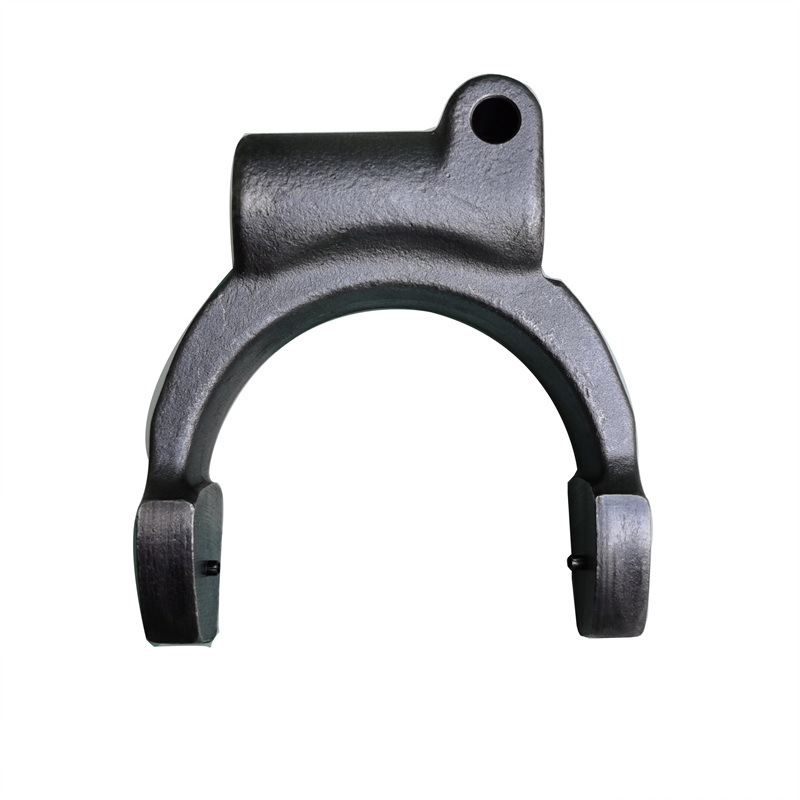
How a Damaged Shift Fork Disrupts Gear Engagement
Bent or Deformed Fork Arms Prevent Full Travel
When a shift fork sustains impact damage or bends under excessive side load, its arms no longer move the gear sleeve through the correct travel distance. A shift fork that cannot complete full stroke leaves the gear partially engaged — a condition known as a half-engaged or false neutral state. In this state, the gear teeth carry load on a reduced contact area, generating heat and accelerating surface fatigue on both the sliding gear and the synchronizer ring, compounding the original damage.
Worn Contact Pads Reduce Positional Accuracy
The contact pads or fingers of the shift fork bear against the groove of the sliding gear or sleeve throughout every gear change. Over time — particularly in transmissions operating under high load cycling or without adequate lubrication — these pads wear down. A shift fork with worn pads introduces slop into the engagement path, allowing the gear to sit slightly off-centre in the engaged position. This misalignment concentrates load at the edge of the gear teeth rather than across the full tooth face, shortening gear life and producing the characteristic grinding noise during operation.
Cracks and Fractures Cause Sudden Transmission Failure
A cracked shift fork can continue functioning under light loads while being structurally compromised. Under a high-torque shift event — common when engaging a loaded implement or changing gear on a gradient — the remaining material gives way suddenly, leaving the transmission unable to hold a gear. This type of failure is more disruptive than gradual wear because it occurs without warning during operation, rather than presenting progressively worsening symptoms that give the operator time to schedule maintenance.
What Causes Shift Fork Damage in Tractor Transmissions?
Forced Shifting Without Clutch Disengagement
One of the most common causes of shift fork damage is operating the gear lever without fully disengaging the clutch, particularly during high-load field operation. When the clutch is not fully released, the sliding gear is still rotating and the shift fork must force it into mesh against resistance. The repeated side loads this imposes on the fork arms — especially at the root of the pad contact zone — cause progressive bending and fatigue cracking that eventually renders the shift fork unable to function correctly.
Overloading Beyond Transmission Design Limits
Tractors used for applications beyond their rated capacity — pulling oversized implements, operating on steep terrain, or being used as a substitute for higher-class machines — subject the transmission to torque levels the shift fork was not designed to manage. Under these conditions, gear engagement forces increase substantially, and the shift fork absorbs a disproportionate share of the excess load. Alloy steel is the standard material for shift fork construction due to its combination of strength and toughness, but even correctly specified material will fail if the operating loads consistently exceed design limits.
Lack of Lubrication and Contamination
The transmission oil film that lubricates the contact between the shift fork pads and the gear sleeve groove is a critical factor in controlling pad wear rate. When oil level is low, the lubricant is degraded, or contamination introduces abrasive particles into the transmission, pad wear accelerates significantly. A shift fork running in contaminated oil can wear its contact pads to a fraction of their original thickness within a relatively short operating period, undermining gear engagement accuracy long before the fork itself reaches the end of its expected service life.
Replacing a Damaged Shift Fork: Sourcing and Quality Considerations
Material Specification for Replacement Parts
Replacement shift fork components should be manufactured from alloy steel to match or exceed the mechanical properties of the original part. The combination of high tensile strength and adequate toughness is what allows the shift fork to handle both the sustained contact loads from pad wear and the occasional shock loads from forced gear changes. Heat treatment to achieve the correct hardness profile — hard enough to resist surface wear at the pad contact zone, tough enough to absorb bending loads without cracking — is as important as the alloy grade selection.
Custom Sourcing for Non-Standard Tractor Models
Many older tractor models and specialist machines use shift fork dimensions that are not available as standard replacement parts through mainstream distribution channels. In these cases, replacement shift fork components can be produced from engineering drawings or from a dimensional survey of the worn original. The drawing confirmation process — covering pad geometry, arm thickness, bore dimensions, and overall fork profile — is a critical step that directly affects fit and function. Buyers should plan for some lead time flexibility, as complex custom parts with repeated drawing reviews naturally take longer to produce correctly.
Inspection Before Installation
A replacement shift fork should be dimensionally verified before installation — confirming pad thickness, arm geometry, bore diameter, and surface condition. For procurement teams managing fleet maintenance across multiple machines, requesting a material certificate and hardness test result as part of the delivery documentation provides objective confirmation that the part meets specification. Installing a shift fork that passes dimensional inspection but was manufactured from under-specified material will reproduce the original failure within a fraction of the expected service interval.
Conclusion
Shift fork damage disrupts tractor transmission performance in ways that range from minor inconvenience to sudden mechanical failure, depending on how far the damage has progressed. Worn pads, bent arms, and fatigue cracks each affect gear engagement differently but share a common outcome: reduced reliability and accelerated wear on connected components. Using correctly specified alloy steel replacement parts, sourced from a manufacturer with strong quality control, is the most direct route to restoring full transmission function.
FAQ
Q1: What are the signs of a worn or damaged shift fork?
Difficulty selecting gears, grinding during engagement, gears slipping out of position, and false neutral conditions are all common indicators of shift fork wear or damage.
Q2: What material is a shift fork made from?
Shift forks for tractor transmissions are typically manufactured from alloy steel, heat-treated to balance surface hardness with core toughness.
Q3: Can a bent shift fork be straightened and reused?
Straightening a bent shift fork is generally not recommended for heavy-duty applications, as the bending event introduces internal stress that makes the part more susceptible to subsequent cracking.
Q4: How long does it take to source a custom replacement shift fork?
Lead times depend on component complexity and drawing confirmation requirements. Early inquiry is strongly recommended for non-standard parts to allow adequate production time.
Q5: Does a damaged shift fork affect other transmission components?
Yes. A worn or bent shift fork causes incomplete or misaligned gear engagement, which accelerates wear on gear teeth, synchronizer rings, and bearing surfaces throughout the transmission.
Need a Reliable Shift Fork Replacement? Talk to Huan-Tai
At Xian Huan-Tai Technology and Development Co., Ltd., we have spent over 30 years manufacturing customized mechanical components for agricultural, engineering, and heavy equipment applications worldwide. Our technical team can produce shift fork parts and other non-standard transmission components to your drawings or samples, with rigorous quality control at every production stage. If you are sourcing replacement parts and need a supplier you can count on for quality and delivery, we would like to hear from you. Contact us: inquiry@huan-tai.org.
References
- Shigley, J. E., Mischke, C. R., & Budynas, R. G. (2004). Mechanical Engineering Design (7th ed.). McGraw-Hill.
- Goering, C. E., Stone, M. L., Smith, D. W., & Turnquist, P. K. (2003). Off-Road Vehicle Engineering Principles. American Society of Agricultural and Biological Engineers.
- Naunheimer, H., Bertsche, B., Ryborz, J., & Novak, W. (2011). Automotive Transmissions: Fundamentals, Selection, Design and Application (2nd ed.). Springer.
- Mott, R. L. (2014). Machine Elements in Mechanical Design (5th ed.). Pearson Education.
- Hunt, D. (2001). Farm Power and Machinery Management (10th ed.). Iowa State University Press.
