
For extending the useful life of a grille for truck uses, sandblasting and powder finishing are two of the best surface treatment techniques. Sandblasting gets rid of rust, mill scale, and old coats all the way down to bare metal. This leaves a clean, shaped surface that sticks better. The surface is then sealed with powder coating, which gives it a tough, even finish that doesn’t rust or break down in UV light or from impact. Together, they protect against damage for a much longer time than regular paint.
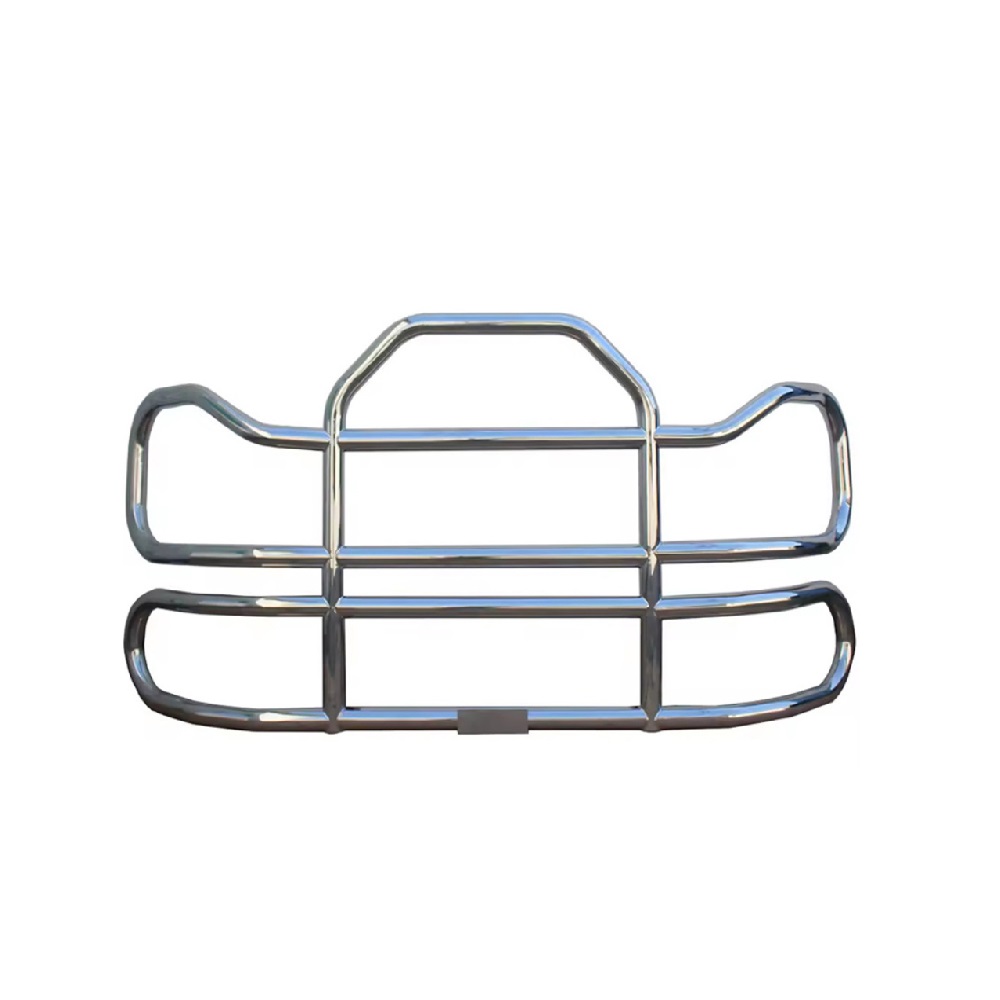
Why Surface Preparation Is the Foundation of Long-Lasting Truck Grille Protection
Removing Contamination at the Source
The metal surface below must be cleaned very well before any protected covering can work properly. Years of exposure to the road cause the steel to build up layers of rust, grease, and rusting on a grille for truck use that can’t be fully removed by wire brushing. Sandblasting gets rid of all of these contaminants, even in places like weld gaps and complicated shapes that would be missed by hand-cleaning. This makes the metal ready for a finish that sticks.
Creating a Surface Profile for Better Adhesion
Sandblasting does more than clean — it creates a controlled surface roughness, or anchor profile, on the metal. This microscopic texture gives the powder coating mechanical grip, dramatically improving adhesion strength compared to applying a coating over smooth or minimally prepared steel. For a grille for truck operating in harsh environments, this improved bond is the difference between a finish that lasts years and one that begins peeling within months of service.
Consistency Across Complex Geometry
Truck grilles often feature intricate bar patterns, mounting brackets, and welded joints — all of which are difficult to treat evenly by hand. Industrial sandblasting equipment covers these complex shapes uniformly, ensuring that no area is left under-prepared. This consistency matters because any spot of inadequate surface prep on a grille for truck becomes a starting point for corrosion that spreads beneath the coating and shortens the component’s service life.
How Powder Coating Builds a Durable Barrier Against Corrosion and Wear
The Electrostatic Application Advantage
Powder coating uses an electric charge to spread out the dry powder particles on a metal surface that is grounded. All of the grille for truck, including the sides and creases where liquid paint likes to run off, is coated with a uniform thickness using this method. The end result is a smooth film that covers the whole part and leaves no weak spots that could rust quickly.
Curing Creates a Chemically Bonded Finish
The powder-coated grille for truck is placed in a drying oven after it has been applied, where it melts, moves, and cross-links into a continuous polymer film. This chemical bonding process makes a finish that is much stronger and harder to damage than wet paint that is dried in the air. When the layer is dry, it doesn’t get chipped by road debris, worn down by machine contact, or damaged by the temperature changes that truck parts go through during the year.
Long-Term Resistance to Environmental Exposure
The harsh outdoor conditions that industrial and off-road vehicles must endure, such as UV rays, wetness, salt spray, and fuel or oil contact, are well suited for a powder-coated grille for truck. The thick, non-porous layer film keeps water from getting to the steel base, which is what causes rust in the first place. The powder coat protects for a long time with little upkeep because it is combined with the clean, shaped surface that comes from sandblasting.
Customization, Lead Time, and Quality Considerations When Sourcing Treated Truck Grilles
Matching Surface Treatment to Application Requirements
Different operating environments call for different coating specifications. A grille for truck used in coastal or mining environments may require a primer layer beneath the powder coat for additional corrosion resistance, while a vehicle operating primarily on dry roads may need only a standard single-coat application. Discussing the intended service environment with your supplier at the inquiry stage ensures the surface treatment specification is matched to the actual demands of the application.
Custom Production and Realistic Lead Times
Custom grille components — particularly those requiring drawing confirmation, specific coating colours, or non-standard dimensions — involve multiple production stages that take time to complete properly. Surface treatment adds process steps after fabrication, so customers should account for this when planning procurement timelines. Lead times for customized grille for truck components vary depending on complexity, and orders with repeated drawing revisions or special process requirements naturally take longer. Early communication on delivery expectations helps avoid scheduling pressure on both sides.
Inspection Standards for Coated Components
Quality control for powder-coated grille components covers coating thickness measurement, adhesion testing, and visual inspection for surface defects such as pinholes, runs, or uncoated areas. Customers with specific quality documentation requirements — such as coating thickness reports or material certificates for the substrate steel — should raise these at the order confirmation stage. Pre-shipment inspection ensures that the grille for truck arrives ready for installation without requiring rework on receipt.
Conclusion
Sandblasting and powder coating work together to give a grille for truck the surface protection it needs to withstand years of operational exposure. Thorough surface preparation ensures the coating bonds properly, while the cured powder coat delivers durable resistance to corrosion, impact, and weathering. For companies sourcing replacement or custom grille components, specifying both processes together is a straightforward way to extend service life and reduce long-term maintenance costs.
FAQ
Q1: Can any truck grille be sandblasted and powder coated?
Most steel and iron grilles are suitable for both processes. The suitability depends on the base material and existing condition of the component.
Q2: How long does powder coating last on a truck grille?
With proper surface preparation, a powder-coated grille for truck typically maintains its protective and cosmetic properties for many years under normal operating conditions.
Q3: What colours are available for powder-coated truck grilles?
Powder coating is available in a wide range of standard and custom colours, including matte, gloss, and textured finishes.
Q4: Is powder coating better than paint for a truck grille?
Powder coating generally outperforms conventional paint in impact resistance, coating uniformity, and long-term corrosion protection for a grille for truck.
Q5: Can custom-sized grilles be powder coated?
Yes. Custom-fabricated grilles can be sandblasted and powder coated to the same standard as catalogue components, provided the substrate material is compatible.
Work with Huan-Tai for Custom Truck Grille Components
Xian Huan-Tai Technology and Development Co., Ltd. has over 30 years of experience manufacturing customized non-standard mechanical parts for engineering, mining, and heavy vehicle applications. Our professional production and inspection team manages quality at every stage of the process, and our technical team is equipped to meet your specific performance and dimensional requirements. If you need custom grille for truck components or other fabricated parts, reach out — we are ready to help. Contact us: inquiry@huan-tai.org.
References
- Pietschmann, J. (2012). Industrial Powder Coating: Fundamentals, Practice, and Troubleshooting (2nd ed.). Vincentz Network.
- Tracton, A. A. (Ed.). (2006). Coatings Technology: Fundamentals, Testing, and Processing Techniques. CRC Press.
- Society for Protective Coatings. (2007). SSPC-SP 6/NACE No. 3: Commercial Blast Cleaning. SSPC.
- Lambourne, R., & Strivens, T. A. (Eds.). (1999). Paint and Surface Coatings: Theory and Practice (2nd ed.). Woodhead Publishing.
- Hare, C. H. (1994). Protective Coatings: Fundamentals of Chemistry and Composition. Technology Publishing Company.
