
Resin sand casting improves impact crusher part accuracy because the chemically bonded mold cures hard, resists metal pressure without wall movement, and copies the pattern faithfully. Impact plates come off the mold closer to print—tighter dimensions, smoother surfaces, less machining—so they bolt up true, wear evenly, and stay in the crusher longer.
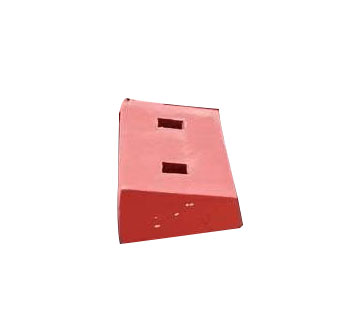
Inside the Mold: Where the Accuracy Is Actually Won
Dimensional accuracy isn’t inspected in at the end. It’s molded in at the start.
Rigid Molds That Refuse to Move
Green sand molds can swell and shift when the pour hits, and every millimeter of mold wall movement lands on the casting. Resin-bonded sand cures into a rigid shell that holds its geometry under metallostatic pressure. Impact plates come out nearer to net shape, with dimensions that repeat from the first pour to the fiftieth.
Pattern Detail That Survives the Pour
Resin sand flows and compacts tightly around the pattern, so the cavity captures corners, ribs, and bolt holes crisply. The smoother cavity surface becomes a smoother casting surface. For impact plates, that means seating faces that sit flat without hours of grinding, and holes that line up with the drill pattern already on your frame.
One Process Among Several, Picked on Purpose
We cast by lost-wax, resin sand, and V-method, choosing the route that secures dimensional accuracy for the part size and detail involved. Large wear castings favor resin sand; fine features may favor lost-wax. Impact plates made of alloy steel, high-manganese steel, high-chromium cast iron, or composite materials all benefit when the process matches the drawing.
From Drawing to Rotor: What Accuracy Buys You on the Machine
A casting that’s true to print behaves differently the day it goes in—and every day after.
Bolt-Up Fit Without the Grinder
When a plate arrives oversize or warped, the crew pays for it in shims, torches, and lost hours. Accurate impact plates drop into position, seat fully against their backing, and transfer crushing loads across the whole contact face instead of one high spot. Installation becomes a bolt-up job, not a fitting exercise.
Steady Gaps, Steady Product
The curtain gap between plates and blow bars sets your product size. True-cast impact plates hold that gap as designed, so gradation stays consistent and recirculating load stays down. The same machine’s blow bars are cast in high manganese steel, alloy steel, or high chromium cast iron; hammer crushers run their own hammer heads—a different part on different equipment.
Strength That Gets Used, Not Wasted
Our castings deliver excellent resistance to fracture and impact force, built for high-load, high-strength working environments. Accuracy is what lets that strength work: load spreads evenly instead of concentrating at a misfit edge. Pair true impact plates with a forged main shaft keeping the rotor aligned, and the whole chamber wears the way the designer intended.
Specifying Castings That Arrive True to Print
Buying accuracy is mostly about the conversation you have before the pattern is cut.
Start With the Drawing and the Worn Part
Send the drawing, plus photos and measurements of the worn component—distortion in the old part tells us where the machine loads it. Straightforward jobs can move in weeks; complex custom work runs longer when drawings need repeated confirmation and process planning. That front-end care is what makes impact plates fit the first time.
Inspection Through the Whole Pour
Quality managed through the entire production process means pattern verification, melt chemistry checks, controlled heat treatment, and dimensional inspection before machining datums are cut. After 30 years of custom non-standard work, that’s our normal routine. Impact plates leave the shop measured against your print, not against a hope.
Keep the Rest of the Chamber Honest
Even a perfect casting suffers in a neglected machine. Dust seal rings in high manganese steel or high chromium alloy steel, toggle plates in high manganese steel, springs in spring steel, high-strength steel wire, or carbon steel, and rack bar in alloy steel all hold alignment. A healthy chamber lets impact plates wear evenly to their full life.
Conclusion
Resin sand casting earns accuracy through rigid molds, faithful pattern reproduction, and the right process choice—then that accuracy pays back in fit, wear life, and uptime. Specify impact plates by drawing and duty, and buy from a foundry that controls every step.
FAQ
Why resin sand for large crusher castings?
The rigid, cured mold resists wall movement, so big parts hold dimensions and surface finish.
What materials do you cast impact plates in?
Alloy steel, high-manganese steel, high-chromium cast iron, or composite materials.
When is lost-wax the better route?
For smaller parts with fine detail; large plates favor resin sand.
How long do custom castings take?
It varies—simple jobs move quickly; complex drawings and process planning extend the cycle.
Do you make other crusher wear parts?
Yes, including blow bars, toggle plates, seal rings, and forged shafts.
Put Your Print in Front of Our Foundry
For 30 years, Xian Huan-Tai has cast and machined customized non-standard parts for mining and engineering machinery—excellent service, quality managed through the entire production process, and a technical team that meets your performance requirements. Send a drawing, a photo of the worn part, or your crusher model and feed conditions. We’ll reply with a process recommendation and a clear quote: inquiry@huan-tai.org.
References
- Campbell, J. (2015). Complete Casting Handbook: Metal Casting Processes, Metallurgy, Techniques and Design, 2nd Edition. Butterworth-Heinemann.
- Beeley, P. (2001). Foundry Technology, 2nd Edition. Butterworth-Heinemann.
- Heine, R. W., Loper, C. R., & Rosenthal, P. C. (1967). Principles of Metal Casting, 2nd Edition. McGraw-Hill.
- Brown, J. R. (2000). Foseco Ferrous Foundryman’s Handbook, 11th Edition. Butterworth-Heinemann.
- Gundlach, R. B., & Parks, J. L. (1978). Influence of Abrasive Hardness on the Wear Resistance of High Chromium Irons. Wear, 46.
