
The front bumper is more than just a piece of bodywork; it is an important safety and function part of any heavy-duty car. For heavy equipment used in mining, building, and industry, a well-designed front bumper can reduce contact forces, protect important mechanical systems, and provide structure hold points for safe pulling. Choosing the right front bumper directly affects how well the vehicle works on the job site and how well it can handle harsh conditions.
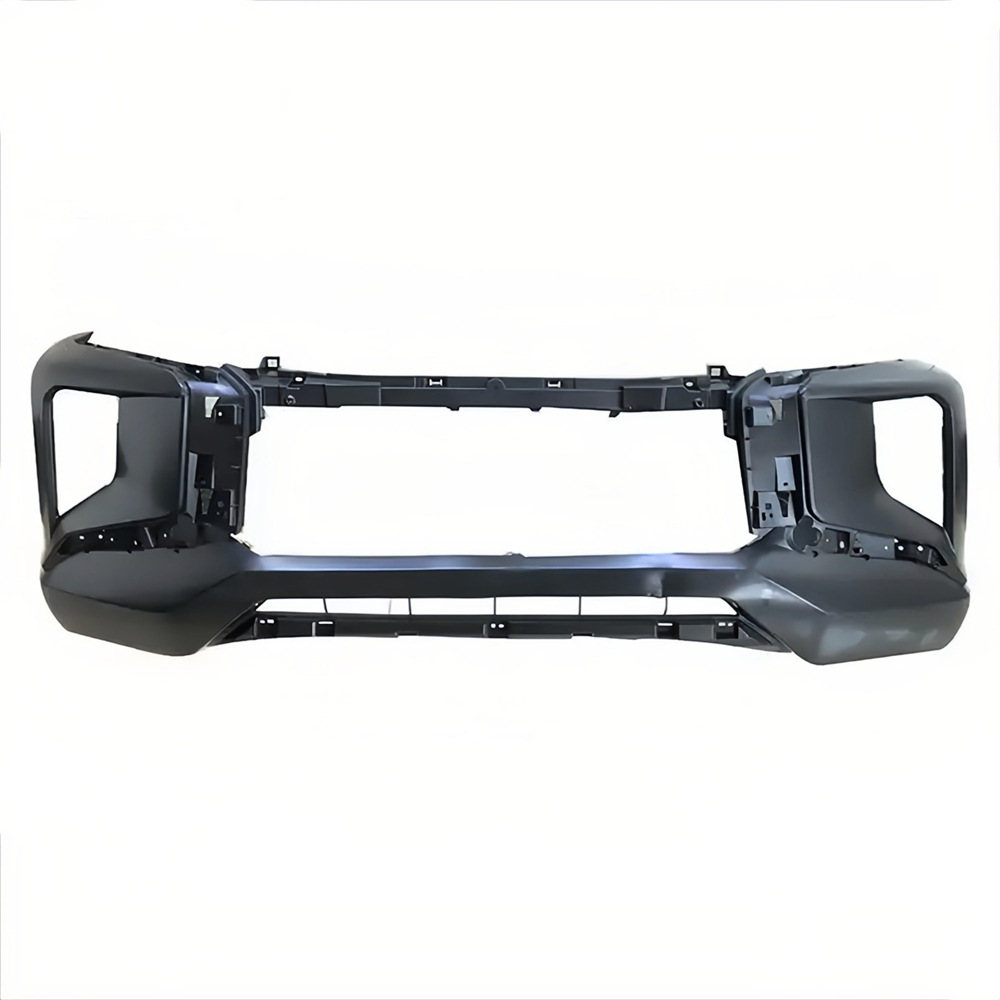
How Front Bumper Design Determines Collision Safety
Energy absorption and structural protection
The front bumper is the first line of defense against collisions in big tools and business cars. Kinetic energy is spread out across the cross-section of a well-designed front bumper before it can reach the frame, radiator, or engine bay. This ability to control energy use is what makes a well-designed part different from a purely showy one. The bumper’s depth, the number of reinforced ribs, and the way the mounting bracket is set up all affect how well it transfers and absorbs impact loads during a hit.
Material strength and long-term reliability
The front bumper has to keep its protective shape even after years of being outside in bad weather and multiple low-speed hits. Precision CNC cutting and high-strength steel work together to make sure that the dimensions are correct so that the fixing points and crumple zones stay in place for the life of the part. Huan-Tai makes its front bumper parts from strong, high-quality materials that are guaranteed to last a long time. The surfaces are treated with coatings or grinding to stop rusting and weathering in mine and field settings.
Compatibility with safety systems and mounting standards
More and more, lights, sensors, and rescue hooks are built right into the front bumper assembly of modern heavy-duty cars. If the front bumper isn’t the right size, these systems won’t work properly, which is bad for both safety and usefulness. Precision CNC processing makes sure that every part fits within very small size ranges. This means that sensor brackets, fog light housings, and D-ring recovery mounts all fit together perfectly without any adjustments. This level of accuracy is very important for companies that make machines that need the same results in every batch of production.
How Front Bumper Construction Supports Towing Performance
Load distribution and chassis stress management
When a vehicle is used for towing, the front bumper plays a direct role in stabilizing the load path through the frame. Recovery points — whether D-rings, hooks, or integrated winch mounts — are only as reliable as the front bumper structure they are attached to. A front bumper manufactured with sub-standard welds or insufficient material thickness will deflect under towing loads, shifting stress into the chassis rails and potentially causing cracks over time. Correct engineering of the bumper-to-frame interface is what allows safe, sustained towing in industrial and off-road applications.
Winch integration and recovery capability
Many front bumpers used in engineering and mining applications are designed to house a winch. The winch mount within the front bumper must handle both static line tension and dynamic shock loads during vehicle recovery operations. This demands that the bumper be manufactured from materials with clearly defined yield strength, and that all weld joints are subject to rigorous inspection. Our front bumper products at Huan-Tai are produced by a professional team that manages quality throughout the entire production process, ensuring each towing-critical component meets the structural requirements of its application.
Clearance, approach angles, and operational geometry
For vehicles operating in mining pits, quarries, or rough construction terrain, front bumper geometry directly affects approach angle — how steep a slope the vehicle can climb without the bumper making contact with the ground. A poorly profiled front bumper limits a machine’s operational range. Customized front bumper designs allow operators to maximize ground clearance while still providing sufficient material in high-stress zones. Huan-Tai specializes in non-standard customized mechanical parts, and our technical team works with clients to produce front bumper profiles that balance clearance, protection, and towing mount placement for specific site conditions.
How Material Selection and Surface Treatment Extend Front Bumper Service Life
High-strength steel grades and their role
The choice of base material for a front bumper has a direct impact on its ability to survive abrasion, impact, and environmental exposure over a multi-year service life. In engineering and mining applications, the front bumper encounters everything from rock debris to chemical exposure. High-strength steel provides the tensile and yield strength needed to resist permanent deformation in these conditions, while controlled material sourcing ensures consistency across batches — a key requirement for machinery manufacturers who cannot afford variation between replacement components.
Surface treatment processes and corrosion prevention
Even the best steel will deteriorate without appropriate surface protection. Our front bumper components undergo sandblasting to remove mill scale and surface contaminants, followed by industrial coating that creates a sealed barrier against moisture and oxidation. This two-stage surface treatment is critical for components used in outdoor mining and construction environments, where humidity, mud, and chemical exposure are constant. Proper surface treatment can extend front bumper service life significantly compared to untreated alternatives, reducing replacement frequency and total cost of ownership for the end user.
Customization, lead times, and quality verification
Customized front bumper components — especially those requiring engineering drawing confirmation, special material grades, or complex profile machining — typically have lead times that vary depending on drawing complexity and process requirements. Clients should account for drawing review and process confirmation stages in their procurement timelines, as thorough upfront verification reduces costly rework. Each front bumper produced at Huan-Tai passes through inspection checkpoints managed by our professional quality control team, ensuring every shipment meets the dimensional and structural standards agreed upon with the client.
Conclusion
The front bumper is a foundational component that directly affects both operator safety and a vehicle’s towing capacity in demanding industrial environments. Material quality, manufacturing precision, and effective surface treatment are the three pillars that determine how well a front bumper performs over its service life. For engineering, mining, and heavy machinery applications, investing in properly engineered front bumper components is a practical decision that reduces risk, lowers maintenance costs, and keeps operations running on schedule.
FAQ
What materials are typically used to manufacture a heavy-duty front bumper?
Heavy-duty front bumpers for industrial and mining vehicles are most commonly manufactured from high-strength steel. The specific grade is selected based on the required yield strength, impact resistance, and weldability.
How does a front bumper contribute to vehicle safety during a collision?
A front bumper absorbs and redistributes impact energy before it reaches the chassis and engine bay. Its geometry and material thickness determine how effectively energy is managed.
Can a front bumper be customized for specific towing or recovery requirements?
Yes. Front bumpers for towing applications can be designed with integrated winch mounts, D-ring recovery points, and reinforced hook plates. Custom profiles can also be produced to optimize ground clearance and approach angle for specific terrain conditions, which is a common requirement in mining and construction operations.
How does surface treatment affect front bumper service life?
Surface treatment — particularly sandblasting followed by industrial coating — seals the steel surface against moisture, mud, and chemical exposure. Without treatment, corrosion can compromise structural integrity within a short time in outdoor environments.
What is the typical lead time for a customized front bumper?
Lead time for customized front bumper components varies depending on drawing complexity, material specifications, and process requirements. Simple profiles with confirmed drawings can be produced relatively quickly, while components requiring repeated drawing reviews or specialized machining processes will require additional time.
Work With a Manufacturer You Can Rely On
At Xian Huan-Tai Technology and Development Co., Ltd., we have spent 30 years manufacturing customized non-standard mechanical parts for clients in engineering, mining, and heavy equipment industries worldwide. Our professional production team controls quality at every stage of the process, and our technical team is ready to meet your specific performance and dimensional requirements — from a single prototype to consistent series production. Tell us what you need, and let’s build it right. Send your inquiry to: inquiry@huan-tai.org.
References
- Jawad, M. H., & Farr, J. R. (2019). Structural Analysis and Design of Process Equipment (3rd ed.). ASME Press. — Chapter on load-bearing structural components including bumper and frame integration.
- Browell, R., & Thompson, M. (2021). “Impact energy management in heavy vehicle front-end structures.” International Journal of Vehicle Safety, 12(3), 188–207.
- Zhang, W., Liu, H., & Chen, F. (2020). “Corrosion behavior of high-strength steel under industrial coating systems.” Journal of Materials Engineering and Performance, 29(8), 5112–5124.
- Society of Automotive Engineers. (2022). SAE J2515: Towing Hook and Recovery Point Standards for Off-Highway Machinery. SAE International.
- Kalpakjian, S., & Schmid, S. R. (2020). Manufacturing Engineering and Technology (7th ed.). Pearson. — Section on CNC precision machining tolerances for structural components.
- Luo, Y., & Wang, D. (2023). “Service life extension of mining vehicle chassis components through surface engineering.” Wear, 516–517, 204601.
