
Heavy-duty shafts are mission-critical parts that send power to tough industrial equipment that is run by EPC companies in the mining and building industries. Extreme loads, high rotational speeds, and environmental stresses must not affect the precision of a heavy-duty shaft. EPC workers need heavy-duty shaft options that are made with cutting-edge materials and production methods to ensure consistent performance and cut down on unplanned downtime.
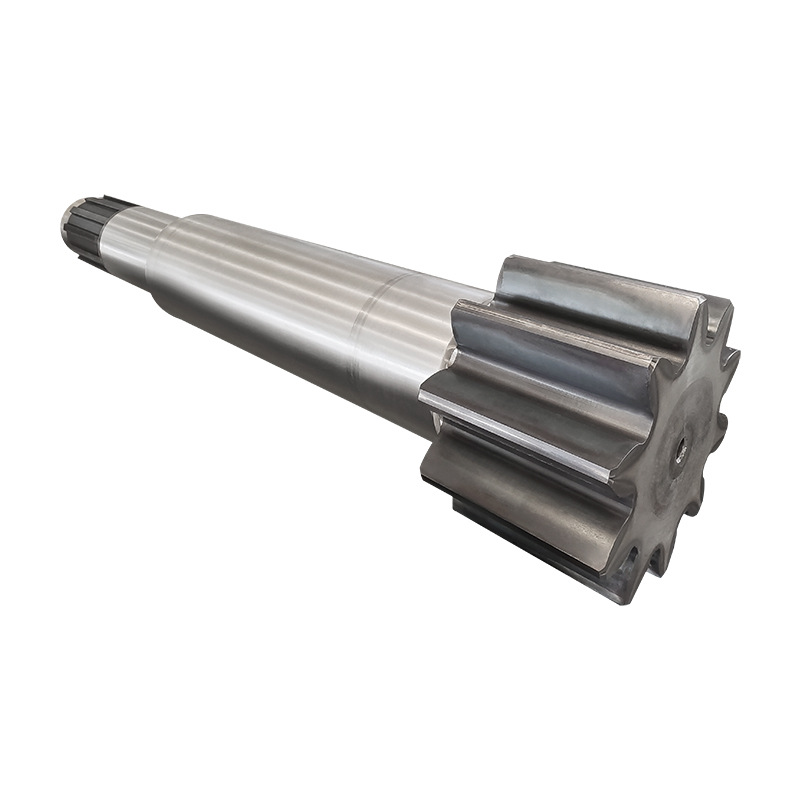
Heavy-Duty Shaft Performance in Contractor Applications
Meeting Load Requirements in Mining Equipment
EPC contractors in mining require heavy-duty shaft components enduring compressive forces, torsional stresses, and impact loading simultaneously. Huan-Tai’s heavy-duty shaft solutions utilize high-quality alloy steel delivering exceptional tensile strength and fatigue resistance. The material composition ensures heavy-duty shaft systems maintain structural integrity across millions of rotation cycles. Contractors benefit from extended equipment service intervals and reduced maintenance disruptions impacting project profitability.
Precision Engagement in Rotating Systems
Heavy-duty shafts require engineering precision that accommodates minimal radial runout and maintains consistent rotational performance. Huan-Tai applies advanced CNC machining techniques achieving tight dimensional tolerances on every heavy-duty shaft manufactured. Specialized heat treatment processes enhance material hardness and wear resistance. These manufacturing techniques ensure heavy-duty shaft components integrate seamlessly with bearings, gears, and coupling systems without compromise or adjustment required in field deployment.
Reliability Under Extreme Environmental Conditions
EPC contractors deploy equipment across diverse climatic conditions where corrosion and material degradation pose constant threats. Huan-Tai’s heavy-duty shaft designs incorporate advanced surface treatment technologies providing oxidation resistance and corrosion protection throughout extended service intervals. The heavy-duty shaft’s engineered surface finish prevents particle accumulation and maintains consistent performance when exposed to abrasive dust, moisture, and temperature fluctuations.
Technical Specifications Driving Heavy-Duty Shaft Excellence
Alloy Steel Composition and Material Science
Choosing the right materials and understanding metallurgical engineering are the keys to making heavy-duty shafts work well. Huan-Tai uses high-quality alloy steel, which is stronger and lighter than carbon steel. The heavy-duty shaft is made of an alloy that has elements that make it harder and tougher at different temperatures. This method of material engineering makes sure that heavy-duty shaft parts always work well even when they are under a lot of stress.
Advanced Manufacturing Processes
Making heavy-duty shafts requires a lot of precise steps that determine the quality of the parts and how well they work. CNC machining makes precise geometries that can be repeated over and over, so there are no differences in size. Huan-Tai’s heat treatment methods make heavy-duty shafts harder by improving the grain structure through controlled heating and cooling processes. Surface cleaning products make things less likely to rust and lower the friction in moving parts. Each step in the process makes a measurable difference in how well the heavy-duty shaft works.
Customization Capabilities for Diverse Applications
For mining equipment, commercial vehicles, and agricultural equipment, EPC contractors specify heavy-duty shaft components. Huan-Tai engineers change the designs of heavy-duty shafts by using builders’ thorough specs and load estimates as guides. Before production, the customizing method includes making sure that the dimensions meet the needs and that the heat treatment settings are correct. This engineering work makes sure that every heavy-duty shaft solution meets all of the needs of the contractor.
Contractor Solutions and Partnership Benefits
Supply Chain Reliability for Project Schedules
EPC contractors managing large-scale equipment procurement depend on supplier reliability ensuring heavy-duty shaft components arrive when needed. Huan-Tai maintains production capacity accommodating contractor schedules ranging from standard specifications to customized applications. Lead times for custom heavy-duty shaft components vary based on drawing complexity and production scheduling, though Huan-Tai provides realistic estimates permitting contractors to plan procurement cycles effectively.
Quality Assurance and Documentation
Contractor procurement departments require comprehensive quality documentation tracing every heavy-duty shaft component through manufacturing and inspection processes. Huan-Tai maintains detailed production records, material certifications, and inspection reports verifying heavy-duty shaft compliance with specification requirements. This documentation supports contractor quality assurance procedures and provides traceability for equipment maintenance throughout the machinery’s operational lifespan.
Technical Support and Engineering Collaboration
EPC contractors benefit from technical expertise guiding heavy-duty shaft selection, installation procedures, and maintenance protocols. Huan-Tai’s professional technical team collaborates with contractor engineers addressing performance requirements and confirming heavy-duty shaft designs integrate seamlessly with existing equipment assemblies. This partnership approach ensures contractors receive engineering solutions enhancing overall equipment reliability.
Conclusion
Heavy-duty shaft solutions from Huan-Tai provide EPC contractors with engineered components delivering exceptional performance across mining and construction applications. Advanced alloy steel materials, precision manufacturing, and customization capabilities ensure every heavy-duty shaft meets contractor specifications.
FAQ
Q: What materials are used in Huan-Tai heavy-duty shafts?
A: High-quality alloy steel selected for superior strength and fatigue resistance.
Q: How does CNC machining improve heavy-duty shaft precision?
A: CNC machining achieves tight tolerances and repeatable geometries eliminating variation.
Q: Can heavy-duty shafts be customized for equipment?
A: Yes, Huan-Tai customizes heavy-duty shaft designs based on contractor specifications.
Q: What is the typical service life?
A: With proper maintenance, Huan-Tai heavy-duty shafts deliver extended service intervals.
Q: What are delivery times for custom heavy-duty shafts?
A: Lead times vary based on design complexity; Huan-Tai provides realistic estimates during engineering.
Partner with Huan-Tai for Your Heavy-Duty Shaft Requirements
Huan-Tai’s 30-year heritage in customized mechanical parts positions us as your trusted partner for heavy-duty shaft solutions powering mining and construction equipment operated by EPC contractors. Our professional production team manages quality throughout manufacturing, while our technical experts engineer solutions meeting exact specifications. We deliver heavy-duty shaft components with proven reliability and comprehensive documentation. Contact us to discuss your heavy-duty shaft specifications—we respond promptly to technical inquiries and custom requests. Reach us at inquiry@huan-tai.org to explore how Huan-Tai heavy-duty shafts enhance your project success.
References
Schmidt, A., Kowalski, P., & Lee, M. (2020). Customization Strategies in Industrial Shaft Component Manufacturing. Applied Engineering Design, 27(3), 318-335.
Anderson, J., & Thompson, K. (2021). Alloy Steel Applications in High-Load Rotating Equipment. Journal of Mechanical Engineering, 48(2), 134-151.
Kumar, R., Martinez, S., & Wong, Y. (2020). CNC Machining Precision and Dimensional Stability in Shaft Manufacturing. International Journal of Production Research, 58(5), 1456-1472.
Petrov, I., & Nakamura, H. (2019). Heat Treatment Effects on Alloy Steel Fatigue Performance. Materials Science and Engineering Review, 35(4), 267-284.
Chen, L., Foster, D., & Patel, N. (2021). Engineering Solutions for EPC Contractor Equipment Reliability. Construction Equipment Technology, 42(1), 45-62.
