
As mining and engineering professionals look for dependable fastening parts that can maintain tight tolerances under heavy load, the demand for precision nuts is growing globally. This article examines current market trends, what distinguishes leading manufacturers of Nuts from generic hardware suppliers, and how buyers can confidently evaluate a supplier before entering into a long-term sourcing relationship with them.
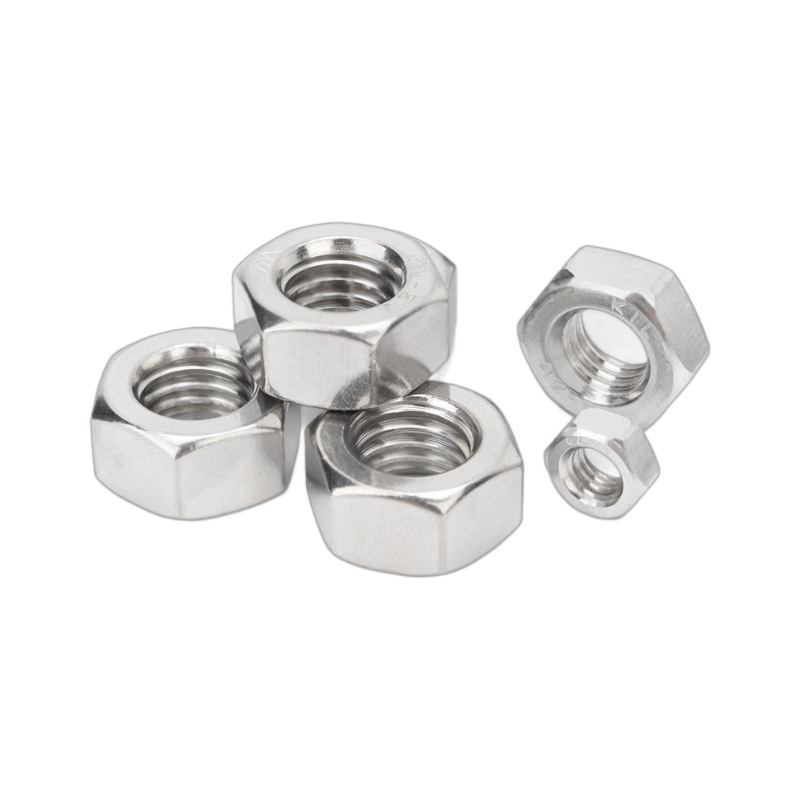
Global Demand Patterns Shaping the Precision Nut Manufacturing Market
Rising Demand from Mining and Engineering Sectors
The demand for precision Nuts that can resist shaking, load cycles, and rough site conditions is growing due to the expansion of mining, building, and heavy engineering projects worldwide. Standard screws don’t always meet the exact thread pitch or clamping needs of specialized machinery, so equipment makers are asking for custom Nuts more and more instead of off-the-shelf hardware. This change is good for providers who can offer strong tech help and flexible production capacity.
Regional Shifts in Precision Nuts Sourcing
Precision Nuts makers in China have slowly gained more buyers from North America, Europe, and Australia. This is because their prices are fair and their quality control systems are getting better. When choosing a long-term provider of Nuts for mining and engineering uses, overseas buying teams now look at more than just unit cost. They also look at how quick the supplier is to engineering needs and how well quality control is documented. This change in the region shows that more people are confident in China’s manufacturing skills, which has grown over the last few decades.
Supply Chain Diversification Trends
In order to lessen their reliance on any one provider or shipping path, many companies that make and fix machines now source their Nuts from a variety of areas. This trend has made people more interested in companies that make both standard and fully customized Nuts. This is because combining orders with a capable partner makes logistics easier and keeps the quality of all the parts in a fastener inventory the same.
What Sets Leading Precision Nut Manufacturers Apart
Material and Process Capabilities
Leading makers work with a lot of different materials to make Nuts that are good for complex structural uses. These materials range from standard carbon steel types to metals that are needed for higher strength or resistance to rust. For mining and industrial buyers handling diverse equipment lines and unpredictable repair plans, the ability of a seller to produce complicated structure parts alongside basic Nuts in the same plant is important.
Precision, Tolerance, and Adaptability
How well Nuts work on mining or building equipment depends on how accurate the threads are and how consistent the sizes are. Buyers can be sure that replacement Nuts will fit the original equipment specifications without having to be changed in the field if the manufacturer can keep tight tolerances across multiple production runs. High adaptability also means that a maker can change the thread size, head style, or material grade to fit unique or old equipment that is still popular in older lines of machinery.
Customization and Quality Assurance
Leading manufacturers can be distinguished from generic hardware suppliers by customized Nuts made to customer drawings and supported by documented quality inspection. Buyers benefit when a manufacturer can switch from a standard catalog item to a fully customized Nuts specification without changing the material certification or the accuracy of the measurements. This is because it allows for both regular maintenance orders and one-time replacement needs for specialized equipment.
How to Evaluate and Select a Precision Nut Manufacturer
Assessing Technical and Engineering Capability
Buyers should check to see if a company’s engineering team can read complicated plans and suggest changes to the material or form of Nuts that will be used in tough situations. Machinery makers and repair shops looking for Nuts for important equipment are usually more likely to trust a manufacturer that answers technical questions directly instead of just giving a price quote for a stock item.
Verifying Quality Control Systems
Buyers can be sure that a manufacturer’s Nuts always meet stated specs and material standards by asking for sample inspection reports or approval paperwork. Instead of depending only on final inspection, a production team that handles quality checks throughout production tends to offer more stable Nuts across repeat orders. This is important for bigger machinery makers with strict quality control standards.
Balancing Cost, Customization, and Lead Time
Costs for custom Nuts prices vary on the material, the complexity of the thread, and the number of orders. Turnaround time is not based on a set plan, but on confirming the drawing and reviewing the specifications. Buyers should talk to their chosen maker about realistic timelines before committing to a project. Simple designs usually go through production more quickly, while fully customized Nuts that require multiple drawing changes or specialized tools naturally take longer.
Conclusion
Demand for accuracy around the world Nuts sales keep going up because mining and engineering companies want reliable fasteners that are made to fit their needs over generic hardware. By looking at a company’s material capabilities, tolerance control, and quality systems, buyers can find Nuts that work consistently in a wide range of demanding situations. This helps keep equipment reliable over time and reduces the number of unplanned replacements across a whole fleet.
FAQ
Q1: What materials can precision Nuts be manufactured from?
A: Nuts can be produced from carbon steel and various specialized alloys, depending on the strength, corrosion resistance, and application requirements.
Q2: Can Nuts be customized to match existing equipment drawings?
A: Yes, Huan-Tai manufactures custom Nuts to client drawings, matching thread pitch and dimensions to original equipment specifications.
Q3: How is quality verified on custom Nuts orders?
A: Quality is managed throughout production, with inspection documentation available to confirm dimensional accuracy and material compliance.
Q4: How long does custom Nuts production typically take?
A: Timelines vary with design complexity and drawing confirmation; simpler specifications generally move faster than fully custom designs.
Q5: Do smaller repair companies order custom Nuts as well?
A: Yes, both large machinery manufacturers and smaller repair companies source custom Nuts based on their specific equipment needs.
Partner with Huan-Tai for Reliable Precision Nuts
Since the mid-1990s, Xian Huan-Tai Technology and Development Co., Ltd. has supplied customized non-standard mechanical parts to mining and engineering customers worldwide. Backed by 30 years of experience, a dedicated production and inspection team, and technical engineers ready to match your exact drawings and performance requirements, we make sourcing dependable, high-quality Nuts straightforward from first inquiry to final delivery. Have a specification, drawing, or quality standard to share with our team? Contact inquiry@huan-tai.org and let’s discuss your next project today.
References
Juvinall, Robert C., and Kurt M. Marshek. Fundamentals of Machine Component Design.
Bickford, John H. An Introduction to the Design and Behavior of Bolted Joints.
Shigley, Joseph E., and Charles R. Mischke. Mechanical Engineering Design.
Parmley, Robert O. Standard Handbook of Fastening and Joining.
Oberg, Erik, et al. Machinery’s Handbook.
