
While other shafts primarily transfer power or hold up rotating assemblies, an eccentric shaft in a jaw crusher drives the jaw. The movement that opens and closes the crushing chamber is caused by its eccentric shape. When handling hard rock in mine, quarrying, and building, an eccentric shaft that is properly made improves the breaking power, jaw movement, flow stability, and service dependability.
What Makes an Eccentric Shaft Different from Other Crusher Shafts?
The Eccentric Design Creates Jaw Movement
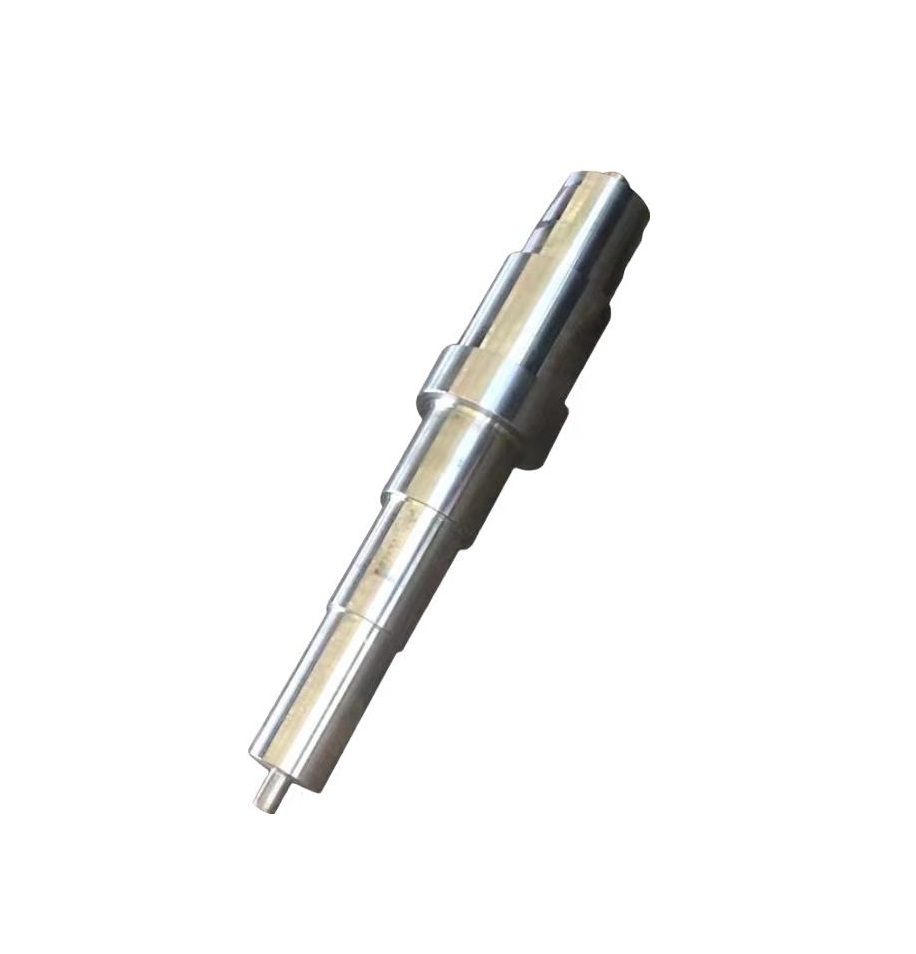
Unlike a straight drive shaft, an Eccentric shaft has offset journal sections that convert rotary motion into the reciprocating movement required by the moving jaw. The jaw is moved through the pitman assembly and toggle system as the shaft turns. This mechanical action is very important for controlling the flow of material, breaking it up, and compressing it in a jaw crusher that is used in ongoing mining or gravel production.
It Carries High Reactive Crushing Loads
When hard rock is pushed between the fixed and moving jaw plates of a jaw crusher, a lot of reactive force is created. In order to withstand these repeated loads without deforming, the eccentric shaft needs to be very strong and rigid. Some parts of a crusher are cast, but the main shaft of a jaw crusher is usually forged instead of cast because forging provides the mechanical power needed for tough crushing and rotating tasks.
It Works with, Rather Than Replaces, Other Shafts
The eccentric shaft serves a unique purpose in motion and shouldn’t be confused with other shafts in mining machinery. Depending on the type of crusher, it may have a flywheel shaft, a drive system, bearings, a pitman, and main supporting structures. Each part does something different. Having the right gear shape, balance, and fitting helps the whole jaw crusher move smoothly and keep its breaking power under control.
How Does Eccentric Shaft Quality Affect Jaw Crusher Performance?
Accurate Machining Supports Stable Jaw Motion
Precise machining is essential for an Eccentric shaft because journal diameters, bearing locations, keyways, threads, and eccentric offsets must match the approved design. Even small mistakes in measurements can affect how well the bearings fit, how the jaws move, how well they are oiled, and how stable the machine is when it’s running. Huan-Tai can make non-standard mechanical parts that are customized based on confirmed drawings, samples, and technical requirements. This lets customers get shafts that fit their equipment with fewer adjustments having to be made on-site.
Material Selection Must Match Working Conditions
The material used for an Eccentric shaft should match the crusher model, feed material, production load, and expected operating environment. Because it is strong and tough, forged alloy steel is often chosen for critical shaft applications. Most of the time, high manganese steel and high carbon steel are chosen for cast wear parts that will be hit and worn down. You shouldn’t buy a shaft based on price alone; a practical material review can help you avoid that.
Good Surface Condition Protects Bearings
Bearing contact areas on an Eccentric shaft require careful machining and inspection because they affect shaft rotation and load distribution. Journals that are rough, broken, or the wrong size can speed up bearing wear and cause vibrations while they’re running. Proper lubrication, clean oil, precise assembly, and regular checks all contribute to the quality of a shaft. This helps maintenance teams protect expensive bearing assemblies and reduce avoidable crusher downtime.
What Should Buyers Check Before Ordering an Eccentric Shaft?
Confirm the Crusher Model and Part Details
Before ordering an Eccentric shaft, buyers should provide the crusher model, OEM part number, drawing, sample, or measured dimensions. Important details include overall length, journal diameter, eccentric distance, keyway dimensions, thread specifications, and bearing-seat requirements. For older equipment, a worn sample can be useful for technical review. Clear confirmation gives production teams a reliable basis for forging, machining, inspection, and final quality control.
Inspect Related Components During Replacement
Replacing an Eccentric shaft is a good opportunity to inspect related jaw crusher components, including bearings, the pitman, toggle plates, jaw plates, springs, and flywheels. Toggle plates are commonly made from high manganese steel rather than carbon steel. Crusher springs may use spring steel, high-strength steel wire, or carbon steel. Reviewing connected components together helps identify alignment issues and supports a more complete maintenance plan.
Allow Practical Time for Custom Production
Lead time for a custom Eccentric shaft depends on material availability, forging requirements, machining complexity, heat treatment, inspection standards, and drawing confirmation. Repeat orders with approved specifications may proceed more efficiently. However, custom shafts can require a longer production cycle when dimensions need repeated verification or special processes are necessary. Early inquiry helps customers coordinate procurement with planned shutdowns and spare-parts inventory requirements.
Why Is Custom Manufacturing Valuable for Eccentric Shafts?
Custom Dimensions Improve Equipment Compatibility
A customized Eccentric shaft can be manufactured to match a specific jaw crusher configuration, especially when standard replacement parts are unavailable or equipment has been modified. Huan-Tai reviews drawings, samples, and operational requirements to support practical fitment. Correct dimensions help the shaft work with existing bearing housings, flywheels, and moving-jaw assemblies, reducing the risk of installation delays at mines, quarries, and repair facilities.
Inspection Builds Confidence for Overseas Buyers
Overseas customers need stable quality, consistent communication, and predictable production management when sourcing an Eccentric shaft from China. Huan-Tai’s production and inspection teams manage key stages from material preparation and forging through machining, dimensional checking, and packing. Inspection of critical shaft features helps buyers confirm that parts meet the agreed technical requirements before shipment for mining, engineering, and industrial machinery applications.
Engineering Support Helps Control Total Cost
The lowest unit price does not always represent the best value for an Eccentric shaft. A poorly matched shaft can create fitting work, bearing damage, extended shutdowns, and additional transport costs. Huan-Tai’s technical team helps customers review material options, dimensions, manufacturing processes, and performance requirements before production. This approach supports a more informed purchasing decision and helps balance quality, delivery expectations, and overall maintenance cost.
Conclusion
The Eccentric shaft is the core motion component of a jaw crusher, making its forging quality, material selection, machining accuracy, and fitment essential to crusher performance. Compared with other shafts, it carries a unique eccentric load and drives the moving jaw directly. Careful sourcing and planned maintenance help improve reliability, output stability, and service life.
FAQ
Q1: What is an Eccentric shaft in a jaw crusher?
An Eccentric shaft drives the moving jaw through its offset journal design, creating the crushing motion.
Q2: Is a jaw crusher eccentric shaft cast or forged?
It is generally produced through forging rather than casting to support high strength and fatigue resistance.
Q3: What information is needed for a custom shaft order?
A drawing, sample, part number, crusher model, dimensions, material requirements, and bearing-seat details are helpful.
Q4: Why is shaft machining accuracy important?
Accurate journals and eccentric offsets support correct bearing fit, stable jaw movement, and lower vibration.
Q5: Do you supply shafts for precision electronic equipment?
No. Huan-Tai focuses on customized mechanical parts for mining, engineering, industrial, and heavy equipment.
Secure a Reliable Eccentric Shaft for Your Crusher Project
Need a custom Eccentric shaft for a jaw crusher rebuild, mining equipment repair, or OEM machinery program? Xian Huan-Tai Technology and Development Co., Ltd. brings 30 years of experience in customized non-standard mechanical parts. Our technical team reviews drawings and performance requirements, while our professional production and inspection teams manage quality throughout every stage. Contact us for responsive service, practical production guidance, and a customized quotation at inquiry@huan-tai.org.
References
- Wills, Barry A., and James Finch. Wills’ Mineral Processing Technology: An Introduction to the Practical Aspects of Ore Treatment and Mineral Recovery. Butterworth-Heinemann, 2016.
- Gupta, Ashok, and Denis S. Yan. Mineral Processing Design and Operation: An Introduction. Elsevier, 2016.
- Budynas, Richard G., and J. Keith Nisbett. Shigley’s Mechanical Engineering Design. McGraw-Hill Education, 2020.
- Totten, George E., Maureen Howes, and T. Inoue. Handbook of Residual Stress and Deformation of Steel. ASM International, 2002.
- Oberg, Erik, Franklin D. Jones, Holbrook L. Horton, and Henry H. Ryffel. Machinery’s Handbook. Industrial Press, 2020.
