
The hammerhead is the primary striking component in a hammer crusher, rotating at high speed to break feed material through repeated impact. Because it operates under extreme mechanical stress, hammerhead failures are among the most disruptive issues in hammer crusher maintenance — directly affecting output quality, production continuity, and operating cost. Understanding the most common failure modes and how to address them is essential for any operation running this type of equipment.
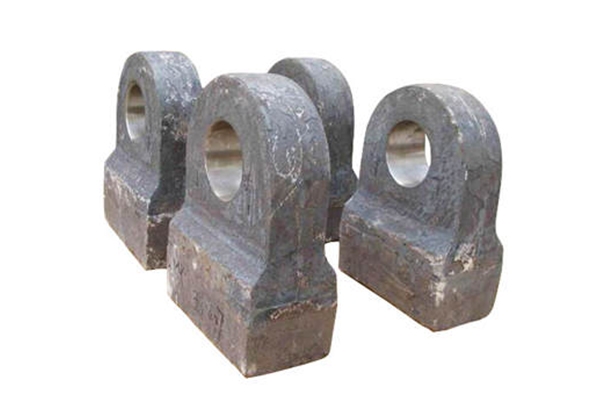
What Are the Most Common Hammerhead Failure Modes?
Premature Wear on the Striking Face
The most frequent issue is accelerated wear on the hammerhead striking surface, which reduces its effective mass and geometry, leading to inconsistent product size and reduced throughput. This typically results from a mismatch between the hammerhead material and the feed material hardness. In hard rock or high-abrasion applications, a hammerhead cast from standard alloy steel may wear faster than expected. Selecting a material grade — such as high manganese steel or high chromium cast iron — that matches the actual working conditions is the first and most effective solution. Among crusher components broadly, hammerheads and cone parts both suffer most when material selection is treated as an afterthought.
Fracture and Breakage Under Impact Load
Sudden fracture is a more severe failure mode than gradual wear, and it carries a higher risk of secondary damage to the rotor, liner plates, and other components. Fracture typically results from material brittleness, internal casting defects, or improper heat treatment. A quality hammerhead must balance hardness with sufficient toughness — the ability to absorb sudden impact without cracking. Precision casting methods, including lost-wax and resin sand casting, help ensure dimensional accuracy and structural integrity, reducing internal stress concentrations that act as fracture initiation points.
Loosening and Displacement on the Rotor
A hammerhead that shifts position during operation creates rotor imbalance, which generates vibration, accelerates bearing wear, and can cause serious mechanical damage if left unaddressed. This failure mode is usually traced to incorrect installation, worn mounting hardware, or dimensional inaccuracy in the hammerhead itself. Ensuring that replacement hammerheads are manufactured to the correct dimensional specification — and that the mounting system is inspected and refurbished during each change-out — prevents this from recurring. Consistent part dimensions, achieved through controlled casting processes, are a prerequisite for reliable rotor operation.
How Does Material Choice Affect Hammerhead Performance and Failure Rate?
High Manganese Steel for High-Impact Conditions
High manganese steel is a well-established hammerhead material for hammer crushers processing mixed or moderately abrasive feed. Its key advantage is work-hardening: the surface becomes progressively harder under repeated impact, increasing wear resistance during service. This makes it a practical choice for operations where feed composition varies and impact loads are the dominant stress. Compared to cone parts and other crusher wear components, hammerheads in high manganese steel tend to deliver predictable service life in these conditions.
High Chromium Cast Iron for Abrasive Feed
When feed material is consistently hard and abrasive — silica-rich rock, recycled concrete, hard limestone — high chromium cast iron offers superior surface hardness and abrasion resistance. This extends the replacement interval significantly in the right application. However, it requires careful material and process control during casting to avoid excessive brittleness. The casting method — whether lost-wax, V-process, or resin sand — has a direct bearing on dimensional accuracy and the internal quality of the finished hammerhead.
Alloy Steel as a Versatile Option
Alloy steel hammerheads offer a balance of toughness and hardness suited to medium-duty hammer crusher applications. They are used where neither extreme abrasion resistance nor maximum impact toughness alone is sufficient. For operations running a variety of feed materials across different shifts, alloy steel provides reliable performance without the specific material sensitivity of higher-hardness options. Like all hammerhead materials, the casting quality and post-cast treatment determine whether the part performs to its material potential.
How Can Operations Reduce Hammerhead Failures Over the Long Term?
Match Replacement Parts to the Actual Application
The single most impactful decision in reducing hammerhead failure rate is selecting the right material for the feed material and operating conditions. Many premature failures are the result of using a standard replacement part in an application it wasn’t designed for. A supplier with genuine application knowledge — not just a product catalog — can recommend the appropriate material grade and casting specification. This guidance is as relevant for hammerheads as it is for cone parts and other high-wear crusher components.
Establish Consistent Inspection and Replacement Intervals
Reactive replacement — waiting for a hammerhead to fail before changing it — leads to rotor imbalance, secondary damage, and unplanned downtime that is far more disruptive than a scheduled change-out. Establishing inspection intervals based on operating hours and feed volume, and replacing hammerheads as a set rather than individually, keeps rotor balance consistent and avoids the asymmetric wear patterns that cause vibration issues. Keeping records of service life by material type also helps optimize future material selection.
Source from Suppliers with Controlled Manufacturing Processes
Not all hammerheads of nominally the same material perform the same way in service. The difference lies in alloy composition consistency, casting process discipline, and post-cast inspection. Suppliers who verify incoming material, control the casting process, and conduct dimensional and hardness checks on finished parts deliver a consistent product that performs to specification. For custom or non-standard hammerhead profiles — which may require drawing review and multiple process steps — lead times vary, and early procurement planning avoids schedule pressure that leads to accepting parts without adequate quality verification.
Conclusion
Hammerhead failures in hammer crushers — whether wear, fracture, or displacement — are manageable when the right material is selected, the casting quality is controlled, and replacement is planned rather than reactive. Working with a capable, experienced supplier is the most reliable way to reduce failure frequency and keep production on schedule.
FAQ
Q1: What causes hammerheads to wear out quickly?
Premature wear is usually caused by a mismatch between the hammerhead material and the abrasiveness of the feed. Selecting a harder material — such as high chromium cast iron — for abrasive feed resolves most premature wear problems.
Q2: What materials are used to make hammerheads?
Common materials include high manganese steel, high chromium cast iron, and alloy steel. The right choice depends on the feed material characteristics and the dominant failure mode in the specific application.
Q3: Can hammerheads be customized for non-standard hammer crushers?
Yes. Custom hammerheads can be produced from drawings or samples. Lead times depend on specification complexity, drawing confirmation rounds, and production scheduling.
Q4: How often should hammerheads be replaced?
Replacement frequency depends on feed material hardness, operating hours, and crusher throughput. Scheduled inspection intervals and replacing hammerheads as matched sets help maintain rotor balance and extend machine life.
Q5: Why does casting method matter for hammerhead quality?
Casting method affects dimensional accuracy and internal structural integrity. Precision methods such as lost-wax or resin sand casting reduce internal defects and stress concentrations that lead to premature fracture.
Get Reliable Hammerheads Built for Your Application
At Xi’an Huan-Tai Technology and Development Co., Ltd., we manufacture customized hammerheads and crusher wear parts for mining and engineering operations worldwide — backed by over 30 years of industry experience. Our technical team helps you select the right material for your feed conditions, and our production process is quality-controlled at every stage. Whether you need standard or custom profiles, we deliver parts that perform consistently. Share your requirements with us today at inquiry@huan-tai.org.
References
- Wills, B. A., & Finch, J. A. (2015). Wills’ Mineral Processing Technology: An Introduction to the Practical Aspects of Ore Treatment and Mineral Recovery (8th ed.). Butterworth-Heinemann.
- Gupta, A., & Yan, D. S. (2006). Mineral Processing Design and Operations: An Introduction. Elsevier.
- Metso Corporation (2015). Crushing and Screening Handbook (5th ed.). Metso Minerals Industries, Inc.
- Albertsson, G., Jonsson, S., & Haraldsson, J. (2015). Influence of Microstructure on Abrasive Wear of High Chromium White Cast Iron. Wear, 332–333, 717–724.
- Tylczak, J. H., Hawk, J. A., & Wilson, R. D. (1999). A Comparison of Laboratory Abrasion and Field Wear Results. Wear, 225–229, 1059–1069.
