
For most jaw crusher applications, the best liner plate material is high manganese steel, because it work-hardens under impact and resists abrasion; high carbon steel wins where rigidity matters most. The right choice depends on your rock, your chamber loads, and how well the plate was cast.
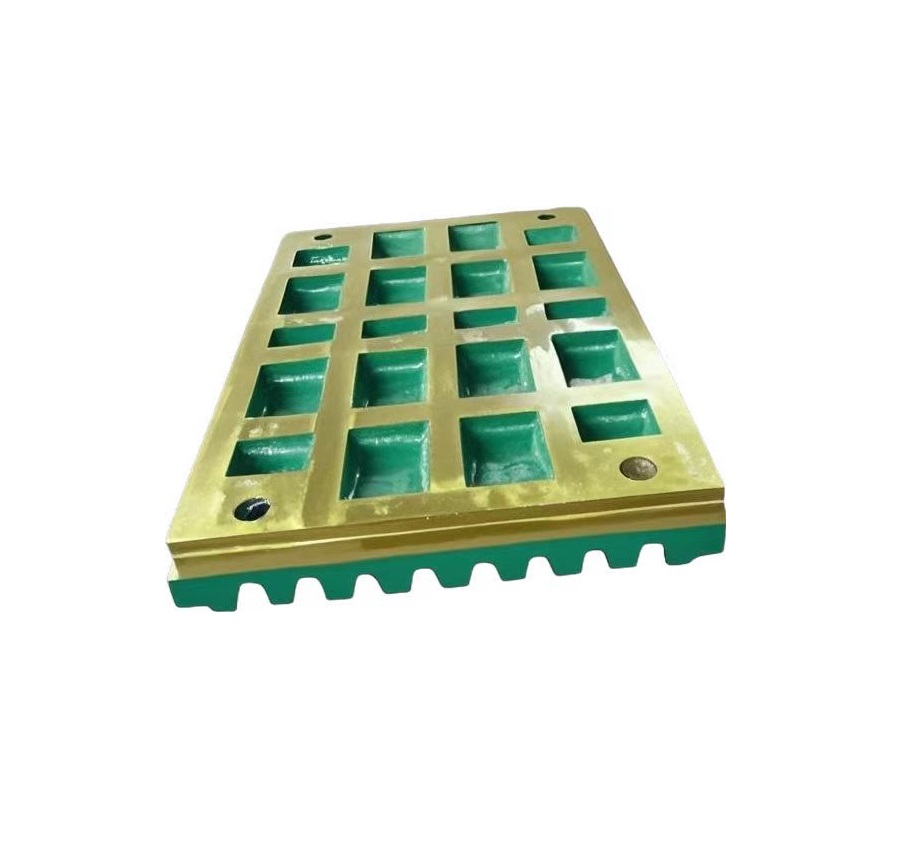
The Short Answer: Match the Liner Plate to the Rock
There’s no single winner—there’s a right match. Three questions sort it out fast.
High Manganese Steel for Heavy Impact
When big feed drops into the chamber and hits hard, high manganese steel is the workhorse. Its surface work-hardens under each blow while the core stays tough, so a liner plate cast from it absorbs impact force instead of cracking. That’s the combination that extends service life in hard, abusive duty.
High Carbon Steel for Shape-Holding Rigidity
Some chambers punish plates with steady crushing pressure more than falling rock. There, a high carbon steel liner plate earns its keep: high strength and rigidity let it carry the reactive force of fragmentation without flexing or dishing, so the nip zone holds its profile and product gradation stays where you set it.
Hard Rock and Wet Pits Raise the Bar
Granite, basalt, and quartz-rich feed chew through soft castings fast, and aggressive pit water chews what’s left. Our liner plate castings apply well to harder rocks and carry good corrosion resistance, so mines running abrasive ore or wet conditions get full wear life instead of watching moisture and chemistry cut it short.
Why Two Identical-Looking Liner Plates Wear So Differently
The grade stamps match; the performance doesn’t. That gap gets made in the foundry.
Sound Casting Before Anything Else
Chemistry on a mill certificate won’t save a liner plate full of porosity and shrinkage—those voids become crack starters under cyclic load. Controlled melting, clean molding, and proper feeding give the casting a dense body, and that density is what lets high-quality steel deliver the impact resistance the grade promises.
Heat Treatment Locks In the Properties
Austenitic manganese steel needs a proper solution anneal and water quench; carbon steel needs its own cycle to balance hardness and toughness. Get heat treatment right and the liner plate gains the strength and rigidity to withstand the reactive force of fragmentation. Skip it, and no alloy content can compensate.
The Machine Around It Has a Vote
Even a perfect casting dies young in a sick crusher. Toggle plates belong in high manganese steel, tension springs in spring steel, high-strength steel wire, or carbon steel, dust seal rings in high manganese steel or high chromium alloy steel, the main shaft forged rather than cast, rack bar in alloy steel. Alignment keeps the liner plate wearing evenly.
Turning the Material Choice Into a Smart Purchase Order
Buying wear parts well is mostly about the information you hand over.
Let the Old Plate Write the Spec
Before reordering, photograph and measure the worn part. Even wear means the material matched the duty; a hollowed center or chipped edges say the impact-abrasion balance was off. Bringing that evidence to your foundry turns the next liner plate from a repeat purchase into an upgraded specification.
Describe the Duty, Not Just the Drawing
Feed size, rock hardness, moisture, and throughput shape the right call, and the same honesty applies across machines: impact crushers run blow bars in high manganese steel, alloy steel, or high chromium cast iron, while hammer crushers rely on their own hammer heads. Tell us the duty, and we’ll engineer the liner plate to suit it.
Lead Time Follows the Drawing
Standard-profile castings can move in a matter of weeks; complex custom work runs longer when drawings go through repeated confirmation and process planning. A supplier managing quality through the entire production process—pattern to pour to final machining—delivers a liner plate that seats the first time and wears the way it should.
Conclusion
The best liner plate material is the one matched to your rock, cast soundly, and heat treated properly—usually high manganese steel for impact, high carbon steel for rigidity. Read your worn plates, share your duty conditions, and buy from a foundry that controls the whole process.
FAQ
What’s the best liner plate material for granite?
High manganese steel—its work-hardening surface handles hard, abrasive, high-impact feed.
When should liners be replaced?
Measure thickness at each shutdown and reorder from the wear trend, before profile loss hurts gradation.
Does casting quality really change wear life?
Yes. Porosity and poor heat treatment cut life short regardless of grade.
Can you cast liners to our drawings?
Yes. Timelines vary with drawing confirmation and process complexity.
What else do you supply?
Toggle plates, seal rings, forged shafts, and other mining and engineering machinery parts.
Send Us the Rock, We’ll Send the Spec
For 30 years, Xian Huan-Tai has cast and machined customized non-standard parts for mining and engineering machinery—excellent service, quality managed through the entire production process, and a technical team that meets your performance requirements. Tell us your crusher model and what you’re feeding it, or attach a drawing. We’ll reply with a material recommendation and a clear quote: inquiry@huan-tai.org.
References
- Donovan, J. G. (2003). Fracture Toughness Based Models for the Prediction of Power Consumption, Product Size, and Capacity of Jaw Crushers. PhD Dissertation, University of Utah.
- Avery, H. S. (1974). Work Hardening in Relation to Abrasion Resistance. Symposium on Materials for the Mining Industry, Vail, Colorado.
- Garnaik, S. K. (2010). Computer Aided Design of Jaw Crusher. National Institute of Technology Rourkela.
- Numbi, B. P., Zhang, J., & Xia, X. (2014). Optimal Energy Management for a Jaw Crushing Process in Deep Mines. Energy Policy, 68.
- Gupta, A., & Yan, D. S. (2016). Mineral Processing Design and Operations: An Introduction, 2nd Edition. Elsevier.
