
If you pick the wrong bearing housing for a hammer crusher, the rotor will not be stable, the bearings will not last long, and the machine will not be able to produce as much. In tough mining and tunnelling settings, a good Bearing Housing keeps bearings safe from dust, shock loads, and being out of line. This guide tells purchasing and production managers about the different types of materials, how to choose the right structure, and how to evaluate suppliers so that you can choose a Bearing Housing that will keep your crusher running smoothly.
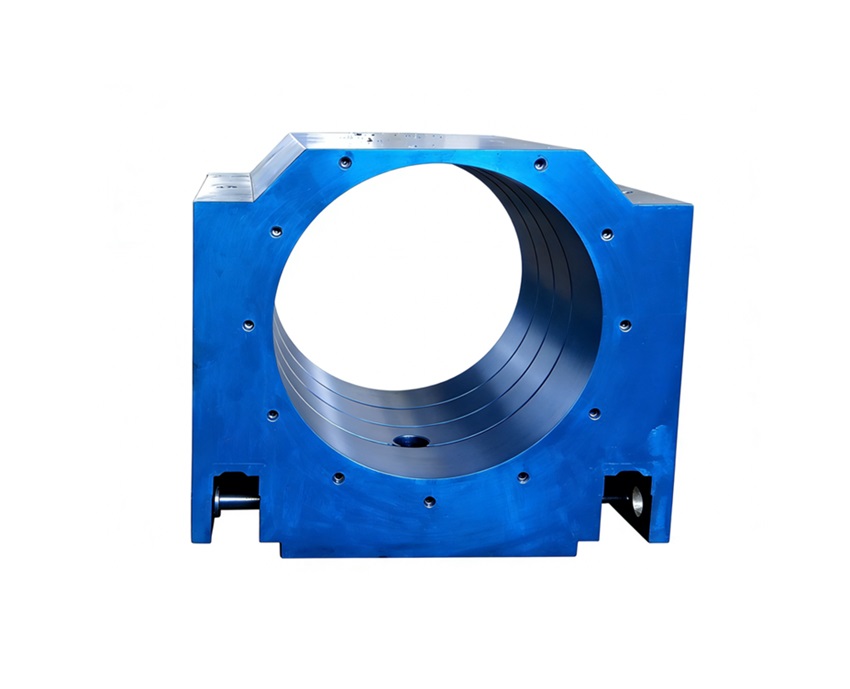
Material and Casting Quality: The Foundation of a Reliable Bearing Housing
Cast Steel and Ductile Iron Options
Cast steel or ductile iron is used to make most heavy-duty crusher Bearing Housing units. The choice depends on the load. For big hammer crushers that work with hard rock, cast steel is better at resisting pressure, while ductile iron is better for medium-duty tools. A properly cast Bearing Housing with a strong internal structure keeps cracks from forming when mining equipment is constantly vibrating during each shift.
Why Casting Integrity Matters
Inside a bearing housing, shrinkage holes, sand particles, and gaps are dangers that you can’t see and only become apparent after the failure. Reputable makers make sure that their casts are thick and free of flaws by controlling the filling temperature and designing the risers correctly. Before being machined, each Bearing Housing should be inspected with ultrasound waves or magnetic particles. This is because a flaw that isn’t obvious near the bearing hole could cause it to break suddenly when the pressing loads are at their highest.
Machining Precision After Casting
After the bore, mounting face, and bolt holes are carefully machined, raw castings are ready to be used. So that the bearing outer ring fits evenly, the Bearing Housing hole needs to be round and have a smooth surface. Poor drilling leads to stress in certain areas, burning, and a shorter life for the bearing. A well-machined Bearing Housing also makes installation easier on-site, which saves your maintenance staff valuable time.
Structural Design Features That Separate a Good Bearing Housing from a Great One
Split Versus Solid Configurations
A split Bearing Housing allows bearing replacement without removing the entire rotor and forged main shaft, dramatically cutting maintenance time on large hammer crushers. Solid housings, meanwhile, offer greater rigidity for compact machines. When evaluating a bearing housing design, consider your maintenance workflow: repair shops with limited lifting equipment often prefer split designs for their practical serviceability advantages.
Sealing and Dust Protection Design
Crushing environments are loaded with abrasive fines, so the Bearing Housing must incorporate effective sealing arrangements. Labyrinth seals paired with dust rings made from high manganese steel or high chromium alloy steel keep contaminants away from the lubricant. A Bearing Housing with well-designed seal grooves extends grease intervals and protects bearings that would otherwise wear out within months in dusty quarry conditions.
Lubrication Channels and Heat Dissipation
Grease must reach the bearing rollers consistently, so the Bearing Housing needs correctly positioned lubrication ports and internal channels. Adequate wall thickness and external surface area also help dissipate heat generated during continuous operation. An optimized Bearing Housing structure supports the strong crushing forces of the rotor assembly while keeping operating temperatures within safe limits, preserving lubricant quality and bearing performance.
Matching Your Bearing Housing to the Complete Crusher System
Compatibility with Rotor and Shaft Assembly
The bearing housing works as part of a system that includes the forged main shaft, rotor discs, and hammers. Alignment between both housings determines whether the rotor spins true or wobbles destructively. When ordering a replacement Bearing Housing, provide accurate center height and bore dimensions, or send worn samples so the supplier can reverse-engineer a unit that fits your equipment precisely.
Supporting Components Deserve Equal Attention
A crusher performs only as well as its weakest part. Alongside the Bearing Housing, verify that springs made from spring steel, high-strength steel wire, or carbon steel remain within specification, and that bimetallic composite hammerheads—featuring hard, wear-resistant heads and strong handles that resist breakage—are properly balanced. Uneven hammer wear transfers vibration straight into the Bearing Housing and shortens its life.
Evaluating a Custom Manufacturing Partner
Since hammer crushers vary widely across brands and capacities, an off-the-shelf Bearing Housing rarely fits every machine. Look for a supplier offering true customization suitable for various types of equipment, with engineering support, full-process quality control, and honest scheduling. Custom Bearing Housing orders may take longer when drawings require several confirmation rounds, so choose a partner who communicates timelines transparently.
Conclusion
Selecting the right bearing housing comes down to verified casting quality, thoughtful structural design with proper sealing and lubrication, and precise compatibility with your rotor system. Partner with an experienced custom manufacturer, and your hammer crusher will reward you with longer bearing life, less vibration, and fewer unplanned shutdowns across demanding mining and engineering applications.
FAQ
Q1: What materials are used for a hammer crusher Bearing Housing?
Typically cast steel for heavy-duty applications and ductile iron for medium-duty machines, depending on load and impact conditions.
Q2: Can you produce a Bearing Housing without original drawings?
Yes. Send us the worn part or key measurements, and our technical team will reverse-engineer an accurate replacement.
Q3: How does the Bearing Housing seal keep dust out?
Labyrinth seal grooves combined with dust rings made from high manganese steel or high chromium alloy steel block abrasive particles.
Q4: What is the lead time for a custom Bearing Housing?
It varies with complexity. Drawing confirmations and casting processes can extend the cycle, so we confirm realistic schedules upfront.
Q5: Do you supply other hammer crusher parts?
Yes, including forged main shafts, bimetallic composite hammerheads, springs, and dust rings for mining and engineering machinery.
Get the Right Bearing Housing for Your Crusher Today
Since the mid-90s, Xian Huan-Tai Technology and Development Co., Ltd. has been a trusted manufacturer of customized non-standard mechanical parts. With 30 years of industry experience, excellent service, a production team managing quality through every stage, and a technical team ready to meet your exact performance requirements, we deliver the stability and consistency overseas buyers expect. Share your drawings, samples, or questions with us at inquiry@huan-tai.org—our engineers will respond with a tailored solution and quotation.
References
- Harris, T. A., & Kotzalas, M. N. — Essential Concepts of Bearing Technology, Rolling Bearing Analysis Series.
- Li, X., & Zhou, Y. — Failure Analysis of Bearing Housings in Mining Crushing Equipment, Engineering Failure Analysis Journal.
- Bhadeshia, H. K. D. H. — Steels: Microstructure and Properties in Cast Components, Materials Science Publications.
- Wang, F., & Zhang, Q. — Sealing Design and Contamination Control for Heavy Machinery Bearing Assemblies, Tribology and Lubrication Technology Review.
- Olsson, E., & Nilsson, P. — Vibration Behavior of Rotor-Bearing Systems in Impact Crushing Machines, Journal of Mechanical Systems and Signal Processing.
